
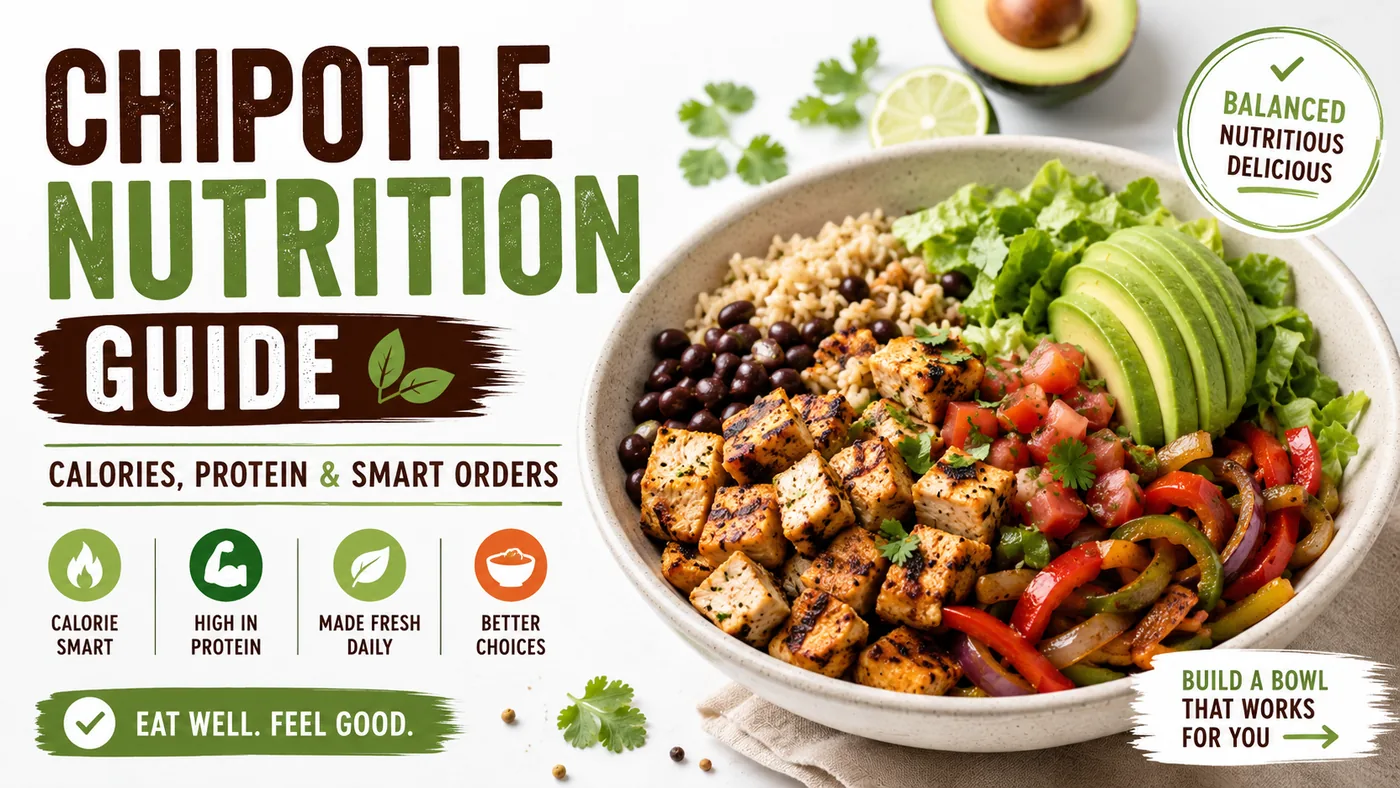
The smartest Chipotle nutrition strategy is to choose a bowl or salad, start with a lean protein, add beans or vegetables for fiber, use salsa for flavor, and treat cheese, sour cream, queso, guacamole, vinaigrette, and chips as intentional extras. This does not mean those extras are bad. It means they should match your goal instead of being added automatically. In simple terms, a healthy Chipotle order starts with a clear goal before the extras are added.
A balanced everyday order could be chicken or steak, brown rice or light rice, black beans, fajita vegetables, fresh tomato salsa, and lettuce. A lower-calorie order may skip the tortilla and rich toppings, while a high-protein order may use double protein and beans. The best answer depends on whether the reader wants fewer calories, more protein, more fiber, less sodium, vegetarian options, or a more filling meal.
- Introduction
- How Chipotle Nutrition Works
- Chipotle Calories by Menu Format
- Protein Choices: Chicken, Steak, Barbacoa, Carnitas, Sofritas, and Beans
- Rice, Beans, Vegetables, and Fiber
- Salsas, Cheese, Sour Cream, Guacamole, and Queso
- Chipotle Sodium: The Number Many Readers Miss
- Best Low-Calorie Chipotle Order
- Best High-Protein Chipotle Order
- Bowl vs Burrito: Nutrition Difference
- Vegetarian, Vegan, Gluten-Sensitive, and Allergy Notes
- How to Use the Chipotle Nutrition Calculator
- Common Chipotle Nutrition Mistakes
- Smart Order Examples
- Conclusion
- Clean Source List Used –
- FAQs –
Introduction
Chipotle nutrition can look simple at first because the menu is built from familiar ingredients: rice, beans, protein, salsa, vegetables, and toppings. The challenge is that every scoop changes the final meal. A bowl can be light and balanced, but the same bowl can become a much bigger meal when rice, cheese, sour cream, queso, guacamole, vinaigrette, and chips are added together.
This guide explains Chipotle nutrition in a practical way for U.S. readers. Instead of calling one order healthy for everyone, it shows how calories, protein, carbohydrates, fiber, fat, sodium, and toppings work together. When exact numbers matter, the safest starting point is Chipotle’s nutrition calculator and the U.S. nutrition facts PDF because menu portions, limited-time items, and local availability can change.
Use this article as a decision guide, not as personal medical advice. If you have diabetes, kidney disease, high blood pressure, food allergies, celiac disease, or another medical condition, use the official nutrition and allergen information and follow your clinician’s guidance before building a meal around any restaurant menu.
How Chipotle Nutrition Works
Chipotle nutrition works like a build-your-own equation. The base sets the structure, the protein adds most of the protein, the beans add fiber and plant protein, the rice adds carbohydrates, and the toppings decide whether the meal stays moderate or becomes richer. This is why two people can order from the same line and end up with completely different nutrition totals.
The official menu shows the main formats, including burritos, burrito bowls, tacos, salads, quesadillas, sides, drinks, and newer high-protein options. The nutrition numbers are not fixed for every customer because ingredient amounts, preparation, and local offerings can vary. That is why readers should use this guide for strategy and confirm final numbers through Chipotle’s own tools before ordering.
A helpful way to think about the menu is to separate ingredients into three groups. First are foundation items such as tortilla, rice, beans, and greens. Second are protein choices such as chicken, steak, barbacoa, carnitas, sofritas, or beans. Third are add-ons such as cheese, sour cream, queso blanco, guacamole, vinaigrette, chips, and drinks.
Chipotle Calories by Menu Format
The menu format matters before any topping is added. Chipotle’s U.S. nutrition facts list burrito bowls and salads at 420 to 910 calories, while burritos are listed at 740 to 1,210 calories. Tacos can range from 390 to 1,140 calories depending on shells, protein, and toppings. These are broad ranges, but they show why a bowl or salad often gives more control than a wrapped burrito.
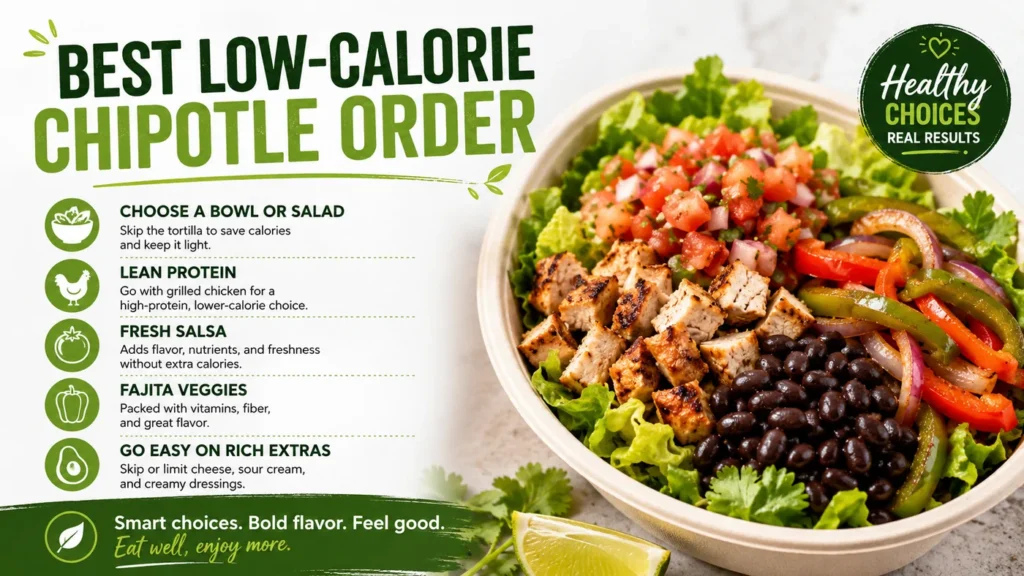
The biggest reason is the tortilla. The burrito flour tortilla is listed at 320 calories, 50 grams of carbohydrates, 600 milligrams of sodium, and 8 grams of protein. That tortilla can be useful for a filling handheld meal, but it also changes the nutrition profile before rice, beans, meat, salsa, or toppings are added.
A bowl is not automatically low calorie, but it makes the ingredient choices easier to see. You can choose light rice, skip rice, add beans, add fajita vegetables, and decide whether guacamole or cheese fits the meal. A burrito can be fine when you want a hearty meal, but a bowl gives more flexibility for calorie control and leftovers.
| Menu Format | Official Calorie Range / Key Note | Nutrition Meaning |
| Burrito Bowl | 420-910 cal | Flexible because it skips the tortilla. |
| Salad | 420-910 cal | Greens base; toppings decide final nutrition. |
| Burrito | 740-1210 cal | More filling because of the flour tortilla. |
| Tacos | 390-1140 cal | Range depends on tortillas and toppings. |
Protein Choices: Chicken, Steak, Barbacoa, Carnitas, Sofritas, and Beans
Protein is the center of most Chipotle meals. According to Chipotle’s nutrition facts, a 4-ounce serving of chicken is listed at 180 calories and 32 grams of protein. Steak is listed at 150 calories and 21 grams of protein, barbacoa at 170 calories and 24 grams of protein, carnitas at 210 calories and 23 grams of protein, and sofritas at 150 calories and 8 grams of protein.
From a protein-focused angle, chicken gives the most protein among the common 4-ounce proteins listed in the standard nutrition chart. Steak and barbacoa can still work well for flavor and protein, while carnitas is richer. Sofritas is helpful for plant-forward meals, but it is lower in protein than chicken, steak, or barbacoa in the listed serving.
Beans deserve attention because they add both fiber and plant protein. Black beans and pinto beans are each listed at 130 calories and 8 grams of protein per 4-ounce serving. Pinto beans are listed with 8 grams of dietary fiber, and black beans with 7 grams, which makes beans useful for satiety and meal balance.
Chipotle has also moved into curated high-protein ordering. Its High Protein Menu newsroom release says the menu includes items such as a Double High Protein Bowl, High Protein-High Fiber Bowl, High Protein-Low Calorie Salad, Double High Protein Burrito, High Protein Cup, and Adobo Chicken Taco. That menu can be useful, but readers should still check total calories, sodium, and toppings before assuming every high-protein option is light.
Protein Choices: Chicken, Steak, Barbacoa, Carnitas, Sofritas, and Beans
Protein is one of the biggest nutrition decisions at Chipotle. Compare calories, protein, sodium, and the quick use-case for each option before building your bowl, burrito, salad, or tacos.
Chicken
Serving size: 4 oz
Quick take: Highest standard protein listed.
Steak
Serving size: 4 oz
Quick take: Lean, bold flavor.
Barbacoa
Serving size: 4 oz
Quick take: Protein-rich but higher sodium.
Carnitas
Serving size: 4 oz
Quick take: Richer pork option.
Sofritas
Serving size: 4 oz
Quick take: Plant-based but lower protein.
Black Beans
Serving size: 4 oz
Quick take: Fiber plus plant protein.
Pinto Beans
Serving size: 4 oz
Quick take: Fiber-rich plant protein.
Source note: Nutrition values are based on Chipotle’s U.S. nutrition facts. Serving sizes are approximations and may vary by order, so use the official Chipotle nutrition facts PDF when exact numbers matter.
Rice, Beans, Vegetables, and Fiber
Rice, beans, and vegetables are the parts of the order that often decide whether a meal feels balanced or heavy. White rice and brown rice are both listed at 210 calories per 4-ounce serving, but brown rice is listed with 36 grams of carbohydrates, 2 grams of fiber, and 190 milligrams of sodium, while white rice is listed with 40 grams of carbohydrates, 1 gram of fiber, and 350 milligrams of sodium.
Beans add more fiber than rice and can help a bowl feel more complete. Fajita vegetables are listed at only 20 calories per 2-ounce serving, with 5 grams of carbohydrates and 1 gram of fiber. They are a smart add-on because they bring volume, flavor, and texture without changing the calorie total as dramatically as chips, queso, or extra cheese.
- Social Security COLA 2026 Explained: What Changed This Year
- Kyle Busch Pneumonia Sepsis: Cause of Death Explained
- Ebola Outbreak 2026: Bundibugyo Virus Explained & Related Topic
For a more filling meal, use one carb base and one fiber source instead of automatically adding everything. Brown rice plus black beans can work for an active person who wants a full bowl. A salad base plus beans and fajita vegetables can work for someone who wants more volume with fewer calories.
Salsas, Cheese, Sour Cream, Guacamole, and Queso
Salsas can make Chipotle meals more flavorful, but they are not all the same nutritionally. Fresh tomato salsa is listed at 25 calories, tomatillo-green chili salsa at 15 calories, tomatillo-red chili salsa at 30 calories, and roasted chili-corn salsa at 80 calories. The more important detail for some readers is sodium, because fresh tomato salsa is listed at 550 milligrams per serving.
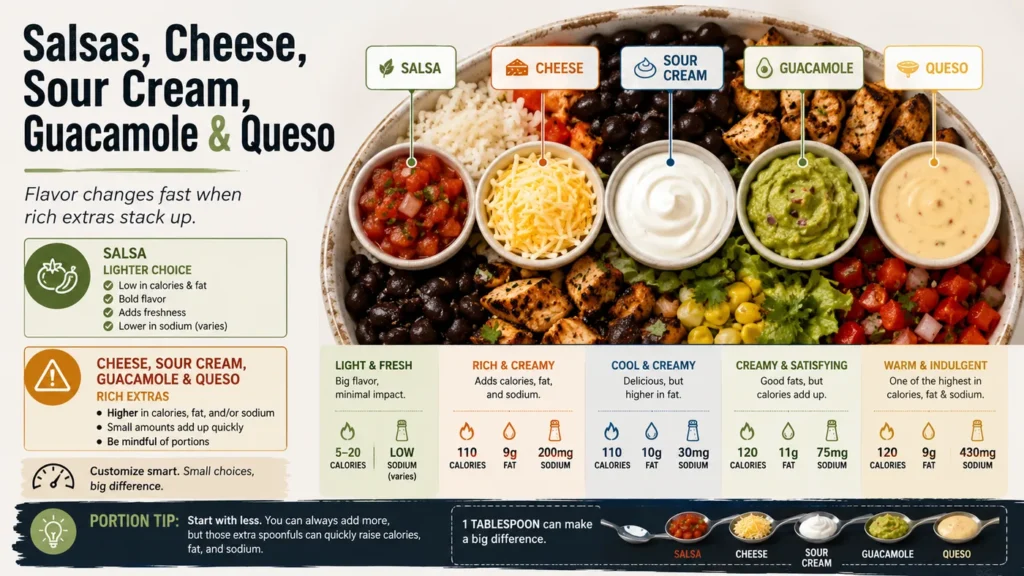
Cheese, sour cream, queso blanco, and guacamole change the meal quickly. The standard nutrition facts list cheese at 110 calories, sour cream at 110 calories, queso blanco entree serving at 120 calories, and guacamole side serving at 230 calories. These can all fit into an order, but adding several of them together can turn a moderate bowl into a much richer meal.
Guacamole is not the same kind of extra as chips or queso because avocado brings unsaturated fat and fiber, but it still adds calories. If satisfaction matters, guacamole may be worth it. If the goal is a lower-calorie lunch, use salsa and fajita vegetables first, then decide whether guacamole is important enough to include.
Chipotle Sodium: The Number Many Readers Miss
Sodium is often the easiest Chipotle nutrition detail to underestimate. Restaurant meals can combine sodium from tortillas, rice, beans, proteins, salsas, cheese, queso, and sides. A burrito with salty protein, rice, salsa, cheese, and chips can move upward quickly even if the ingredients seem fresh.
The FDA sodium guide says the Daily Value for sodium is less than 2,300 milligrams per day. The same FDA guidance says 5% Daily Value or less is considered low and 20% Daily Value or more is considered high for sodium. That makes sodium worth checking when a person is managing blood pressure or trying to keep restaurant meals balanced.
A simple sodium strategy is to avoid stacking several high-sodium choices in one meal. If you choose a flour tortilla, salty salsa, cheese, and chips, consider using fewer salty extras elsewhere. If sodium is a serious medical concern, do not rely on guesswork. Use official numbers and personal medical guidance.
Best Low-Calorie Chipotle Order
A practical low-calorie Chipotle order is a salad or bowl with chicken, fajita vegetables, fresh tomato salsa or tomatillo salsa, lettuce, and either beans or light rice depending on your appetite. The goal is not to make the meal tiny. The goal is to keep protein and vegetables high while limiting extras that add calories quickly.
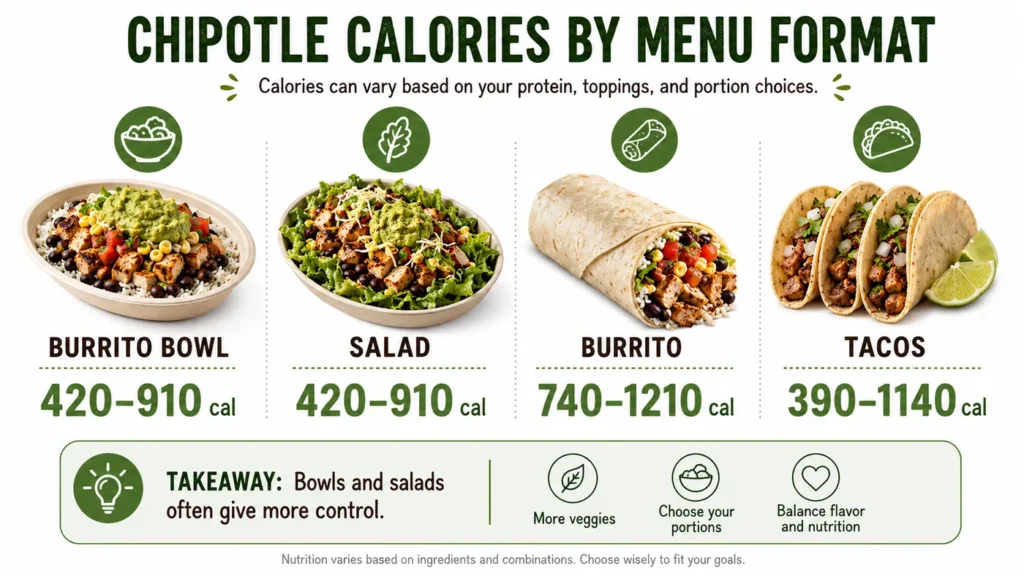
For a lower-calorie bowl, start with lettuce or light rice, add chicken or steak, choose fajita vegetables, and use salsa for flavor. Then decide if one richer topping fits the meal. For example, guacamole can make a bowl more satisfying, but it may be better to skip queso, sour cream, and chips if calories are the main goal.
The biggest low-calorie mistake is ordering a bowl and then adding enough extras to make it heavier than a burrito. Calories often come from combinations, not one single ingredient. Tortilla, extra rice, cheese, sour cream, queso, guacamole, vinaigrette, chips, and sweet drinks can compound quickly.
Best High-Protein Chipotle Order
A practical high-protein Chipotle order is a bowl with double chicken or steak, beans, fajita vegetables, salsa, and lettuce. This build increases protein without automatically requiring a burrito tortilla or chips. Beans help add fiber, while salsa and vegetables keep the meal flavorful and easier to eat.
If you want a curated choice, review Chipotle’s high-protein options and then compare them with your personal goals. The Double High Protein Bowl in Chipotle’s newsroom release is described as 81 grams of protein, 11 grams of fiber, and 760 calories, while the High Protein-Low Calorie Salad is described as 36 grams of protein, 10 grams of fiber, and 470 calories.
High protein does not automatically mean best for everyone. A very high-protein order can be useful after training or for someone with a higher protein target, but it can be too large for a quick lunch. The smarter strategy is to match the meal size to your activity, appetite, and health goals.
Bowl vs Burrito: Nutrition Difference
The bowl versus burrito decision is one of the most important Chipotle nutrition choices. A burrito is portable and satisfying, but the flour tortilla adds calories, carbohydrates, and sodium before anything else is included. A bowl skips that tortilla and gives more visibility over the rice, beans, protein, and toppings.
For many readers, the bowl is the better default when they want nutrition control. You can choose a greens base, reduce rice, add beans, and visually manage toppings. The burrito is better when convenience and fullness matter more than calorie control. Neither is always right; the better choice depends on the meal goal.
A good rule is to choose a bowl for everyday balance and a burrito for a hearty meal. If you do choose a burrito, keep the inside simpler. Use one carb base, one protein, salsa, and lettuce before adding richer toppings.
Vegetarian, Vegan, Gluten-Sensitive, and Allergy Notes
Chipotle can work for many vegetarian customers because beans, rice, fajita vegetables, salsas, cheese, sour cream, queso, guacamole, and sofritas create many combinations. Vegan customers should avoid dairy toppings and check current ingredient details before ordering, especially when limited-time items are available.
For gluten-sensitive customers, Chipotle says people who avoid gluten should not eat the flour tortillas. The allergen page also notes that highly sensitive customers can ask employees to change gloves at the start of the order. However, the same page warns that foods can come into contact during preparation, so people with celiac disease or severe sensitivity should be careful.
The allergy note matters because nutrition is not only about calories and protein. Chipotle says it does not use eggs, mustard, peanuts, tree nuts, sesame, shellfish, or fish as ingredients in its food, but it cannot guarantee the complete absence of those allergens in restaurants. Readers with severe allergies should check official information and speak to restaurant staff before ordering.
How to Use the Chipotle Nutrition Calculator
The Chipotle nutrition calculator is useful because it shows how each ingredient changes the meal. Start with the menu format, add protein, add rice or beans, then test toppings one at a time. This method is better than guessing because the numbers change quickly when multiple extras are added.
For example, build your normal order first and write down the total calories, protein, carbs, fat, fiber, and sodium. Then remove the tortilla, chips, queso, sour cream, or extra rice one at a time. You will quickly see which choices matter most for your personal goal.
Do not use the calculator only to chase the lowest calorie number. A very small order may leave you hungry and lead to extra snacks later. A useful meal should be realistic: enough protein, enough fiber, enough flavor, and a calorie level that fits the day.
Common Chipotle Nutrition Mistakes
The first mistake is treating fresh ingredients as automatically low calorie. Chipotle uses many recognizable ingredients, but a meal can still become large when several calorie-dense toppings and sides are combined. Fresh food and lighter nutrition are related, but they are not the same thing.
The second mistake is ignoring sodium. The FDA Daily Value guide lists sodium at 2,300 milligrams as the Daily Value, and it also explains that 20% Daily Value or more of a nutrient per serving is considered high. This helps readers compare restaurant ingredients more carefully.
The third mistake is ordering for trends instead of goals. A viral bowl may be tasty, but it may not fit your budget, hunger level, sodium needs, or calorie target. The best Chipotle order is the one that you can enjoy and repeat without feeling like the meal worked against your goal.
The fourth mistake is forgetting drinks and sides. Chips, queso, guacamole sides, and sweet drinks can add more calories than expected. If you want a richer entree, keep sides simple. If you want chips, consider making the bowl lighter.
- Healthiest Thing to Eat at Chipotle: Best Orders Explained
- Chipotle Mexican Grill Menu Explained: Best Items to Try
- Social Security Payment Schedule 2026: Dates by Birth Date
Smart Order Examples
For a balanced everyday bowl, try chicken, brown rice, black beans, fajita vegetables, fresh tomato salsa, tomatillo-green salsa, and lettuce. Add guacamole if it helps you feel satisfied, but skip chips if the meal is already filling.
For a lower-calorie salad, try chicken, supergreens or lettuce, fajita vegetables, fresh tomato salsa, tomatillo salsa, and light beans if you want more fiber. Be selective with vinaigrette, cheese, sour cream, and queso because each one changes the meal total.
For a high-protein bowl, use double chicken or steak, black beans, fajita vegetables, salsa, and lettuce. Add rice if you need more carbohydrates for a full meal. Skip or limit chips if the purpose is protein rather than a large comfort-food order.
For a vegetarian bowl, use sofritas or beans, brown rice, fajita vegetables, salsa, lettuce, and guacamole. If you eat dairy, cheese or sour cream can add flavor. If you avoid dairy, use salsa and guacamole to keep the meal satisfying.
A final healthy-eating note: the current Dietary Guidelines emphasize whole, nutrient-dense foods while limiting foods high in added sugars, saturated fat, and sodium. Chipotle can fit that direction when the order is built around protein, beans, vegetables, salsa, and reasonable portions.
| Goal | Suggested Build | Why It Works |
| Balanced bowl | Chicken, brown rice, black beans, fajita vegetables, salsa, lettuce | Protein, fiber, vegetables, and flavor. |
| Lower-calorie salad | Chicken, greens, fajita vegetables, salsa, light beans | Skips tortilla and controls heavy extras. |
| High-protein bowl | Double chicken or steak, beans, fajita vegetables, salsa, lettuce | Raises protein while keeping format flexible. |
| Vegetarian bowl | Sofritas or beans, brown rice, fajita vegetables, salsa, guacamole | Plant-forward and filling. |
Conclusion
Chipotle nutrition is flexible because the menu works like a build-your-own system. The same restaurant can produce a lighter salad, a balanced bowl, a high-protein meal, a vegetarian bowl, or a very large burrito. The difference comes from the base, protein, beans, rice, toppings, sides, drinks, and portion choices.
For most readers, the best default strategy is simple: choose a bowl or salad, start with chicken, steak, beans, or sofritas, add fajita vegetables and salsa, use rice and beans based on your hunger, and add richer toppings intentionally. If exact numbers matter, confirm them with official Chipotle tools before ordering.
A smart Chipotle order does not have to be boring. It only needs to match your goal. For fewer calories, control the tortilla, rice, chips, queso, cheese, sour cream, and vinaigrette. For more protein, prioritize chicken, steak, barbacoa, beans, or double protein. For better balance, build around protein, fiber, vegetables, and flavor first.
Clean Source List Used –
- Chipotle official menu / order page: https://www.chipotle.com/home — Current menu categories, formats, and order page reference.
- Chipotle official nutrition calculator: https://www.chipotle.com/nutrition-calculator — Meal builder for calories, carbs, protein, fat, fiber, and sodium.
- Chipotle U.S. nutrition facts PDF: https://www.chipotle.com/content/dam/chipotle/menu/nutrition/US-Nutrition-Facts-Paper-Menu-3-2025.pdf — Ingredient-level calories, protein, carbs, sodium, and menu format calorie ranges.
- Chipotle allergens and special diet page: https://www.chipotle.com/allergens — Gluten, allergy, cross-contact, and special diet notes.
- Chipotle ingredients page: https://www.chipotle.com/ingredients — Ingredient reference for menu components.
- Chipotle High Protein Menu: https://www.chipotle.com/high-protein-meals — Current high-protein menu reference.
- Chipotle High Protein Menu newsroom release: https://newsroom.chipotle.com/2025-12-18-CHIPOTLE-UNVEILS-ITS-FIRST-EVER-HIGH-PROTEIN-MENU-FEATURING-A-NEW-SNACK-READY-HIGH-PROTEIN-CUP — Official launch details and high-protein item numbers.
- FDA sodium guide: https://www.fda.gov/food/nutrition-education-resources-materials/sodium-your-diet — Daily Value and high/low sodium guidance.
- FDA Daily Value guide: https://www.fda.gov/food/nutrition-facts-label/daily-value-nutrition-and-supplement-facts-labels — Daily Values and %DV interpretation.
- Dietary Guidelines current page: https://www.dietaryguidelines.gov/ — Current federal dietary guidance reference.
- CDC sodium and salt overview: https://www.cdc.gov/salt/about/index.html — General sodium context and public health background.
FAQs –
1. Is Chipotle healthy?
Chipotle can be healthy depending on how you build the meal. A bowl or salad with protein, beans, fajita vegetables, salsa, and lettuce can be balanced, while a burrito with several rich toppings, chips, queso, and a sweet drink can become a much larger meal.
2. What is the lowest-calorie thing to order at Chipotle?
A lower-calorie Chipotle order is usually a salad or bowl with lean protein, fajita vegetables, salsa, lettuce, and limited rich toppings. The exact calories depend on the protein, rice, beans, cheese, sour cream, queso, guacamole, and sides you choose.
3. Which Chipotle protein has the most protein?
In Chipotle’s standard nutrition facts, chicken is listed at 32 grams of protein per 4-ounce serving, which is higher than the other standard 4-ounce protein options listed in the nutrition chart.
4. Is a Chipotle bowl healthier than a burrito?
A Chipotle bowl is often easier to make lighter because it skips the flour tortilla and lets you see and control each ingredient. A burrito can still fit your diet, but the tortilla adds calories, carbohydrates, and sodium before fillings are added.
5. How can I lower sodium at Chipotle?
To lower sodium at Chipotle, avoid stacking several high-sodium ingredients in the same meal. Use the nutrition calculator, be careful with tortillas, salsas, cheese, queso, chips, and rich toppings, and follow medical guidance if you need a low-sodium diet.
6. How should I check Chipotle nutrition before ordering?
Use Chipotle’s official nutrition calculator to build your exact meal and review calories, protein, carbs, fat, fiber, and sodium. The official U.S. nutrition facts PDF is also useful for ingredient-level numbers.
- Guzman y Gomez vs Chipotle: Menu, Taste, and Value Compared
- Chipotle Bowl vs Burrito: Which One Is Healthier?
- Chipotle Nutrition Guide: Calories, Protein & Smart Orders
- Healthiest Thing to Eat at Chipotle: Best Orders Explained
- Chipotle Mexican Grill Menu Explained: Best Items to Try
- Kyle Busch Pneumonia Sepsis: Cause of Death Explained
- Why Are Social Security Checks Late in May 2026? (The Real Truth)
- Ebola Outbreak 2026: Bundibugyo Virus Explained & Related Topic
- Robert Redfield: Biography, CDC Role, COVID-19 Legacy
3 thoughts on “Chipotle Nutrition Guide: Calories, Protein & Smart Orders”