
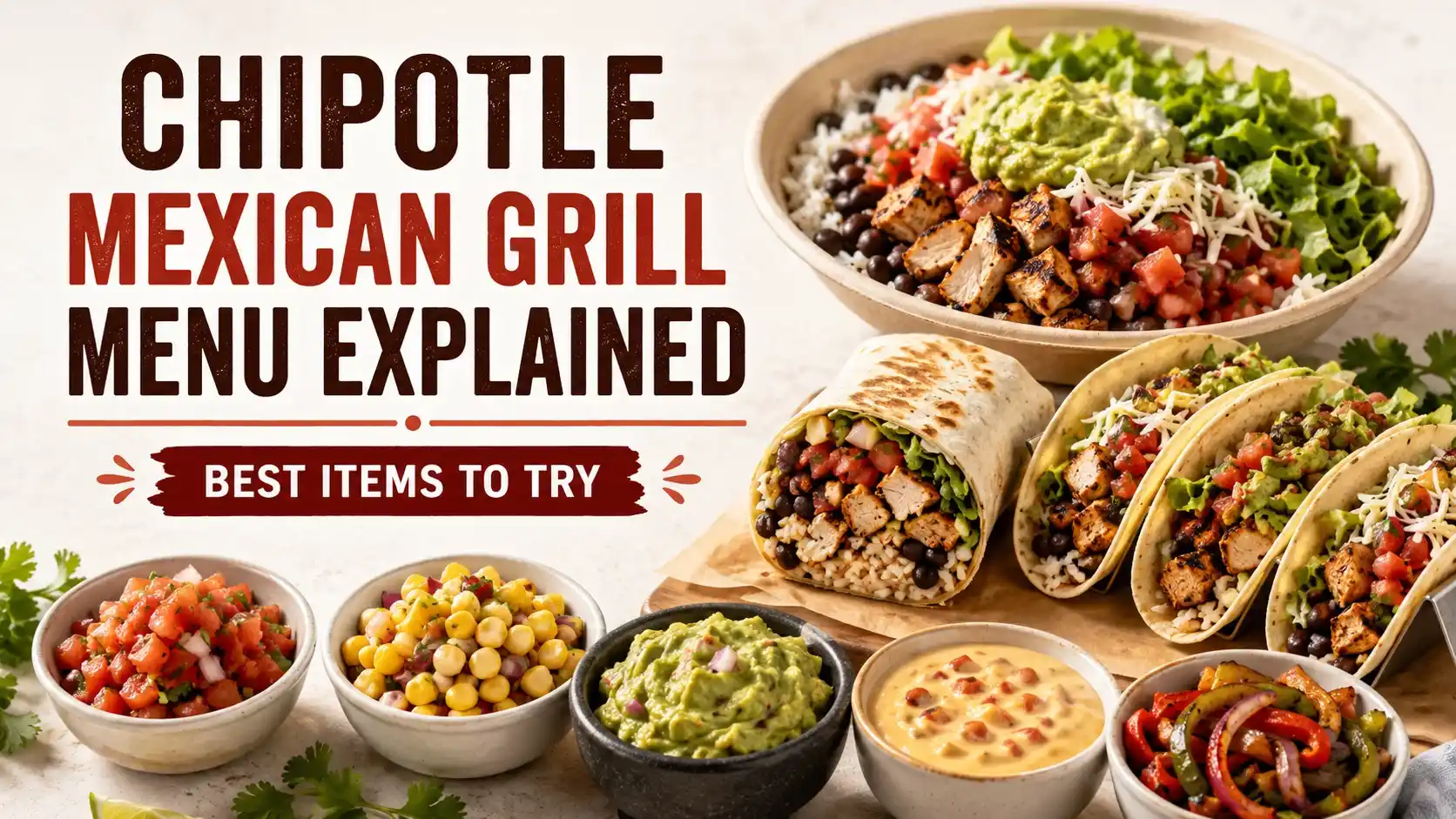
The Chipotle Mexican Grill menu is built around customizable meals, which means you choose a format first and then build your order with proteins, rice, beans, salsa, toppings, and sides. The most common choices are burritos, burrito bowls, tacos, and salads. A burrito is best for a filling handheld meal, while a bowl is usually the most flexible option because it is easier to customize and adjust for calories, protein, or lighter eating goals. Popular protein choices include chicken, steak, barbacoa, carnitas, sofritas, beans, and limited-time proteins when available. Chipotle also offers vegetarian options, high-protein meal ideas, catering, rewards, and online ordering. The smartest way to order is to choose your goal first—taste, value, protein, lighter eating, or convenience—and then use the official nutrition and allergen information before placing your order.
- Introduction
- What Is on the Chipotle Mexican Grill Menu?
- Chipotle Burrito Explained
- Chipotle Bowl Explained
- Chipotle Tacos and Salad Explained
- Proteins, Rice, Beans, and Toppings
- Best Chipotle Orders to Try
- How to Build Your First Chipotle Order Step by Step
- How to Customize Chipotle for Different Goals
- Healthier Chipotle Menu Choices
- High-Protein Chipotle Options
- Vegetarian and Special Diet Notes
- Limited-Time Menu Items in 2026
- Catering, Group Orders, Rewards, and App Ordering
- Common Ordering Mistakes
- Clean Source List Used –
- Conclusion
- FAQs –
Introduction
The Chipotle Mexican Grill menu is popular because it is simple on the surface but highly customizable once you start ordering. A guest can build a burrito, burrito bowl, tacos, salad, quesadilla, kids meal, or a side-focused order with different proteins, rice, beans, salsas, vegetables, and toppings.
The best way to understand the menu is not to memorize every combination. It is to understand the building blocks: choose your meal style, pick a protein, add rice or beans, choose salsa, decide on toppings, and check Chipotle nutrition if calories, protein, carbs, or sodium matter to you.
This guide explains the Chipotle Mexican Grill menu in a practical way for U.S. readers. You will learn what each menu category means, which orders are beginner-friendly, how to build a healthier meal, what high-protein options to consider, and what mistakes to avoid before you order.
This structure is why two people can both order from Chipotle and get very different meals. One person may build a light salad with chicken and salsa, while another may choose a large burrito with rice, beans, sour cream, cheese, guacamole, and chips on the side.
Chipotle Burrito Explained
A Chipotle burrito is the classic handheld option. It starts with a large flour tortilla and can be filled with rice, beans, protein, salsa, cheese, sour cream, lettuce, and other toppings. It is usually the most filling choice because the tortilla adds extra calories and carbohydrates.
According to Chipotle’s U.S. nutrition PDF, a burrito can range widely depending on ingredients, and the flour tortilla alone adds a meaningful portion of calories and carbs. That does not make a burrito bad; it simply means the burrito is best for people who want a hearty meal rather than the lightest order.
A beginner-friendly burrito could be chicken, brown rice, black beans, fresh tomato salsa, roasted chili-corn salsa, cheese, and lettuce. If you want it lighter, skip either rice or cheese. If you want it more filling, add guacamole or double protein.
Chipotle Bowl Explained
A Chipotle bowl is one of the easiest menu items to customize. It has the same general ingredients as a burrito but without the flour tortilla. That makes it easier to control the meal size, adjust carbs, and separate ingredients if you want leftovers.
For many people, the bowl is the best all-around order because it works for high-protein meals, vegetarian meals, lower-carb meals, and balanced lunches. You can start with rice or greens, add chicken or steak, choose beans, and then add salsa and vegetables.
A simple balanced bowl could include chicken, brown rice, black beans, fajita vegetables, fresh tomato salsa, tomatillo-green chili salsa, and lettuce. For a richer bowl, add cheese or guacamole. For a lighter bowl, skip cheese, sour cream, queso, and chips.
- Antarctica From Space: 5 Climate Signals to Watch
- Ebola Outbreak 2026: Bundibugyo Virus Explained & Related Topic
- Robert Redfield: Biography, CDC Role, COVID-19 Legacy
Chipotle Tacos and Salad Explained
Chipotle tacos are useful when you want variety or a smaller portion. Guests can choose crispy corn or soft flour tortillas and add protein, salsa, cheese, sour cream, and lettuce. Tacos may be easier to share or customize individually than one large burrito.
The salad option is built around greens and can be a smart choice for people who want a lighter base. Chipotle’s nutrition PDF describes the salad as chopped romaine, baby kale, and baby spinach with a choice of beans, meat, salsa, cheese, and chipotle-honey vinaigrette.
The important detail is that a salad can become light or heavy depending on toppings. Chicken, beans, salsa, and fajita vegetables can make it balanced. Queso, sour cream, cheese, vinaigrette, chips, and guacamole can add flavor but also increase calories, fat, and sodium.
Proteins, Rice, Beans, and Toppings
Protein is usually the decision that shapes the rest of the order. Chipotle commonly offers chicken, steak, barbacoa, carnitas, sofritas, and beans, with limited-time proteins appearing during certain promotions. If you want the most flexible option, chicken is often the easiest starting point.
Chipotle’s nutrition details list chicken at 32 grams of protein per 4-ounce serving, while steak, barbacoa, carnitas, beans, and sofritas each bring different calorie, fat, sodium, and protein profiles. The official nutrition information is the safest source if exact numbers matter.
Rice and beans add bulk and texture. White rice and brown rice both add carbohydrates; black beans and pinto beans add fiber and plant-based protein. Fajita vegetables, fresh tomato salsa, tomatillo salsas, and lettuce can add volume without making the meal feel too heavy.
Toppings are where many orders change quickly. Cheese, sour cream, queso blanco, guacamole, and chipotle-honey vinaigrette can all make a meal more satisfying, but they can also raise calories, fat, and sodium. The best order is the one that fits your actual goal, not just the trendiest combination.
Quick Menu Format Comparison
| Menu Format | Best For | Why It Works |
| Burrito | Hearty handheld meal | Filling, classic, portable |
| Burrito Bowl | Most flexible everyday order | Easy to customize, no tortilla |
| Tacos | Smaller portions or variety | Good for lighter orders |
| Salad | Lighter greens-based meal | Best when toppings are controlled |
| Quesadilla | Cheese-forward digital-style order | More indulgent, less flexible than bowls |
Best Chipotle Orders to Try
If you are new to the Chipotle menu, the safest first order is a chicken burrito bowl. It is easy to understand, easy to customize, and balanced enough for most tastes. Start with chicken, rice, beans, salsa, fajita vegetables, and lettuce, then decide whether you want cheese, sour cream, guacamole, or queso.
For a more filling order, try a burrito with chicken or steak, rice, beans, roasted chili-corn salsa, cheese, and lettuce. For a lighter order, choose a salad or bowl with chicken, fajita vegetables, salsa, and lettuce, and add beans if you want more fiber.
For a vegetarian order, build a bowl with sofritas or beans, brown rice, fajita vegetables, salsa, corn salsa, lettuce, and guacamole. For a simple kid-friendly style order, tacos or a quesadilla may be easier than a fully loaded burrito.
The best Chipotle order is not the same for everyone. A gym-focused customer may want double protein. A busy office worker may want a bowl that reheats well. A lighter eater may prefer tacos or a salad. A flavor-first customer may choose queso, guacamole, and hotter salsa.
Best Chipotle Order Ideas
Use these simple Chipotle meal ideas as starting points, then adjust protein, toppings, salsa, and sides based on your taste, budget, and nutrition goals.
Beginner Bowl
Chicken, rice, black beans, salsa, fajita veggies, and lettuce.
Best for: Balanced and easy to customize.
High-Protein Bowl
Double chicken or steak, beans, fajita veggies, and salsa.
Best for: More protein without needing a burrito tortilla.
Vegetarian Bowl
Sofritas or beans, rice, fajita veggies, salsa, and guacamole.
Best for: Plant-forward and filling meals.
Lighter Salad
Chicken, greens, fajita veggies, fresh salsa, and tomatillo salsa.
Best for: A lighter order with less heaviness.
Flavor-First Burrito
Steak or barbacoa, rice, beans, queso, salsa, and cheese.
Best for: Bold and filling flavor-focused orders.
Tip: Start with one order idea, then change only one or two ingredients next time. That makes it easier to find your favorite Chipotle order without overloading the meal.
How to Build Your First Chipotle Order Step by Step
If you are ordering Chipotle for the first time, start with a bowl because it is the easiest format to understand. Choose white rice or brown rice, pick black beans or pinto beans, add a protein, choose one or two salsas, then decide whether you want cheese, sour cream, guacamole, queso, or lettuce.
A simple first order is chicken, brown rice, black beans, fajita vegetables, fresh tomato salsa, cheese, and lettuce. It gives you protein, fiber, vegetables, and flavor without making the order too complicated. After that, you can adjust one ingredient at a time on future visits.
If you like spicy food, add tomatillo-red chili salsa or tomatillo-green chili salsa. If you prefer mild flavor, use fresh tomato salsa and roasted chili-corn salsa. If you want a creamier meal, add sour cream or queso; if you want richer texture, add guacamole.
The best strategy is to build from the center outward. First choose the meal format, then protein, then the base, then flavor toppings, then rich toppings. This keeps the order controlled and helps you avoid paying for extras you do not actually need.
Another helpful habit is to save one favorite order in the app and keep one backup order for days when your preferred protein or limited-time item is unavailable. That makes repeat ordering faster while still giving you enough flexibility to try new ingredients.
How to Customize Chipotle for Different Goals
For a budget-focused order, avoid unnecessary extras and choose filling basics like rice, beans, salsa, and a standard protein. Guacamole, queso, double protein, bottled drinks, chips, and delivery fees can raise the final cost quickly, so decide which upgrade matters most before adding everything.
For a high-protein order, start with chicken, steak, barbacoa, or double protein, then add beans for extra plant protein and fiber. Keep the base simple and use salsa, lettuce, and fajita vegetables for flavor and volume before choosing richer toppings.
For a lighter lunch, use a salad or bowl base, choose chicken or sofritas, add fajita vegetables and fresh salsa, and be selective with cheese, sour cream, queso, vinaigrette, and chips. This approach keeps the meal satisfying without turning it into a heavy dinner-sized order, especially during a quick workday lunch.
For a comfort-food order, a burrito with steak or barbacoa, rice, beans, queso, cheese, and salsa can be satisfying. The point is not that one order is always better than another. The point is to know whether you are ordering for taste, value, protein, calories, convenience, or a quick meal that still feels fresh.
Healthier Chipotle Menu Choices
A healthier Chipotle order depends on what healthy means for you. Some readers want fewer calories, some want more protein, some want more fiber, and others want fewer refined carbs. Chipotle’s advantage is that you can change the meal without leaving the menu.
If calories are your main concern, choose a bowl or salad instead of a burrito, use one carb base instead of both rice and chips, and treat queso, sour cream, cheese, guacamole, and vinaigrette as optional add-ons. If protein is your goal, start with chicken, steak, barbacoa, or double protein.
The official nutrition calculator is useful because every topping changes the numbers. For example, the same bowl can be moderate or very calorie-dense depending on whether you add guacamole, queso, sour cream, cheese, extra rice, chips, or vinaigrette.
A practical healthy order might be chicken, brown rice, black beans, fajita vegetables, fresh tomato salsa, tomatillo-green chili salsa, and lettuce. If you want healthy fats and more satisfaction, add guacamole; if you are watching calories, use it thoughtfully.
High-Protein Chipotle Options
Chipotle is a strong fast-casual option for protein-focused customers because bowls, burritos, salads, and tacos can be built around chicken, steak, barbacoa, carnitas, beans, or sofritas. The easiest protein boost is simply asking for double protein.
Chipotle also launched a dedicated High Protein Menu in the U.S. and Canada, with items ranging from a single high-protein taco to larger bowls and burritos. Its newsroom release said the menu includes options such as a Double High Protein Bowl, High Protein-High Fiber Bowl, High Protein-Low Calorie Salad, and High Protein Cup.
On Chipotle’s own High Protein Menu, the brand explains that chicken, steak, barbacoa, carnitas, extra protein add-ons, black beans, and pinto beans can help guests build higher-protein meals. This is useful for people who want a quick meal without guessing every ingredient.
The main caution is balance. A high-protein order can still become heavy if you add every rich topping and a side of chips. If you want protein without going overboard, choose double chicken or steak, beans, fajita vegetables, salsa, and lettuce before deciding on cheese or guacamole.
Protein Options at a Glance
| Protein / Base | Menu Role | Best Use |
| Chicken | Lean, popular, easy to pair | Good first choice for most bowls |
| Steak | Bold flavor, protein-rich | Good for burritos or bowls |
| Barbacoa | Tender, savory, slightly richer | Best for bold flavor |
| Carnitas | Rich pork option | Good when flavor matters more than lightness |
| Sofritas | Plant-based tofu option | Best for vegetarian bowls |
| Beans | Fiber plus plant protein | Useful in almost any order |
Vegetarian and Special Diet Notes
Chipotle can work for many vegetarian customers because beans, rice, fajita vegetables, salsas, guacamole, queso, cheese, sour cream, and sofritas create many combinations. A simple vegetarian bowl can be filling without feeling like a side dish.
Vegan customers generally need to avoid cheese, sour cream, queso, and vinaigrette and should check current ingredient guidance before ordering. Sofritas, beans, rice, fajita vegetables, salsas, lettuce, and guacamole are common plant-forward building blocks, but availability can vary by location.
Allergen-sensitive readers should be more careful. Chipotle says it does not use eggs, mustard, peanuts, tree nuts, sesame, shellfish, or fish as ingredients, but its allergen information also warns that individual foods may come into contact during preparation and complete absence of allergens cannot be guaranteed.
If you have a food allergy, tell the restaurant before ordering and check the latest official allergen page. This article is not medical advice, and people with severe allergies should rely on official allergen information and their own healthcare guidance.
Limited-Time Menu Items in 2026
Limited-time items help keep Chipotle’s menu fresh. In 2026, one major example is Chipotle Honey Chicken, which returned for summer after becoming a very successful limited-time protein. Chipotle described it as freshly grilled chicken marinated with chipotle peppers and a touch of honey.
Chipotle’s newsroom said Chipotle Honey Chicken returned on April 28, 2026, and noted that it had become the company’s best-performing limited-time offering after its 2025 debut. That makes it a good example of how a menu item can become a seasonal traffic driver.
Chicken al Pastor is another limited-time item that has returned to the menu. Chipotle announced its 2026 return and said it planned multiple limited-time proteins during the year, plus new sides and dips. That means the menu can change even when the core formats stay the same.
For evergreen ordering advice, treat limited-time items as optional upgrades rather than the foundation of the whole menu. If a protein is available, try it in a bowl first so you can taste it with rice, beans, salsa, and vegetables before committing to a larger burrito.
Catering, Group Orders, Rewards, and App Ordering
Chipotle is not only a walk-in lunch option. The official site promotes catering for groups from 6 to 200 people, with options such as build-your-own meals, burritos by the box, and chips and salsa. Catering usually requires advance planning, so check availability before an event.
Group orders are different from catering. Chipotle’s site describes group ordering as a way to order up to 15 meals with normal menu pricing, full menu access, personalized meals, organizer payment, and same-day eating. This can work well for offices, small teams, or family meals.
The Chipotle Rewards program can also matter if you order often. Chipotle says rewards members can earn points on orders and redeem points for menu items or other rewards. Promotions can change, so check the app or official rewards page before assuming a specific offer is available.
App ordering is useful because it gives you time to build the meal carefully. Instead of rushing at the counter, you can compare ingredients, avoid accidental extras, check nutrition, and save favorite orders. That is especially helpful for repeat customers who want consistent meals.
- Social Security Payment Schedule 2026: Dates by Birth Date
- Social Security COLA 2026 Explained: What Changed This Year
- Kyle Busch Pneumonia Sepsis: Cause of Death Explained
- Why Are Social Security Checks Late in May 2026? (The Real Truth)
Common Ordering Mistakes
The first mistake is assuming every Chipotle order is automatically light. Fresh ingredients do not automatically mean low calorie. A burrito with rice, beans, meat, cheese, sour cream, guacamole, queso, and chips can be a very large meal.
The second mistake is forgetting that portions and toppings compound. One topping may not change much, but several rich toppings together can significantly change the meal. Use the nutrition calculator if you are trying to stay within a target.
The third mistake is ignoring sodium. Many restaurant meals can be higher in sodium than people expect. If sodium matters for your diet, review official nutrition numbers and consider choosing fewer high-sodium toppings.
The fourth mistake is assuming all locations, prices, and limited-time proteins are identical. Chipotle says menu offerings can vary by location, and pricing can vary as well. Always check your local restaurant or the app before publishing a final meal plan.
The fifth mistake is ordering only for trend value. A viral order may look good online, but it may not fit your budget, appetite, or nutrition goals. The best Chipotle order is the one you would actually enjoy and feel good about after eating, paying for, and repeating later.
Clean Source List Used –
- Chipotle official menu / order page
- Chipotle official nutrition calculator
- Chipotle official allergen and special diet page
- Chipotle official high-protein meals page
- Chipotle high-protein menu newsroom release
- Chipotle Honey Chicken 2026 newsroom release
- Chipotle Chicken al Pastor 2026 newsroom release
- Chipotle Rewards page
- Chipotle Catering page
- Chipotle U.S. nutrition facts PDF
Conclusion
The Chipotle Mexican Grill menu is easiest to understand when you see it as a flexible building system. You choose the format, pick a protein, add rice or beans, choose salsa, decide on toppings, and adjust the meal for taste, budget, nutrition, convenience, or simple weeknight planning.
For beginners, the best starting point is usually a burrito bowl because it is flexible, easier to customize, and easier to make lighter or higher in protein. Burritos are best when you want a hearty handheld meal, tacos work for smaller portions, and salads are helpful when you want a greens-based base.
Before ordering, check your local menu, use official nutrition tools if numbers matter, review allergen information if needed, and remember that limited-time items can change. Chipotle’s menu is simple enough for a quick lunch, but customizable enough to become a regular meal strategy if you order thoughtfully.
FAQs –
What is the most popular item on the Chipotle Mexican Grill menu?
The burrito bowl is one of the most practical and popular choices because it offers the same core ingredients as a burrito without the flour tortilla. It is easy to customize for protein, calories, toppings, and leftovers.
Is a Chipotle bowl healthier than a burrito?
A Chipotle bowl can be healthier for some people because it skips the flour tortilla and makes portions easier to control. However, the final nutrition depends on the protein, rice, beans, toppings, sauces, and sides you choose.
What is the best high-protein order at Chipotle?
A high-protein bowl with chicken or steak, beans, fajita vegetables, salsa, and lettuce is a strong starting point. People who need more protein can choose double protein or use Chipotle’s official high-protein menu options when available.
Does Chipotle have vegetarian options?
Yes. Vegetarian customers can build meals with beans, rice, fajita vegetables, salsas, guacamole, queso, cheese, sour cream, and sofritas. Vegan customers should avoid dairy toppings and check current ingredient details before ordering.
How can I check Chipotle nutrition before ordering?
Use Chipotle’s official nutrition calculator to build your meal and review calories, carbs, protein, fat, and other nutrition details. Exact values can vary based on portions and preparation.
Are Chipotle prices the same at every location?
No. Prices can vary by location, delivery method, taxes, promotions, and limited-time items. Always check your local restaurant, Chipotle app, or official online order page before ordering.
2 thoughts on “Chipotle Mexican Grill Menu Explained: Best Items to Try”