

The short answer is simple: the 2026 Social Security COLA is 2.8%, and it is automatic for eligible beneficiaries. It is not a separate bonus check, not a stimulus payment, and not something you need to activate through a caller, email, or text message.
The real amount you receive depends on your previous benefit and deductions. A person may see a higher gross benefit but a smaller net increase if Medicare premiums, tax withholding, overpayment recovery, or other deductions also changed.
- Introduction
- What Is Social Security COLA 2026?
- What Changed in 2026?
- How Much Is the 2026 COLA Increase?
- What 2.8% Means for Monthly Benefits
- When Did the 2026 Increase Start?
- Who Gets the 2026 Social Security COLA?
- How Is COLA Calculated?
- How Medicare Part B Can Change the Final Amount
- Social Security Payment Schedule in 2026
- What Beneficiaries Should Check
- Common Mistakes and Scam Warnings
- Smart Planning Tips for 2026
- How to Read Your 2026 COLA Notice
- What the 2026 COLA Does Not Change
- Conclusion
- FAQs –
- Clean Official Source List
Introduction
The Social Security COLA 2026 is a 2.8% cost-of-living adjustment that raises monthly benefits for eligible Social Security and Supplemental Security Income recipients. For retirees, disabled workers, survivors, and low-income beneficiaries, this yearly update can affect rent, groceries, insurance, medicine, and day-to-day household planning.
The Social Security Administration says Social Security and SSI benefits for about 75 million Americans increased by 2.8% in 2026. Social Security beneficiaries started seeing the increase with January 2026 benefits, while increased SSI payments began on December 31, 2025.
This guide explains what changed, who gets the increase, how the COLA is calculated, how Medicare can reduce the final deposit, and what beneficiaries should check before budgeting around the new amount. It is written for regular readers, not financial professionals.
What Is Social Security COLA 2026?
A cost-of-living adjustment is an annual increase designed to help Social Security and SSI benefits keep pace with inflation. Congress created automatic COLAs so benefit purchasing power would not depend on occasional special legislation.
For 2026, the official adjustment is 2.8%. That percentage is applied to eligible benefits before deductions, so the exact dollar amount is different for every person depending on their existing benefit level.
The COLA does not change the basic rules of Social Security eligibility. It increases eligible benefit amounts, but it does not create new eligibility, change retirement age rules, or replace the normal benefit calculation process.
What Changed in 2026?
The biggest change is the 2.8% benefit increase. According to SSA, nearly 71 million Social Security beneficiaries were scheduled to receive the increase beginning in January 2026, and nearly 7.5 million SSI recipients began receiving increased payments on December 31, 2025.
Several other Social Security figures also changed for 2026. The maximum amount of earnings subject to Social Security tax increased to $184,500, and the quarter of coverage amount increased to $1,890.
The 2026 fact sheet also lists updated earnings test limits, disability thresholds, SSI federal payment standards, and average monthly benefit estimates. These details matter for workers, retirees, disabled beneficiaries, and people receiving SSI.
How Much Is the 2026 COLA Increase?
The 2026 COLA increase is 2.8%. In practical terms, a $1,000 monthly benefit would rise by about $28 before deductions, while a $2,000 benefit would rise by about $56 before deductions.
A higher monthly benefit usually creates a larger dollar increase, even though the percentage is the same. That is why two beneficiaries can both receive the same 2.8% COLA but see very different dollar changes.

SSA’s own estimates show the average retired worker benefit moving from $2,015 before the COLA to $2,071 after the COLA for January 2026. That estimate is useful, but your personal amount can be higher or lower.
- Robert Redfield: Biography, CDC Role, COVID-19 Legacy
- Types of Yoga: 30 Powerful Styles Explained
- What is Cloud Storage ? 7 Best Basics
- Are AI voices safe for YouTube monetization
What 2.8% Means for Monthly Benefits
The easiest way to estimate the increase is to multiply your previous gross monthly benefit by 0.028. This gives an approximate gross increase before Medicare premiums, tax withholding, repayment deductions, or other adjustments.
For example, a $1,500 benefit multiplied by 0.028 equals about $42. If the person also pays a higher Medicare Part B premium, the final monthly deposit may rise by less than $42.
These examples should not replace your official notice. The safest way to confirm your exact 2026 amount is to review your COLA notice or sign in to your my Social Security account.
| Previous Monthly Benefit | 2.8% Increase | Estimated New Benefit Before Deductions |
| $1,000 | $28 | $1,028 |
| $1,500 | $42 | $1,542 |
| $2,000 | $56 | $2,056 |
| $2,500 | $70 | $2,570 |
When Did the 2026 Increase Start?
For Social Security beneficiaries, the 2026 COLA began with benefits payable in January 2026. For SSI recipients, increased payments began on December 31, 2025 because of federal payment timing around the New Year holiday.
If your first 2026 deposit did not look much higher, do not assume the COLA was missing. First compare the gross amount, Medicare deduction, tax withholding, and any other deduction that may have changed at the same time.
Who Gets the 2026 Social Security COLA?
The COLA generally applies to eligible people receiving Social Security retirement, disability, survivor, and SSI benefits. It can also affect certain related amounts and thresholds that are updated in the official 2026 Social Security fact sheet.
Some households receive more than one type of benefit, such as Social Security and SSI. In those cases, payment timing, total monthly support, and deductions can be more complicated, so official notices matter even more.
People do not all receive the same dollar increase because starting benefits are not identical. Benefits can depend on earnings history, claiming age, disability status, survivor status, household eligibility, and other program rules.
How Is COLA Calculated?
Social Security COLA is tied to inflation data. SSA uses the Consumer Price Index for Urban Wage Earners and Clerical Workers, commonly called CPI-W, to decide whether benefits should increase for the next year.
For the 2026 COLA, SSA says the increase was based on the rise in CPI-W from the third quarter of 2024 through the third quarter of 2025. The result was the official 2.8% rate.
This formula is meant to protect purchasing power at a national level, but it cannot perfectly match every household’s actual expenses. Rent, groceries, utilities, transportation, insurance, and medical costs can rise differently by location.
How Medicare Part B Can Change the Final Amount
Medicare matters because many retirees have their Medicare Part B premium deducted from Social Security. If the premium rises in the same year as the COLA, the gross benefit increase and the actual bank deposit may not match.
For 2026, CMS says the standard Medicare Part B monthly premium is $202.90, up from $185.00 in 2025. The annual Part B deductible is $283, up from $257 in 2025.
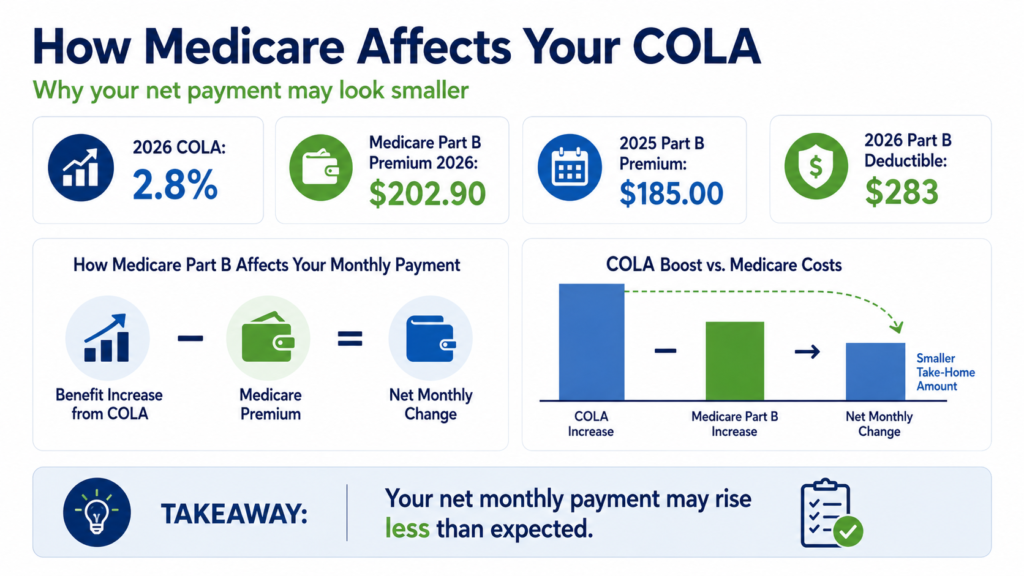
If someone’s gross Social Security benefit increased by $56 but their Part B premium rose by $17.90, the net increase could be closer to $38.10 before other deductions. This is why the net payment matters more than the headline COLA.
Some higher-income Medicare beneficiaries also pay an Income-Related Monthly Adjustment Amount, known as IRMAA. That extra amount can apply to Part B and Part D premiums and can further reduce the practical effect of a COLA increase.
Social Security Payment Schedule in 2026
Most Social Security payment dates depend on a beneficiary’s birth date. People who began receiving Social Security after May 1997 generally receive benefits on the second, third, or fourth Wednesday of the month.
The general rule is easy to remember: birthdays from the 1st through 10th are paid on the second Wednesday, birthdays from the 11th through 20th are paid on the third Wednesday, and birthdays from the 21st through 31st are paid on the fourth Wednesday.
Different rules may apply if you received Social Security before May 1997 or if you receive both Social Security and SSI. In those cases, Social Security is generally paid on the 3rd and SSI on the 1st.
What Beneficiaries Should Check
First, review your official COLA notice. Compare the old gross benefit, new gross benefit, Medicare deduction, tax withholding, and final net payment so you understand exactly what changed.
Second, make sure your bank information and mailing address are current. Direct deposit errors, outdated mailing information, or missed notices can create stress even when the benefit calculation itself is correct.
Third, if you receive SSI, check how income, resources, living arrangements, and any state supplement may affect your total support. SSI rules can be more sensitive to household and financial changes.
Finally, build your budget around the net amount you actually receive. The COLA can help, but food, rent, utilities, medical care, transportation, and insurance can absorb the increase quickly.
Common Mistakes and Scam Warnings
One common mistake is thinking the Social Security COLA 2026 is a stimulus check. It is not a separate payment; it is a percentage increase applied to eligible monthly benefits.
Another mistake is assuming every beneficiary gets the same dollar amount. The percentage increase is the same, but the dollar increase varies because each person’s starting benefit can be different.
A third mistake is trusting random calls, emails, or texts about activating benefits. SSA warns people to avoid sharing personal information or paying fees to receive government benefits.
Smart Planning Tips for 2026
A helpful first step is to compare your 2025 and 2026 benefit amounts side by side. Then list fixed expenses such as rent, insurance, utilities, phone bills, and prescription costs before deciding how much the increase really helps.
If your Medicare costs increased, update your monthly budget before spending the gross COLA increase. A small change in premiums or deductibles can make the real improvement smaller than it appears at first glance.
If you work while receiving benefits, review the 2026 earnings test limits. Workers under full retirement age may have benefits withheld if earnings exceed the annual limit, so the COLA is only one part of the bigger picture.
How to Read Your 2026 COLA Notice
Your COLA notice is the most important document for understanding your personal payment change. It should help you compare the new benefit amount with deductions, so you can see whether the 2.8% increase is fully reflected in your net deposit.
Look for the gross benefit first, then check Medicare premium deductions, tax withholding, and any recovery of previous overpayments. This order matters because many people focus on the deposit amount without checking what changed behind the scenes.
SSA says online COLA notices are available to many beneficiaries in the Message Center of their my Social Security account. Keeping a saved copy can help when you compare monthly payments or talk with a family member who helps with budgeting.
If something looks wrong, use official SSA contact options instead of responding to random texts or emails. Benefit questions often involve private information, so it is safer to start from SSA.gov than from links sent by unknown people.
- Why Are Social Security Checks Late in May 2026? (The Real Truth)
- Antarctica From Space: 5 Climate Signals to Watch
- Ebola Outbreak 2026: Bundibugyo Virus Explained & Related Topic
What the 2026 COLA Does Not Change
The 2026 COLA does not remove Medicare premiums, erase taxes, or guarantee that every household will feel financially ahead. It raises eligible benefits, but separate deductions and expenses can still affect the final amount available for daily spending.
The COLA also does not change the payment schedule rules. Your benefit date still depends on factors such as birth date, benefit type, and whether you started benefits before May 1997 or receive both Social Security and SSI.
The COLA does not mean future increases will be the same. Each year’s adjustment depends on inflation data for that year, so a higher or lower COLA can happen depending on the CPI-W calculation.
Conclusion
The Social Security COLA 2026 gives eligible beneficiaries a 2.8% increase, but the real impact depends on each person’s benefit amount, Medicare deductions, tax withholding, and other adjustments. The headline percentage is useful, but the final deposit is what matters for daily life.
The best next step is to check your official SSA notice, review Medicare-related deductions, and plan your budget using the net payment you actually receive. Official sources are safer than viral posts, unofficial calculators, or messages asking for personal information.
FAQs –
1. What is the Social Security COLA 2026 increase?
The Social Security COLA 2026 increase is 2.8%. It applies to eligible Social Security beneficiaries and SSI recipients as an automatic cost-of-living adjustment.
2. When did the 2026 Social Security COLA start?
The 2026 COLA started with Social Security benefits payable in January 2026. Increased SSI payments began on December 31, 2025.
3. Do I need to apply for the 2026 COLA?
No. The COLA is automatic for eligible beneficiaries. You do not need to apply, pay a fee, or give personal information to activate it.
4. Why is my Social Security increase smaller than expected?
Your gross benefit may increase by 2.8%, but Medicare premiums, tax withholding, or other deductions can reduce the net payment you receive.
5. Is Social Security COLA 2026 a stimulus payment?
No. Social Security COLA 2026 is not a stimulus payment. It is a cost-of-living adjustment added to eligible monthly benefits.
Clean Official Source List
CMS Medicare Part B Premiums and Deductibles 2026
SSA my Social Security Account
- Social Security COLA 2026 Explained: What Changed This Year
- Kyle Busch Pneumonia Sepsis: Cause of Death Explained
- Ebola Outbreak 2026: Bundibugyo Virus Explained & Related Topic
- Robert Redfield: Biography, CDC Role, COVID-19 Legacy
- Are AI voices safe for YouTube monetization
- Realistic Indian Accent AI Voices for Free: 3 Best Tools
- ElevenLabs Free Alternatives for Emotional Voices: 3 Picks
- Best Free AI Voice Generators for Faceless YouTube Shorts
- Top 5 Free AI Voice Generator Realistic Tools
- Free AI Video Generators Without Watermark: 2026 Truth
- AI vs Machine Learning: Powerful 2026 Career Truth
- Generative AI Uses and Risks: 11 Real-Life Lessons for Beginners
- What is Generative AI? 12 Powerful Basics for Beginners
- What is AI? 11 Powerful Basics Every Beginner Should Know