
Table of Contents
- What Is Ebola and What Is Ebola Virus?
- Ebola Outbreak 2026: Latest Ebola News
- Ebola Symptoms and Infection Timeline
- How Is Ebola Transmitted? How Does Ebola Spread?
- Ebola Mortality Rate and Treatment Context
- Bundibugyo Virus: Why This Outbreak Is Different
- Travelers Guide During the Ebola Outbreak
- Robert Redfield and Public Health Preparedness
- Final Takeaway
- FAQs
What Is Ebola and What Is Ebola Virus?
If a reader asks what is Ebola, the simplest answer is that Ebola is a rare but severe viral disease that can cause serious illness and death in humans. The phrase what is Ebola virus is often used broadly by the public, but scientifically the disease belongs to a wider group of viruses called Orthoebolaviruses. For the most reliable overview, the WHO page on Ebola disease explains the virus group, known outbreak-causing species, transmission, symptoms, mortality, prevention, vaccines, and treatment context.
Ebola matters because the illness can move from a small cluster to a larger outbreak if cases are not identified quickly. The disease usually becomes dangerous in settings where people have direct contact with body fluids of a sick or deceased person, healthcare workers lack protective equipment, or funeral practices involve touching the body.
For readers, the key point is not panic. Ebola is serious, but it does not spread like the common cold. A person is typically not contagious before symptoms begin, and ordinary public passing is not the usual transmission route. That difference helps people understand the real risk without creating unnecessary fear.
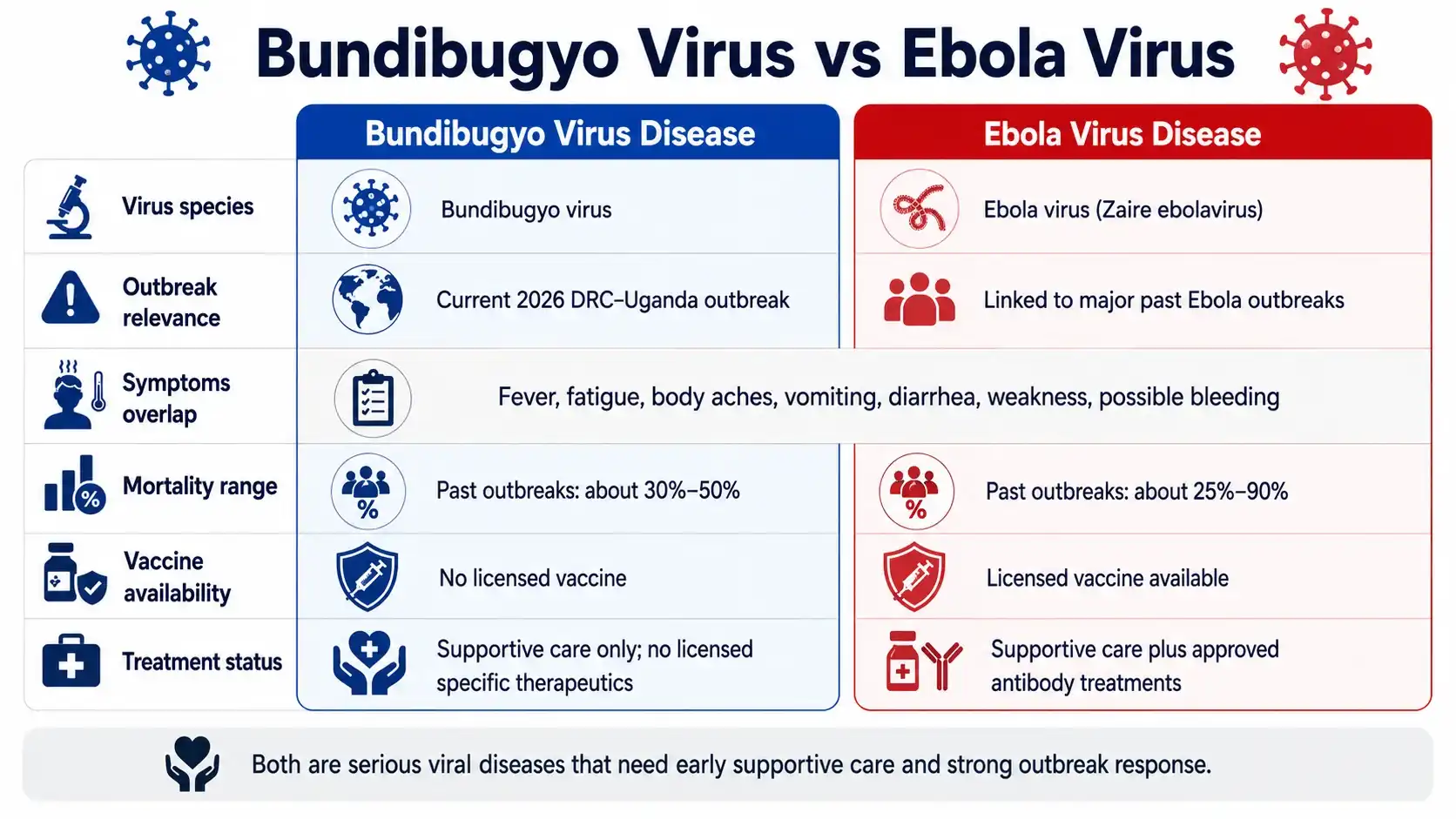
Ebola disease is linked to several Orthoebolavirus species, including Ebola virus, Sudan virus, and Bundibugyo virus.
Ebola Outbreak 2026: Latest Ebola News
The ebola outbreak 2026 became internationally important because it involves Bundibugyo virus disease in the Democratic Republic of the Congo and Uganda. For official disease-outbreak details, the WHO 2026 Bundibugyo virus outbreak notice is the most important source to use inside the article body.
WHO also determined the event to be a Public Health Emergency of International Concern. This should be placed on the exact words “Public Health Emergency of International Concern,” because that anchor text matches the official page topic.
The outbreak also appears in official U.S. public health alerts. CDC’s CDC Health Alert Network notice is useful when explaining healthcare awareness, travel notices, testing considerations, and U.S. status. For broader regional monitoring, the ECDC current outbreak page gives additional current risk context.
A good article should not use exaggerated headlines. Write the update calmly: the outbreak is serious, the virus is Bundibugyo, response teams are monitoring cross-border spread, and readers should follow official health agencies instead of rumors. If you want a news-based link for readers who follow developing updates, use the AP outbreak report only where the paragraph discusses current reporting, not medical advice.
Ebola Symptoms and Infection Timeline
Ebola symptoms often begin like other febrile illnesses, which makes early recognition difficult. The first signs can include fever, fatigue, muscle pain, headache, sore throat, weakness, and body aches. As the disease progresses, vomiting, diarrhea, abdominal pain, rash, organ dysfunction, and sometimes bleeding may appear.
For a U.S.-audience article, the CDC page on Ebola Disease Basics is the cleanest official source for symptoms, incubation period, spread, traveler risk, and 21-day monitoring. Link the anchor “Ebola Disease Basics” or “Ebola symptoms” to that page when explaining symptom progression.
A practical symptom section should remind readers that bleeding is not always the first or most common sign. Waiting for dramatic bleeding can delay care. Fever, weakness, vomiting, diarrhea, and sudden deterioration after exposure in an outbreak area are enough to require urgent medical evaluation under public health guidance.
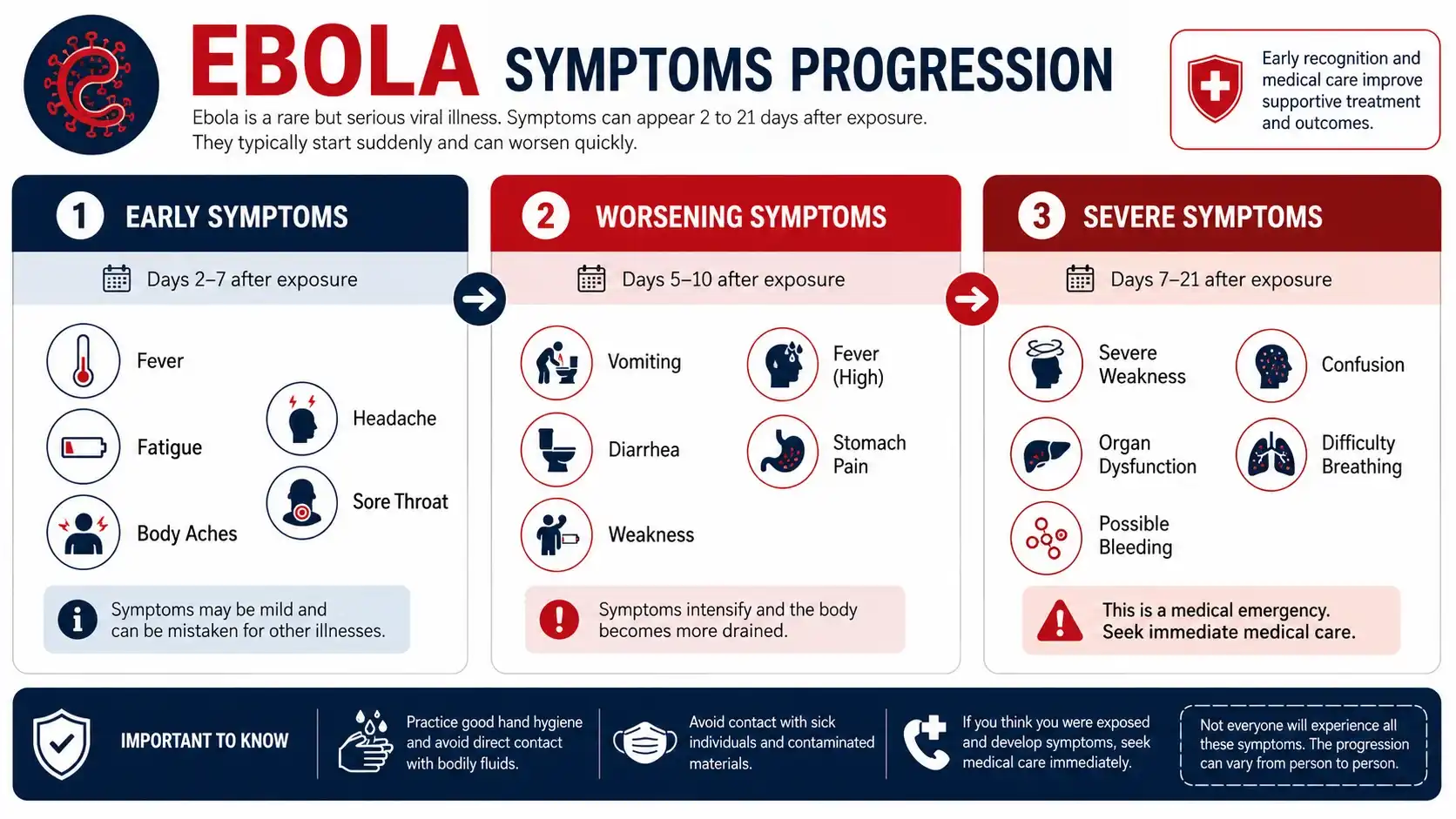
Ebola symptoms can begin with fever and fatigue before progressing to vomiting, diarrhea, weakness, and severe disease.
Ebola Symptoms Table
| Stage | Symptoms | Reader-Friendly Explanation |
|---|---|---|
| Early stage | Fever, fatigue, body aches, headache, sore throat | Can look like malaria, flu, or other febrile illness |
| Worsening stage | Vomiting, diarrhea, weakness, abdominal pain | Dehydration and rapid deterioration become major risks |
| Severe stage | Organ dysfunction, confusion, bleeding in some cases | Emergency isolation and supportive care become critical |
| Monitoring stage | 21-day monitoring after exposure/travel | Symptoms can appear within the known incubation window |
How Is Ebola Transmitted? How Does Ebola Spread?
The questions how is Ebola transmitted, how does Ebola spread, and how is Ebola spread all need a clear answer. Ebola spreads mainly through direct contact with blood or body fluids from a person who is sick with or has died from Ebola disease. It can also spread through contaminated objects and surfaces, unsafe caregiving, and funeral practices that involve direct contact with the body.
The keyword infection should be used here naturally. Ebola infection can occur when infected fluids enter through broken skin or mucous membranes such as the eyes, nose, or mouth. This is why healthcare workers, caregivers, and family members can be at higher risk when infection-control practices are weak.
Ebola does not normally spread through casual passing in public places. That point is extremely important for reducing panic. Readers should understand that the highest-risk situations involve close contact, body fluids, unsafe burial exposure, or contaminated materials—not simply walking near someone.
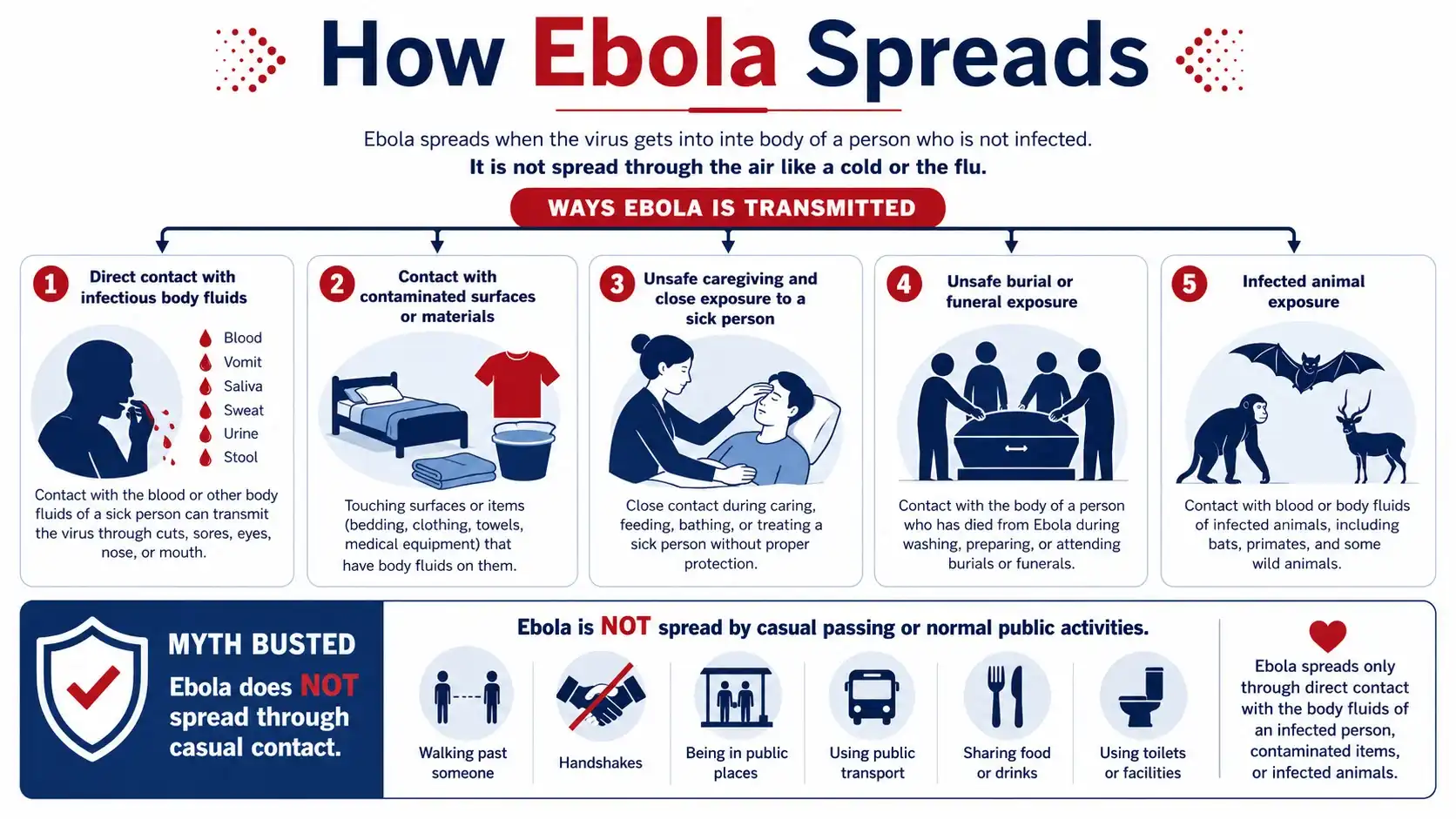
Ebola spreads mainly through direct exposure to infectious body fluids and contaminated materials, not casual public passing.
How Ebola Spreads Table
| Spreads Through | Does Not Normally Spread Through |
|---|---|
| Blood or body fluids of a sick or deceased person | Casual walking past someone |
| Contaminated bedding, clothing, or surfaces | Normal non-contact public proximity |
| Unsafe caregiving without protection | Routine air exposure like common respiratory viruses |
| Unsafe burial practices | Brief public-space contact |
| Some infected animal exposures | Reading news or visiting unaffected areas |
Ebola Mortality Rate and Treatment Context
The Ebola mortality rate is one of the most searched and most misunderstood parts of the topic. Mortality can be high, but the number is not the same in every outbreak. It depends on the virus species, speed of detection, access to care, quality of supportive treatment, and whether a response system can break transmission chains.
For broader background beyond WHO and CDC, the ECDC factsheet about Ebola disease can support a background paragraph about disease severity, outbreak history, and case-fatality context.
In the current Bundibugyo virus outbreak, the treatment message must be careful. Approved vaccines and targeted therapies exist for Ebola virus disease caused by the Zaire species, but they are not the same as licensed Bundibugyo-specific tools. For Bundibugyo virus disease, early supportive care, isolation, contact tracing, safe burials, and infection prevention become especially important.
Mortality and Care Table
| Topic | Safe Explanation |
|---|---|
| Average Ebola disease fatality | Often reported around 50%, but varies by outbreak |
| Bundibugyo virus disease fatality | Past outbreaks have been lower than some Zaire outbreaks but still serious |
| Early care | Rehydration, symptom management, and clinical monitoring can improve survival |
| Outbreak control | Contact tracing, isolation, safe burials, and community trust reduce spread |
| Vaccine/treatment caveat | Zaire ebolavirus tools should not be presented as Bundibugyo-specific solutions |
Bundibugyo Virus: Why This Outbreak Is Different
Bundibugyo virus is central to understanding this outbreak. It is one of the Orthoebolavirus species known to cause large outbreaks, but it does not have the same vaccine and therapeutic readiness as Ebola virus disease caused by the Zaire species.
This matters for article accuracy. Do not simply write “Ebola vaccine is available” without explaining which virus species the approved vaccines target. For Bundibugyo virus disease, health authorities must rely heavily on surveillance, testing, isolation, contact tracing, community engagement, and supportive care.
The 2026 outbreak is also challenging because of geography, population movement, healthcare access, conflict, and cross-border travel. These factors can make case detection and contact tracing more difficult.
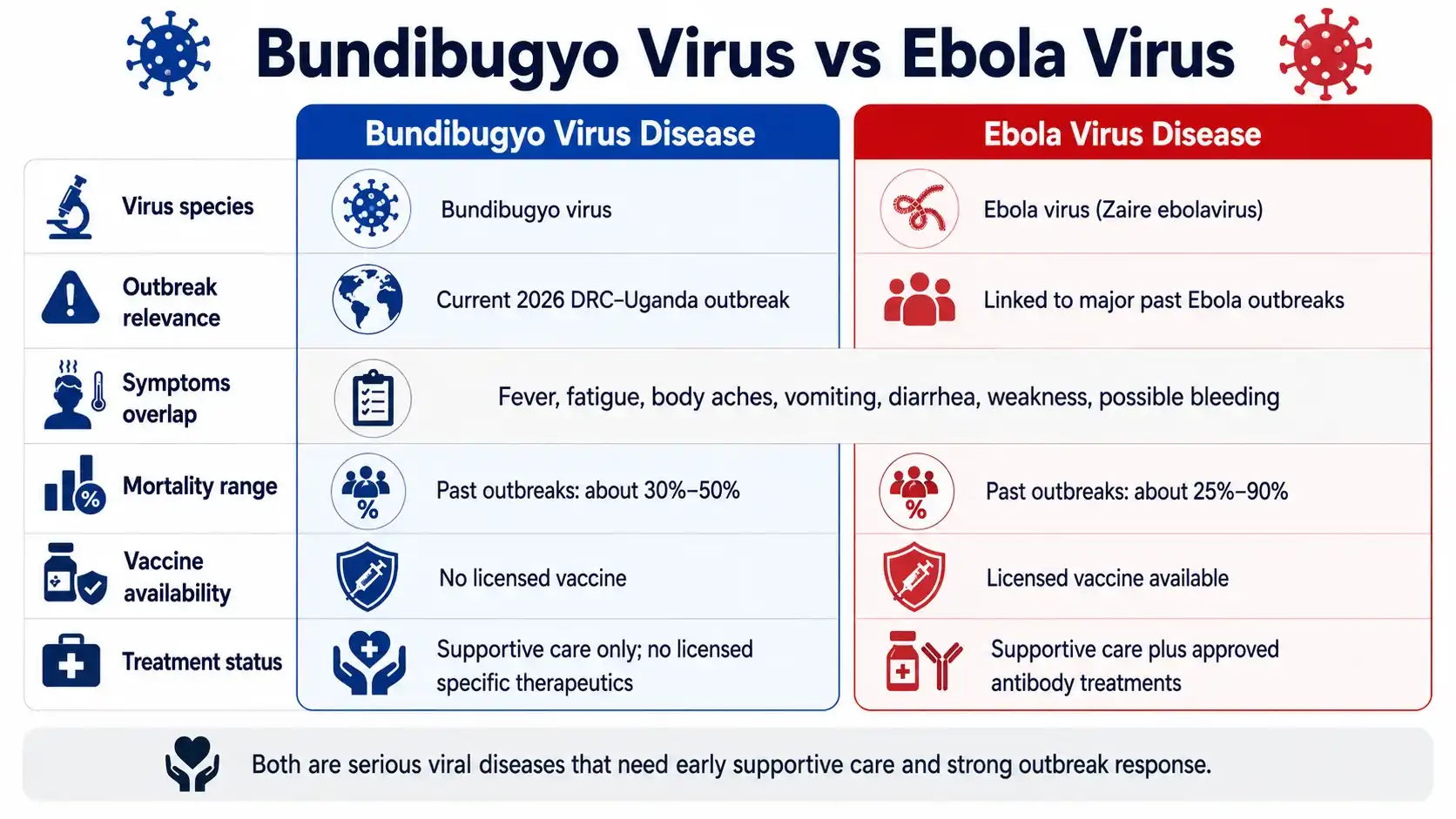
The current outbreak involves Bundibugyo virus, which differs from Ebola virus disease in vaccine and treatment availability.
Bundibugyo Virus Comparison Table
| Topic | Bundibugyo Virus Disease | Ebola Virus Disease by Ebola Virus |
|---|---|---|
| Virus species | Bundibugyo virus | Ebola virus / Zaire ebolavirus |
| 2026 outbreak role | Main virus in the current DRC/Uganda outbreak | Better-known species from past major outbreaks |
| Vaccine availability | No approved Bundibugyo-specific vaccine | Approved vaccines exist for Ebola virus disease |
| Specific treatment | No approved Bundibugyo-specific therapeutics | Approved antibody treatments exist for Zaire ebolavirus disease |
| Article wording | Keep species-specific caveat clear | Do not generalize across all Ebola diseases |
Travelers Guide During the Ebola Outbreak
The keyword travelers should be handled calmly and practically. Travelers should follow official notices, avoid direct contact with sick people or body fluids, avoid unsafe healthcare or funeral settings in affected areas, and monitor symptoms after return.
For official travel-related guidance, use the CDC Travel Health Notices hub in the traveler section. This link belongs on the exact phrase “CDC Travel Health Notices,” not on a generic phrase like “click here.”
Travelers returning from outbreak-affected areas should monitor for symptoms during the incubation window and seek medical care quickly if fever, vomiting, diarrhea, weakness, or other Ebola-compatible symptoms appear. They should also call ahead before visiting a clinic so healthcare teams can prepare safely.
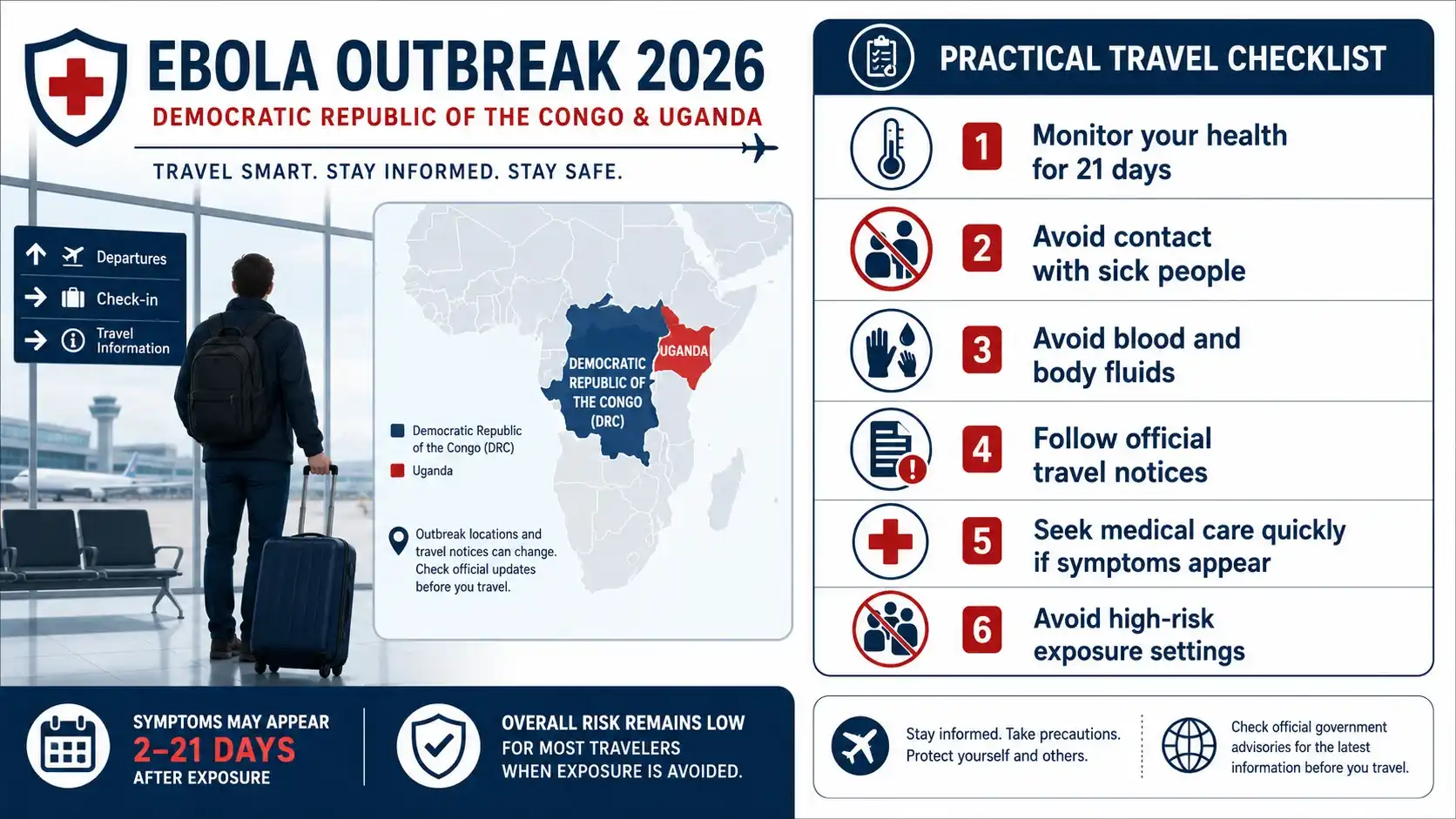
Travelers should follow official notices, avoid direct exposure risks, and monitor their health after travel.
Travelers Checklist
| Action | Why It Matters |
|---|---|
| Check official travel notices before departure | Outbreak guidance changes quickly |
| Avoid direct contact with sick people/body fluids | This is the main transmission route |
| Avoid unsafe burial or caregiving exposure | These are high-risk situations |
| Monitor health after travel | Symptoms can appear within the known incubation window |
| Seek care early if symptoms appear | Early care and isolation protect the patient and community |
Robert Redfield and Public Health Preparedness
The keyword Robert Redfield should be used naturally, not forced. In this article, it works best in a public health leadership section. Georgetown’s official profile of Robert Redfield describes him as a virologist and former CDC director, which makes him relevant to wider discussions about outbreak preparedness, CDC communication, and biosecurity policy.
This does not mean Robert Redfield is the central actor in the 2026 Ebola outbreak. The article should be clear: the outbreak response is being handled by national authorities, WHO, CDC alerts, and international partners. Redfield is relevant as a former CDC leader whose career connects virology, public health, and preparedness debates.
For internal linking, this is the best place to add InfoJustify’s article on Robert Redfield. This internal link is highly relevant, natural, and helps the site connect health-policy content with outbreak coverage.
More Health and Public-Interest Reading on InfoJustify
Readers who want more source-based explainers can visit InfoJustify Latest Posts. Keep this internal link near the end or in a short “more reading” note, not in the middle of medical guidance. You can also keep brand trust links such as InfoJustify Privacy Policy and InfoJustify Contact outside the article body or in the footer area if needed.
Final Takeaway
The ebola outbreak is serious because it involves a severe viral disease, cross-border spread, and the Bundibugyo virus species. The most useful reader message is simple: Ebola is dangerous, but it has specific transmission routes. It is not spread by casual public passing. It spreads mainly through direct contact with infectious body fluids, contaminated materials, unsafe caregiving, unsafe burials, and some animal exposure risks.
For the ebola outbreak 2026, readers should follow official agencies, not rumors. Use official WHO, CDC, and ECDC pages for facts. Use credible news links only for current reporting context. Keep medical claims safe, do not promise cures, and explain that supportive care can improve survival.
FAQs
1. What is Ebola?
Ebola is a severe viral disease caused by viruses in the Orthoebolavirus group. It can cause serious illness and death, especially when outbreaks are not detected and controlled quickly.
2. What are the main Ebola symptoms?
Common Ebola symptoms include fever, fatigue, body aches, headache, sore throat, vomiting, diarrhea, weakness, abdominal pain, and in some cases bleeding later in the disease.
3. How does Ebola spread?
Ebola spreads mainly through direct contact with blood or body fluids of a sick or deceased person, contaminated objects, unsafe caregiving, unsafe burials, and some animal exposures.
4. What is the Ebola mortality rate?
The Ebola mortality rate varies by outbreak, virus species, and access to care. Ebola disease is often described as having an average case fatality around 50%, but past outbreaks have varied widely.
5. What is Bundibugyo virus?
Bundibugyo virus is one of the Ebola-related virus species that can cause large outbreaks. The 2026 DRC/Uganda outbreak is important because it involves Bundibugyo virus disease and does not have an approved Bundibugyo-specific vaccine or treatment.
- Social Security COLA 2026 Explained: What Changed This Year
- Kyle Busch Pneumonia Sepsis: Cause of Death Explained
- Why Are Social Security Checks Late in May 2026? (The Real Truth)
- Antarctica From Space: 5 Climate Signals to Watch
- Ebola Outbreak 2026: Bundibugyo Virus Explained & Related Topic
- Robert Redfield: Biography, CDC Role, COVID-19 Legacy
- Types of Yoga: 30 Powerful Styles Explained
- What is Cloud Storage ? 7 Best Basics
- Are AI voices safe for YouTube monetization
- Realistic Indian Accent AI Voices for Free: 3 Best Tools
- ElevenLabs Free Alternatives for Emotional Voices: 3 Picks
- Best Free AI Voice Generators for Faceless YouTube Shorts
- Top 5 Free AI Voice Generator Realistic Tools
- Free AI Video Generators Without Watermark: 2026 Truth
- AI vs Machine Learning: Powerful 2026 Career Truth
One thought on “Ebola Outbreak 2026: Bundibugyo Virus Explained & Related Topic”