
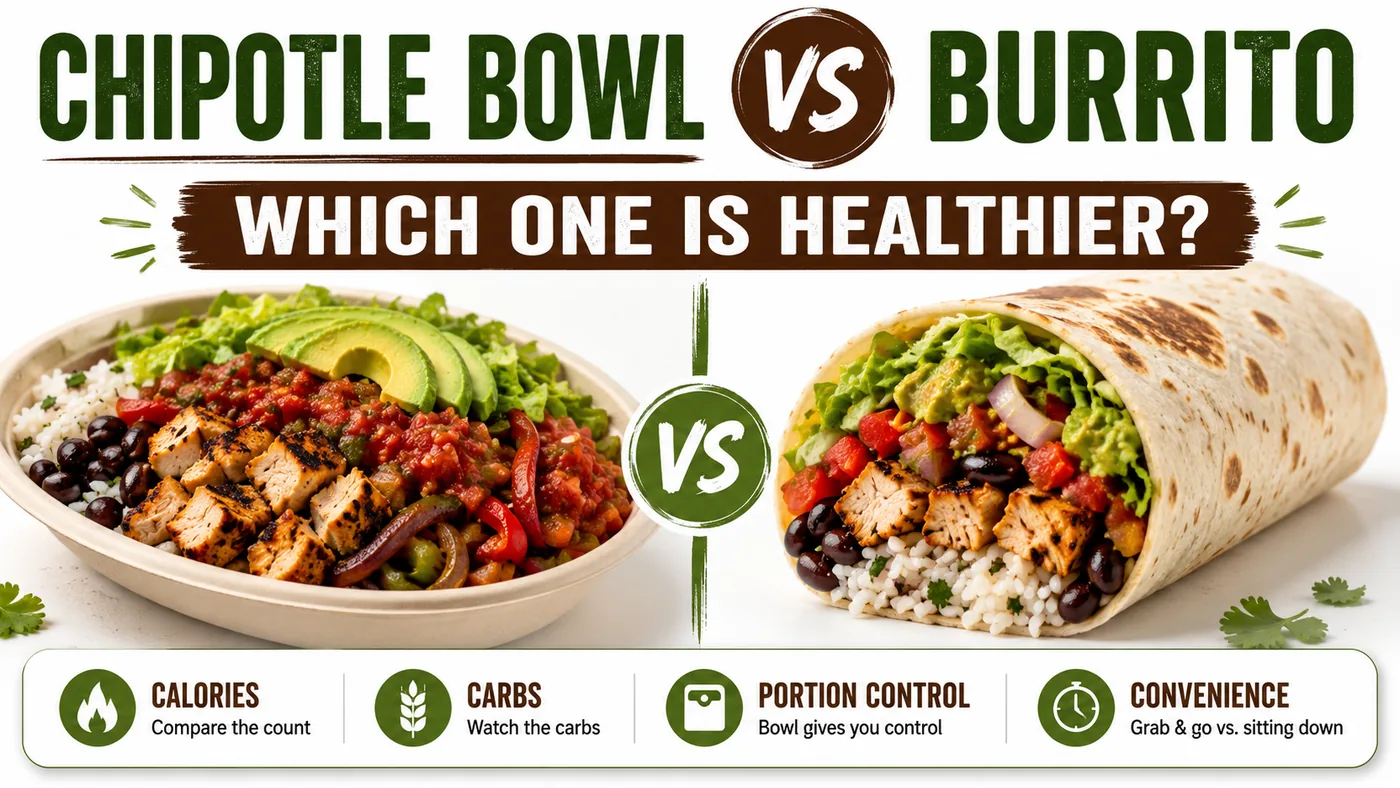
For most people, the Chipotle bowl is the better everyday choice because it is easier to customize, easier to make lighter, and easier to save for later. The burrito is better when you want a hearty handheld meal and do not mind the extra tortilla calories, carbs, and sodium.
A bowl is not automatically healthy, and a burrito is not automatically bad. The real answer depends on the final build. A bowl loaded with extra rice, queso, sour cream, cheese, guacamole, and chips can become a very large meal. A burrito with chicken, fajita vegetables, fresh salsa, and lettuce can be more controlled than many people expect.
Still, if you are choosing a default order, the bowl usually gives you more control. You can see the ingredients, adjust the portion, skip the tortilla, and mix the meal without worrying about the wrap breaking. That makes the bowl the safer first choice for calorie control, macro planning, and leftovers.
| Goal | Better Choice | Why |
| Lower calories | Bowl | Skips the flour tortilla and makes portions easier to control. |
| Portable meal | Burrito | Wrapped, handheld, and easier to eat on the go. |
| High protein | Bowl or Burrito | Protein depends more on chicken, steak, beans, or double protein. |
| Leftovers | Bowl | Easier to reheat and save without a soggy tortilla. |
| Classic comfort | Burrito | The tortilla creates a warm, filling handheld meal. |
- Introduction
- What Is a Chipotle Bowl?
- What Is a Chipotle Burrito?
- Calories: Bowl vs Burrito
- Carbs and Sodium Difference
- Protein and Fullness
- Customization and Portion Control
- Taste, Texture, and Convenience
- When the Burrito Still Makes Sense
- When a Bowl Can Still Go Wrong
- Best Choice for Weight Loss or Lighter Eating
- Best Choice for High-Protein Meals
- Best Choice for Value and Leftovers
- Bowl vs Burrito by Goal
- Smart Order Examples
- Common Mistakes to Avoid
- Clean Source List Used –
- Conclusion
- FAQs –
Introduction
The Chipotle bowl vs burrito question is simple on the surface, but the better choice depends on what you want from the meal. Some people want fewer calories. Some want more protein. Others want the most filling, portable, satisfying order they can eat without thinking too much.
Chipotle is built around customization, which means a bowl and a burrito can share the same rice, beans, protein, salsa, cheese, sour cream, guacamole, and lettuce. The major difference is the format: the bowl skips the tortilla, while the burrito wraps everything inside a flour tortilla.
That one format choice changes the nutrition story. Chipotle’s U.S. nutrition facts list a burrito bowl at 420 to 910 calories and a burrito at 740 to 1,210 calories, depending on ingredients. The flour burrito tortilla itself adds 320 calories, 50 grams of carbohydrates, 600 milligrams of sodium, and 8 grams of protein.
This guide compares the Chipotle bowl vs burrito from a practical U.S. reader perspective: calories, carbs, sodium, protein, taste, convenience, value, leftovers, and smart ordering. It is not medical advice, but it will help you build a better order before you open the app or stand in line.
| Human-friendly takeaway If you only remember one thing, remember this: the bowl is better for control, while the burrito is better for convenience and comfort. |
What Is a Chipotle Bowl?
A Chipotle bowl is basically the burrito experience served in a bowl instead of inside a tortilla. You can start with rice, beans, protein, salsa, fajita vegetables, lettuce, cheese, sour cream, queso, guacamole, and other toppings depending on availability.
The official Chipotle menu lists burrito bowls as one of the main order formats, and the nutrition facts describe a burrito bowl as “just like a burrito, but served in a bowl with no tortilla.” That is the key nutrition difference: the bowl removes the flour wrap before you add anything else.
A bowl is especially useful for people who want to control portions. You can ask for light rice, skip rice, choose beans, add fajita vegetables, use salsa for flavor, and decide whether richer toppings fit your goal. You can also eat half and save the rest more easily than with a wrapped burrito.
What Is a Chipotle Burrito?
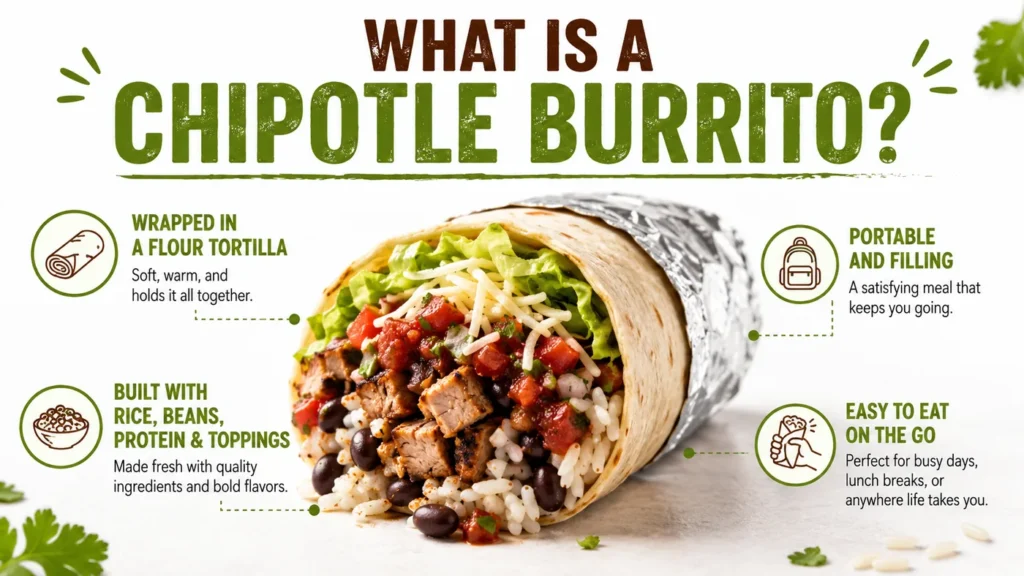
A Chipotle burrito is the classic handheld option. It starts with a large flour tortilla and can include the same fillings as a bowl: rice, beans, meat or sofritas, salsa, cheese, sour cream, lettuce, guacamole, and queso.
The burrito is satisfying because the tortilla adds structure, chew, and portability. If you are eating on the go, a burrito can feel more complete than a bowl because every bite combines the same ingredients in one wrap.
The trade-off is that the tortilla changes the nutrition baseline before the filling even begins. If you want a large meal, that may be fine. If you are trying to keep calories, carbohydrates, or sodium lower, the burrito starts with less flexibility than a bowl.
- Chipotle Nutrition Guide: Calories, Protein & Smart Orders
- Healthiest Thing to Eat at Chipotle: Best Orders Explained
- Chipotle Mexican Grill Menu Explained: Best Items to Try
Calories: Bowl vs Burrito
Calories are the first reason many readers compare a Chipotle bowl vs burrito. According to Chipotle’s U.S. nutrition facts, a burrito bowl ranges from 420 to 910 calories, while a burrito ranges from 740 to 1,210 calories. Those ranges depend on protein, rice, beans, salsa, toppings, and sides. This is the main Chipotle bowl vs burrito number to compare when checking Chipotle bowl calories and Chipotle burrito calories.
The tortilla is the biggest format difference. Chipotle’s flour burrito tortilla is listed at 320 calories. If two orders use the same chicken, rice, beans, salsa, lettuce, and cheese, the burrito normally starts higher because the tortilla is added to the same basic build.
That does not mean the bowl always wins. A bowl with extra rice, double cheese, sour cream, queso, guacamole, and chips can easily pass a simpler burrito. But if both meals have similar fillings, the bowl usually gives you the calorie advantage.
| Format / Item | Official Nutrition Note | What It Means |
| Burrito Bowl | 420-910 calories | More flexible because it has no tortilla. |
| Burrito | 740-1,210 calories | Starts higher mainly because of the flour tortilla. |
| Flour Burrito Tortilla | 320 calories; 50g carbs; 600mg sodium | A major format difference before fillings are added. |
| Tacos | 390-1,140 calories | Depends heavily on shells, protein, and toppings. |
| Salad | 420-910 calories | Can be light or heavy depending on toppings and vinaigrette. |
Carbs and Sodium Difference
Carbohydrates are another major difference. The flour burrito tortilla is listed at 50 grams of carbohydrates. If you add rice and beans inside the burrito, the total carbohydrate count can climb quickly. A bowl lets you choose rice, beans, both, light portions, or a greens-forward base.
Sodium matters too. The same tortilla is listed at 600 milligrams of sodium, and restaurant meals can become sodium-heavy when several salty ingredients are stacked together. The FDA says the Daily Value for sodium is less than 2,300 milligrams per day, so one large fast-casual meal can represent a meaningful share of the day.
For readers watching sodium, the bowl is usually easier to manage because one high-sodium item is removed before the rest of the ingredients are added. Still, sodium can come from salsas, cheese, queso, proteins, beans, and chips, so the best habit is to check the nutrition calculator when exact numbers matter.
Protein and Fullness
Protein mostly comes from the filling, not the format. Chicken, steak, barbacoa, carnitas, sofritas, beans, and double protein choices can work in both bowls and burritos. That means a high-protein bowl and a high-protein burrito can be built from the same core ingredients.
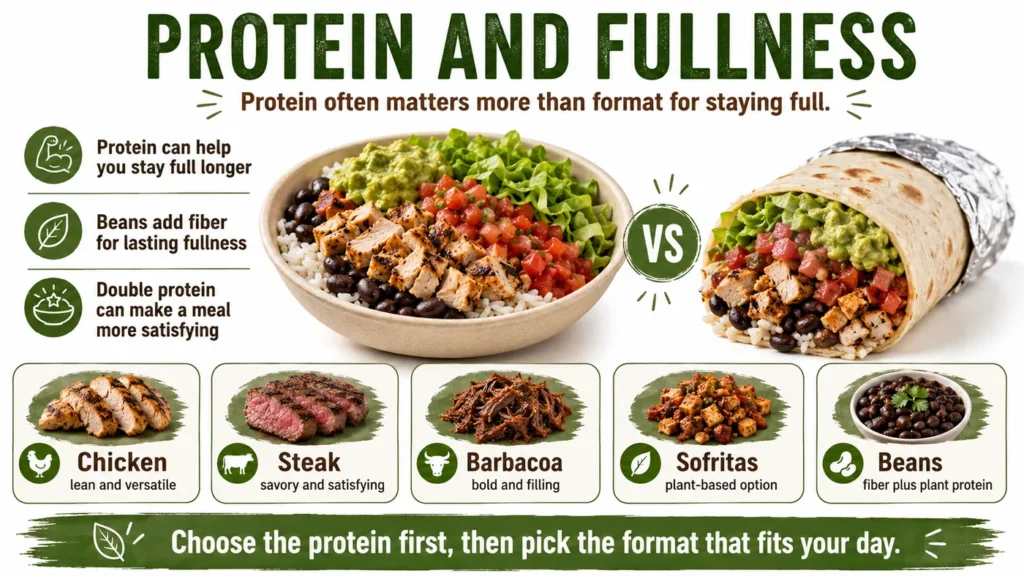
Chipotle’s nutrition facts list chicken at 32 grams of protein per 4-ounce serving, steak at 21 grams, barbacoa at 24 grams, carnitas at 23 grams, sofritas at 8 grams, and beans at 8 grams per 4-ounce serving. The burrito tortilla adds another 8 grams of protein, but it also adds calories, carbohydrates, and sodium.
If your goal is fullness, both formats can work. A burrito may feel more filling because of the tortilla. A bowl may be more satisfying for longer if you build it around protein, beans, fajita vegetables, salsa, and enough rice to match your hunger.
Customization and Portion Control
Customization is where the bowl usually wins. In a bowl, you can clearly see the amount of rice, beans, toppings, and salsa. You can mix ingredients, eat slowly, and stop when you are full. That matters for people who want a healthy Chipotle order without turning the meal into a strict diet. That is why Chipotle bowl nutrition is usually easier to adjust for everyday goals.
A burrito is less flexible once it is wrapped. If one side has too much sour cream or rice, you may not notice until you are eating it. If it becomes too full, it can split or become messy. That is not a deal-breaker, but it makes portion control harder.
The bowl also makes “light” and “extra” instructions easier to manage. Light rice, extra fajita vegetables, extra lettuce, fresh tomato salsa, and no sour cream are all easier to see in a bowl. For people learning how to order Chipotle well, the bowl is usually the easier practice format.
Taste, Texture, and Convenience
Taste is not only about nutrition. A burrito has a clear advantage when you want a warm, wrapped, comfort-food experience. The tortilla gives the meal structure and creates a classic handheld bite. For many people, that is the whole reason to choose a burrito.
A bowl gives more ingredient separation. You can taste salsa, beans, rice, and protein more clearly, and you can control how much you mix. If you like a fresher, less heavy meal, the bowl often feels better. If you want a compact, filling meal with the same bite every time, the burrito may feel better.
Convenience depends on the situation. A burrito is easier to carry and eat without utensils. A bowl is easier for leftovers, meal pacing, and office lunches. If you are driving or walking, choose the burrito. If you are sitting down, working, or saving half for later, choose the bowl.
When the Burrito Still Makes Sense
The burrito still makes sense when your priority is convenience, comfort, and a one-piece meal. It is easier to carry, easier to eat without utensils, and often feels more satisfying when you want the classic Chipotle experience rather than a lighter bowl.
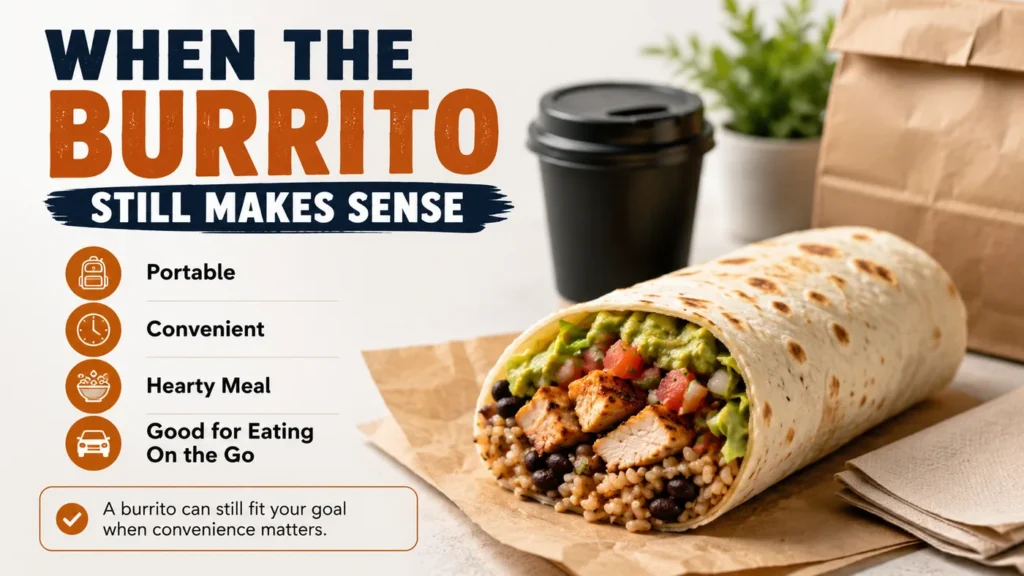
A burrito can also be a practical choice for people who need a bigger meal after a long day, a workout, or a missed lunch. The key is to build it intentionally: choose one protein, one rice portion, one bean option, salsa, and only the rich toppings that actually matter to you.
If you want a burrito but still want control, use light rice, skip queso or sour cream, add fajita vegetables, and choose salsa for flavor. That keeps the burrito enjoyable without turning it into a fully loaded order by accident.
When a Bowl Can Still Go Wrong
The bowl can still go wrong when people treat “no tortilla” as permission to add everything else. Extra rice, double cheese, queso, sour cream, guacamole, chips, and a sweet drink can turn a bowl into a much larger meal than expected.
Another issue is portion creep. Because the bowl looks open and fresh, it can feel lighter even when the ingredient stack is heavy. This is why the nutrition calculator matters for readers who track calories, protein, carbs, fat, or sodium closely.
The best bowl strategy is to pick a goal before ordering. For lighter eating, focus on protein, vegetables, salsa, beans, and moderate rice. For high protein, use double protein and beans. For flavor, choose one or two richer toppings instead of stacking every extra.
Best Choice for Weight Loss or Lighter Eating
If your goal is weight loss or a lighter meal, the bowl is usually the better choice. It removes the tortilla, makes portions visible, and gives you more room to build around protein, vegetables, salsa, and beans instead of automatically adding a wrap. For a healthier Chipotle order, this bowl-first approach usually gives the most control.
A lighter bowl might include chicken or steak, light brown rice or no rice, black beans, fajita vegetables, fresh tomato salsa, tomatillo-green salsa, and lettuce. Guacamole can still fit if it helps satisfaction, but chips, queso, sour cream, and double cheese should be intentional rather than automatic.
The key is not to make the meal tiny. A very small order may leave you hungry and lead to snacking later. A better approach is to build a bowl with protein and fiber first, then decide which richer topping matters most.
Best Choice for High-Protein Meals
For high-protein meals, the format matters less than the protein choice. A bowl with double chicken or steak can be a strong high-protein order. A burrito can also be high in protein, but the tortilla adds calories and carbohydrates that may or may not fit your goal.
Chipotle has also promoted high-protein menu options, but the simplest strategy is still practical: choose a bowl, add chicken, steak, barbacoa, or double protein, include beans if you want extra plant protein and fiber, and use salsa and vegetables for volume.
For most gym-focused readers, a high-protein bowl is easier to manage than a burrito because it concentrates the meal around protein and supporting ingredients. If protein is the goal, do not let chips, queso, and extra sour cream quietly become the main event.
Best Choice for Value and Leftovers
Value is not only about price. It is also about how usable the meal is. A burrito can feel like better value when you want one large handheld meal. A bowl can feel like better value when you want to eat some now and save some for later.
The bowl usually reheats better because it is not trapped inside a tortilla. If you save half a burrito, the tortilla can become soggy or tough. If you save half a bowl, you can reheat the rice, beans, and protein, then add cold salsa or lettuce afterward.
For students, office workers, and people who meal-prep casually, the bowl often wins. For road trips, quick lunches, or a no-utensil situation, the burrito wins. The best value depends on how you will actually eat the meal.
Bowl vs Burrito by Goal
The best answer changes by goal. A person looking for the lightest meal should usually choose a bowl or salad. A person who wants a classic, filling, portable meal may enjoy a burrito more. A person who wants leftovers will usually have an easier time with a bowl.
For nutrition tracking, the bowl is easier because the format is simpler and the tortilla is not built into the baseline. For flavor-first ordering, the burrito can be more satisfying because every bite is wrapped together. For beginner ordering, the bowl is usually more forgiving.
Here is the practical rule: choose the bowl when control matters; choose the burrito when convenience and comfort matter. That one sentence captures most of the Chipotle bowl vs burrito decision. That simple Chipotle bowl vs burrito rule keeps the choice practical.
| Reader Goal | Best Pick | Smart Build |
| Lower-calorie lunch | Bowl | Chicken, fajita vegetables, salsa, lettuce, light beans. |
| High-protein meal | Bowl | Double chicken or steak, beans, salsa, fajita vegetables. |
| On-the-go meal | Burrito | Chicken or steak, light rice, beans, salsa, lettuce. |
| Vegetarian meal | Bowl | Sofritas or beans, rice, fajita vegetables, salsa, guacamole. |
| Comfort-food order | Burrito | Steak or barbacoa, rice, beans, salsa, cheese, optional queso. |
Smart Order Examples
A balanced bowl could include chicken, brown rice, black beans, fajita vegetables, fresh tomato salsa, tomatillo-green salsa, and lettuce. Add guacamole if it helps satisfaction. Skip chips if the bowl already feels filling.
A lighter bowl could include chicken, fajita vegetables, fresh tomato salsa, tomatillo salsa, lettuce, and light beans. This keeps the meal focused on protein, vegetables, and flavor while limiting tortilla calories, heavy toppings, and side items.
A satisfying burrito could include steak or chicken, light rice, black beans, fresh salsa, roasted chili-corn salsa, cheese, and lettuce. To keep it more balanced, choose either cheese or sour cream instead of automatically adding every rich topping.
A vegetarian bowl could include sofritas or beans, brown rice, fajita vegetables, fresh salsa, roasted chili-corn salsa, lettuce, and guacamole. Vegan customers should check current ingredient guidance and avoid dairy toppings such as cheese, queso, sour cream, and chipotle-honey vinaigrette.
- Social Security Payment Schedule 2026: Dates by Birth Date
- Social Security COLA 2026 Explained: What Changed This Year
- Kyle Busch Pneumonia Sepsis: Cause of Death Explained
- Ebola Outbreak 2026: Bundibugyo Virus Explained & Related Topic
Common Mistakes to Avoid
The first mistake is assuming a bowl is always light. A bowl can become a large meal when you add extra rice, queso, sour cream, cheese, guacamole, chips, and a sweet drink. The format helps, but ingredients still matter.
The second mistake is assuming a burrito is always a bad choice. A burrito can fit your meal plan when the fillings are thoughtful and the portion matches your day. The issue is not the tortilla alone; it is the whole order.
The third mistake is ignoring sodium. FDA guidance says 5% Daily Value or less is low and 20% Daily Value or more is high. A restaurant meal can stack sodium quickly, especially with tortillas, proteins, salsas, cheese, queso, and chips.
The fourth mistake is copying viral orders without checking your own goal. A viral burrito may look great online but may not match your budget, hunger, health needs, or taste. A better order is one you understand and can repeat confidently.
Clean Source List Used –
- Chipotle official menu / order page
- Chipotle official nutrition calculator
- Chipotle U.S. nutrition facts PDF
- Chipotle allergen and special diet page
- FDA sodium in your diet guidance
- FDA Daily Value guidance
- Dietary Guidelines for Americans official page
Conclusion
The Chipotle bowl vs burrito decision comes down to control versus convenience. The bowl is usually better for calories, carbs, sodium control, leftovers, and visible customization. The burrito is better when you want a classic handheld meal that feels hearty and complete.
For most everyday orders, the bowl is the smarter default because it skips the tortilla and gives you more control over rice, beans, protein, salsa, toppings, and portion size. For occasional comfort-food meals or on-the-go eating, the burrito can still be a good choice.
The final answer is not “bowl good, burrito bad.” The better answer is: choose the format that fits your goal, then build the ingredients intentionally. If exact nutrition matters, use Chipotle’s official tools before ordering. In short, the Chipotle bowl vs burrito decision should start with your goal, not a trend.
FAQs –
Is a Chipotle bowl healthier than a burrito?
A Chipotle bowl is often easier to make healthier because it skips the flour tortilla and makes ingredients easier to control. However, the final nutrition depends on protein, rice, beans, salsa, toppings, sides, and portion choices.
How many calories are in a Chipotle bowl vs burrito?
Chipotle’s U.S. nutrition facts list a burrito bowl at 420 to 910 calories and a burrito at 740 to 1,210 calories. The final number changes with protein, rice, beans, salsa, toppings, and sides.
Why does a Chipotle burrito have more calories?
A Chipotle burrito usually has more calories because it includes a large flour tortilla. Chipotle lists the burrito tortilla at 320 calories, 50 grams of carbohydrates, 600 milligrams of sodium, and 8 grams of protein.
Which is better for high protein, a bowl or burrito?
A bowl is usually easier for high-protein ordering because you can focus on chicken, steak, barbacoa, beans, or double protein without automatically adding the tortilla. A burrito can also be high protein, but it adds extra calories and carbs.
Is a Chipotle burrito bad for you?
A Chipotle burrito is not automatically bad. It can be a filling meal if the portion and ingredients fit your goals. The issue is that the tortilla and stacked toppings can raise calories, carbohydrates, sodium, and fat quickly.
What is the best Chipotle order for a lighter meal?
A lighter Chipotle order is usually a bowl or salad with chicken or steak, fajita vegetables, fresh salsa, tomatillo salsa, lettuce, and light beans. Be selective with cheese, sour cream, queso, guacamole, chips, and vinaigrette.
- Guzman y Gomez vs Chipotle: Menu, Taste, and Value Compared
- Chipotle Bowl vs Burrito: Which One Is Healthier?
- Chipotle Nutrition Guide: Calories, Protein & Smart Orders
- Healthiest Thing to Eat at Chipotle: Best Orders Explained
- Chipotle Mexican Grill Menu Explained: Best Items to Try
- Kyle Busch Pneumonia Sepsis: Cause of Death Explained
- Ebola Outbreak 2026: Bundibugyo Virus Explained & Related Topic
- Robert Redfield: Biography, CDC Role, COVID-19 Legacy
- 5 Types of Computer Security: पूरी जानकारी आसान भाषा में
- Cloud Computing क्या है?
- Cloud Computing Tools List & Complete Guide
2 thoughts on “Chipotle Bowl vs Burrito: Which One Is Healthier?”