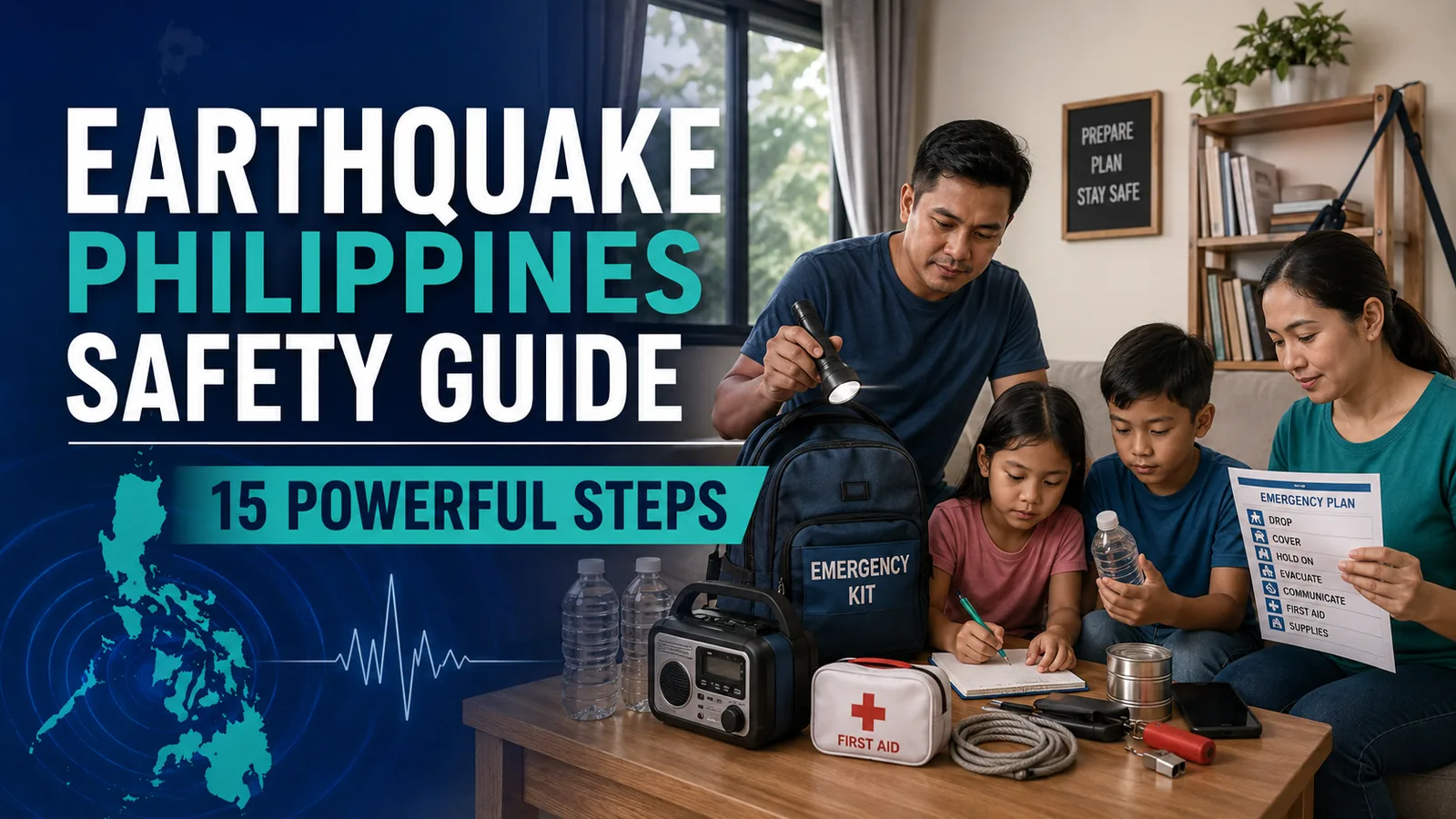
This Earthquake Philippines Safety Guide explains the safest actions to take before, during, and after shaking. Before an earthquake, secure heavy objects, prepare a family plan, check local hazards, and keep an emergency kit ready. During shaking, do not panic or run outside. Use Drop, Cover, and Hold On to protect your head and neck. After shaking stops, check injuries, expect aftershocks, avoid damaged buildings, follow official alerts, and help others only when it is safe.
Introduction
Earthquakes are frightening because they give little or no personal warning. For readers in the Philippines, the risk feels even more serious because the country sits in a highly active earthquake region. A strong quake can affect homes, schools, offices, roads, bridges, coastlines, power lines, and communication systems within seconds. The purpose of this guide is simple: help beginners understand what to do before, during, and after earthquake shaking without turning safety advice into confusing technical language.
This article is not a replacement for instructions from authorities. It is a practical, reader-friendly checklist built around reliable safety guidance and official resources. For local earthquake bulletins and safety references, readers should check PHIVOLCS earthquake preparedness resources, local disaster risk reduction offices, school safety officers, and community emergency channels.
A truly helpful Earthquake Philippines Safety Guide should not stop at basic reminders like “stay prepared.” It should clearly show readers where to take cover, which actions can increase danger, what emergency items to keep ready, how to support children and older family members, and what to do when aftershocks keep happening. This guide is designed to explain all of those points in a simple, practical, and safety-focused way.
Why Earthquake Safety Matters in the Philippines
The Philippines experiences frequent earthquakes because of its tectonic setting. The important point for regular families is not to memorize every plate boundary, but to understand that earthquakes are a normal hazard in the country and preparation should be part of daily life. According to the USGS explanation of earthquake science, earthquakes happen when blocks of the Earth suddenly slip along a fault and release energy as seismic waves. Those waves shake the ground and anything built on it.
The damage people feel depends on many factors: the earthquake size, depth, distance from the epicenter, local soil, building strength, and how prepared the occupants are. This is why two places can experience the same earthquake very differently. One barangay may feel light shaking, while another may see damaged walls, broken glass, landslides, or blocked roads.
For beginners, the biggest lesson is this: earthquake safety Philippines is not only about the seconds when the ground moves. Real safety starts with preparation and continues after the shaking stops. Many injuries happen because of falling objects, broken glass, panic movement, damaged structures, fires, or unsafe re-entry into buildings.
Magnitude and intensity are not the same
People often ask, “How strong was the earthquake?” But there are two useful ideas: magnitude and intensity. The USGS magnitude versus intensity guide explains that magnitude measures the earthquake size at its source, while intensity describes the shaking and damage experienced at a specific location. In simple terms, magnitude is about the earthquake itself; intensity is about what people feel where they are.
This matters for safety because a lower-magnitude shallow quake near a community can feel more damaging than a larger but deeper or farther earthquake. Always respond to the shaking you feel, not only to a number you see online.
Quick Before, During, and After Safety Table
Here is a fast overview of before during after earthquake safety for readers who want the most important actions first. This Earthquake Philippines Safety Guide uses the same simple three-stage approach: prepare before, protect during, and recover carefully after shaking.
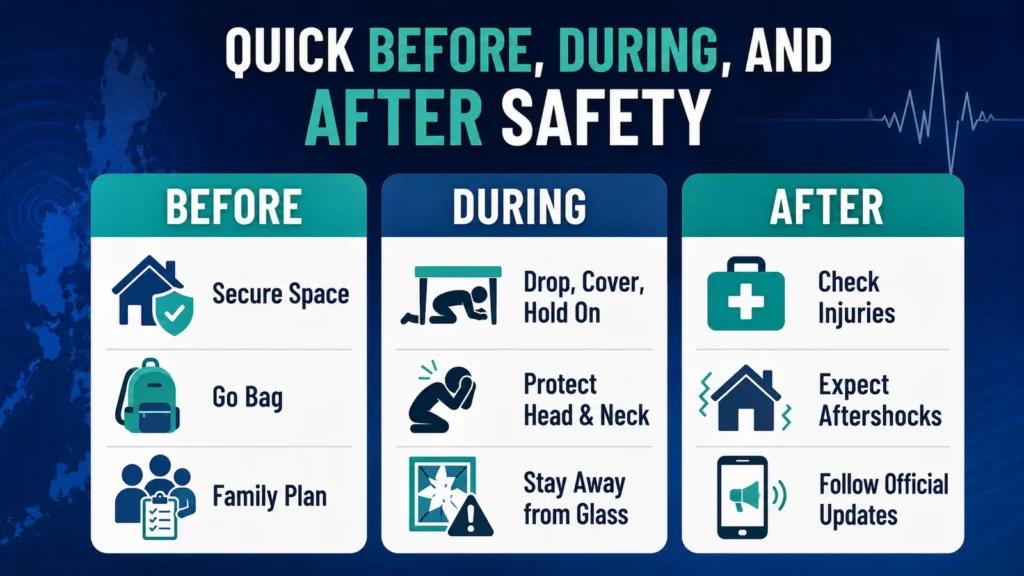
| Stage | What to Do | Why It Helps |
|---|---|---|
| Before | Anchor heavy items, set a household emergency plan, keep a ready bag, learn safe exit routes, and rehearse earthquake drills. | This lowers the risk from falling objects and helps everyone act calmly instead of making rushed decisions. |
| During | Use Drop, Cover, and Hold On, shield your head and neck, and move away from glass, shelves, cabinets, and large furniture. | Staying low and protected reduces exposure to broken glass, moving objects, and falling debris. |
| After | Look for injuries, stay alert for aftershocks, keep away from unsafe structures, follow official alerts, and assist others only when it is safe. | These steps help prevent follow-up injuries, risky building entry, and confusion after the shaking stops. |
Before an Earthquake: Prepare Before You Panic
Preparation sounds boring until the room starts shaking. The best time to make decisions is not during a quake. It is before one happens. Strong Philippines earthquake preparedness begins with a simple home and family review.
1. Secure heavy and breakable items
Walk through each room and imagine it being shaken from side to side. Which objects could fall on a child, student, older adult, or sleeping person? Bookcases, cabinets, wall frames, televisions, water dispensers, mirrors, hanging lights, and kitchen shelves should be secured or moved to safer positions.
- Keep heavy items on lower shelves, not above beds or study tables.
- Fasten tall furniture to walls where possible.
- Use latches on cabinets that hold glassware or chemicals.
- Keep shoes or slippers near beds to protect feet from broken glass after shaking.
What this means for readers: a safer room gives you more seconds to protect yourself instead of dodging falling objects.
2. Make a family communication plan
A good plan answers four questions: Where do we meet? Who checks on children? How do we contact relatives if mobile networks are busy? What will we do if our home is unsafe? Write this plan in simple language and keep a copy near the door, in school bags, and in the emergency kit.
Families should choose one meeting point close to home and one backup location outside the immediate area. Students should know the safest exit route from classrooms, dormitories, review centers, and boarding houses. Offices should assign roles instead of waiting for everyone to decide during stress.
3. Learn your local hazards
Not all earthquake risks are the same. Some places may face ground shaking, landslides, liquefaction, or tsunami hazards. Readers can review official tools such as PHIVOLCS Maps Portal and HazardHunterPH official hazard assessment to understand local hazard information from government-sourced maps and assessments.
Do not use hazard maps to create fear. Use them to make smarter choices: where to place heavy furniture, how to choose evacuation routes, and why coastal or steep-slope areas may need special planning.
4. Practice the safety position
Reading safety steps is helpful, but practice makes them automatic. Families and classrooms should practice Drop, Cover, and Hold On at least a few times a year. The CDC earthquake safety guidance also emphasizes protecting the head and neck, staying inside if you are already inside, and moving away from windows or objects that can fall.
Children, older adults, and people with mobility needs may need adjusted practice. For example, someone using a wheelchair may lock the wheels, cover the head and neck, and stay away from glass. The goal is not perfection; the goal is quick protection.
During Shaking: What to Do in Different Places
When shaking starts, your first job is to protect your body from falling, flying, or collapsing objects. PHIVOLCS advisories commonly tell the public to do the Drop, Cover, and Hold procedure during strongly felt earthquakes. That instruction is simple because the emergency itself is not simple.
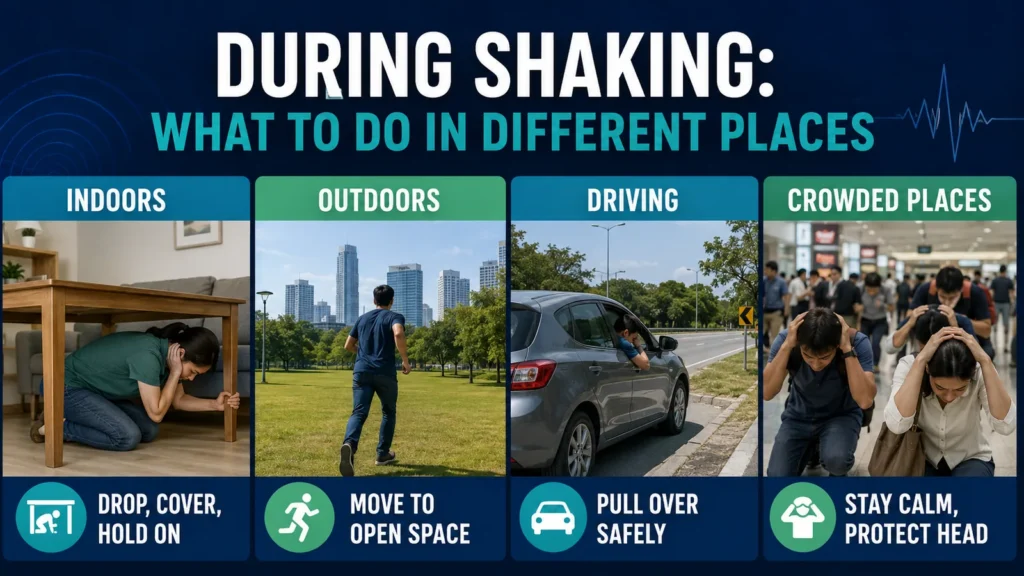
For readers searching what to do during an earthquake Philippines, the beginner-friendly answer is: protect your head and neck first, avoid panic movement, and move only when the shaking stops or when your immediate spot becomes unsafe. This Earthquake Philippines Safety Guide repeats that point because it is the action readers must remember under stress.
If you remember only one line from this Earthquake Philippines Safety Guide, remember this: Drop low, cover your head and neck, and hold on until shaking stops.
If you are indoors
- Stay indoors while the shaking is happening. Do not run toward stairways, doors, or exits.
- Get down on your hands and knees so the shaking is less likely to knock you over.
- If a sturdy table, desk, or solid piece of furniture is nearby, take cover underneath it.
- Hold on to your shelter firmly and be ready to move with it if the shaking shifts it.
- Keep away from glass windows, mirrors, wall shelves, cabinets, tall furniture, and hanging items.
- Do not use elevators during the earthquake or immediately after the shaking stops, because power outages or mechanical problems may occur.
Running outside can expose you to falling glass, signs, roof materials, electrical wires, and wall debris. In many cases, staying where you are and taking cover is safer than trying to escape while the building is moving.
If you are outdoors
- Move to an open area if you can do so safely.
- Stay away from buildings, trees, power lines, streetlights, walls, and bridges.
- Get low and protect your head until shaking stops.
- Watch for falling debris from building edges and balconies.
The outside wall area of buildings can be especially dangerous because glass, concrete, signs, or roof parts may fall outward. If you are already outdoors, stay outdoors and move away from objects that can fall.
If you are in a vehicle
- If you are driving, pull over carefully in an open area away from bridges, overpasses, trees, utility lines, and large roadside signs.
- Put the vehicle in park, set the parking brake, and remain inside until the shaking has fully stopped.
- Check radio updates or phone alerts only when it is safe and you are not putting yourself or others at risk.
- Once the shaking ends, drive slowly and watch for road cracks, downed power lines, landslides, debris, or damaged bridges.
A vehicle may move violently on its suspension, but it can still provide protection from some falling objects. The key is choosing a safer stopping point.
- Tsunami Warning Philippines Explained: 7 Critical Safety Facts
- Philippines Earthquake Explained: 7 Powerful Reasons Quakes Happen
If you are in school, a mall, church, or crowded place
Crowded areas can become unsafe quickly if people start pushing, running, or moving without direction. Stay calm and follow guidance from teachers, security staff, safety officers, or emergency responders. Keep distance from shelves, glass panels, display cases, hanging lights, and large signs. If you cannot reach a table or desk, lower your body near an interior wall and cover your head and neck with your arms.
For students, the best action is not to run toward the door with everyone else. Crowding near exits can cause falls and crushing injuries. Wait for the shaking to stop, then evacuate in an orderly way if instructed.
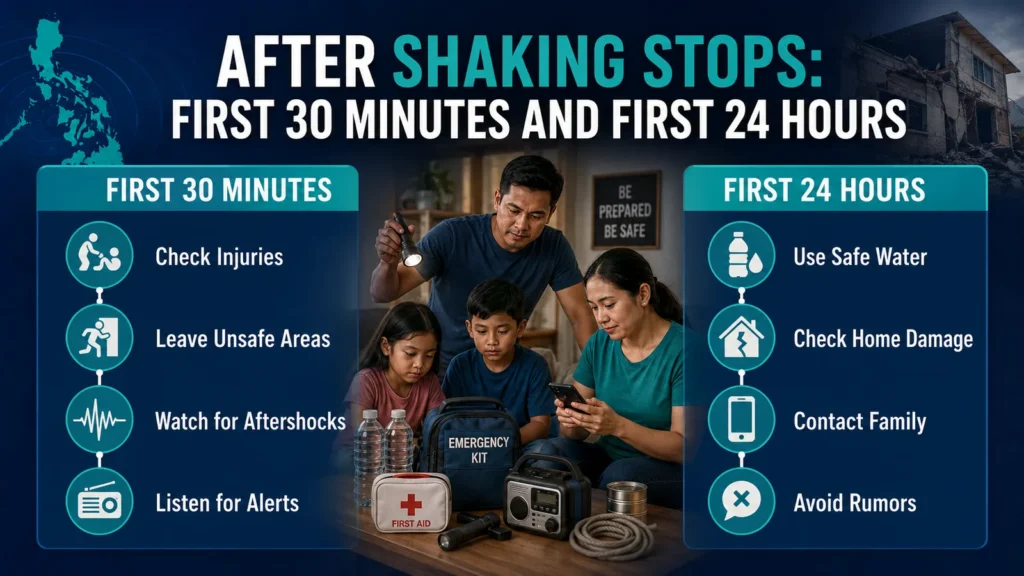
After Shaking Stops: First 30 Minutes and First 24 Hours
The earthquake is not automatically over when the ground becomes still. Aftershocks, damaged buildings, fires, broken glass, downed wires, blocked roads, and unsafe water can create new risks. That is why the after-shaking phase needs calm, step-by-step thinking.
The OSHA earthquake preparedness guidance notes that aftershocks can follow the main shock and may damage already weakened structures. This is especially important in schools, offices, apartment buildings, and areas with visible cracks or falling debris.
First 30 minutes checklist
1. Check yourself for injuries before helping others.
2. Check children, older adults, and people with disabilities nearby.
3. Put on shoes or slippers before walking over debris.
4. Turn off flames if it is safe; avoid matches if you smell gas or chemicals.
5. Leave damaged buildings carefully using stairs, not elevators.
6. Move to an open evacuation area away from walls, poles, and wires.
7. Expect aftershocks and be ready to Drop, Cover, and Hold On again.
First 24 hours checklist
- Follow instructions from local authorities, barangay officials, school leaders, and emergency responders.
- Avoid entering damaged homes, classrooms, offices, or stores until cleared by competent authorities.
- Use text messages when networks are congested, and keep calls for urgent needs.
- Check water, food, medicines, documents, and battery levels.
- Do not share unverified photos, casualty numbers, tsunami claims, or fake warnings.
Beginner tip: after a major quake, your phone can become a safety tool or a rumor machine. Use it for official updates, family messages, maps, flashlight needs, and emergency calls. Avoid spreading unconfirmed posts.
Emergency Kit Checklist for Families and Students
A go bag is not only for families with large houses. Students, renters, office workers, and boarding-house residents can prepare small kits too. Ready.gov recommends building a kit with basic items a household may need to survive for several days after a disaster; readers can review official emergency kit guidance and adjust it for local needs.
| Kit Area | What to Include | Practical Note |
| Water and food | Drinking water, ready-to-eat food, can opener if needed | Rotate before expiry dates. |
| Light and power | Flashlight, batteries, power bank, small solar charger if available | Avoid relying only on one phone battery. |
| Health | First aid kit, prescription medicines, masks, hygiene items | Include items for children, older adults, or specific conditions. |
| Communication | Whistle, small radio, emergency contacts list | A whistle can help rescuers locate trapped people. |
| Documents and money | IDs, copies of documents, cash in small bills | Keep in waterproof pouch. |
| Clothing and protection | Extra shirt, rain cover, sturdy footwear, gloves | Useful for debris, rain, or evacuation centers. |
For students, a mini-kit can fit inside a backpack: water, snack, small flashlight, power bank, whistle, mask, tissue, small first aid items, emergency contacts, and a copy of ID. The goal is not to carry a survival shop. The goal is to have essentials when normal routines stop.
Earthquake Safety for Homes, Schools, and Workplaces
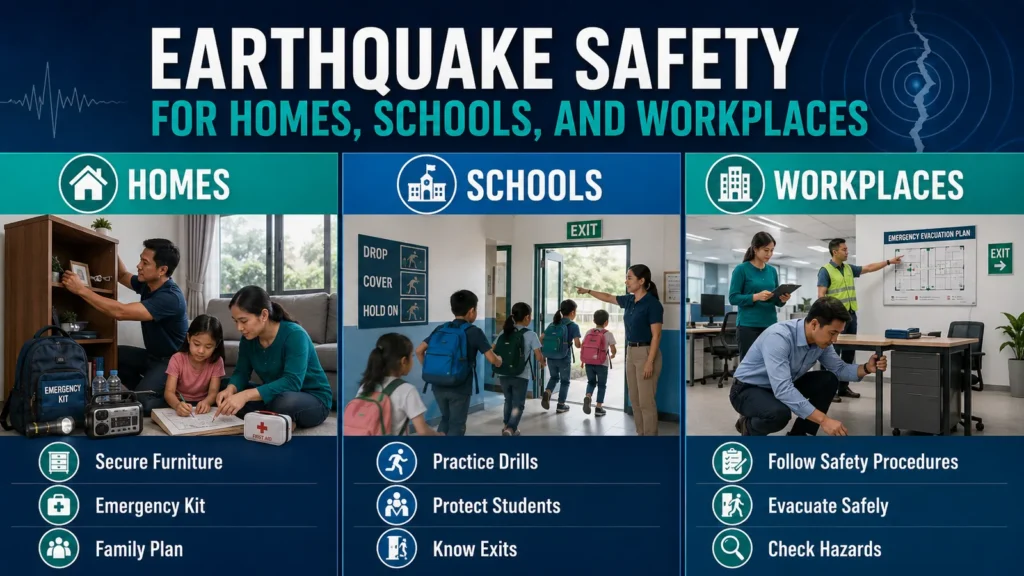
Home safety
At home, earthquakes often happen when people are sleeping, cooking, studying, or caring for children. Keep exits clear, store breakable items safely, know where the flashlight is, and make sure family members understand the meeting point. If you live in an apartment, learn the building evacuation route and avoid elevators after shaking.
School safety
Schools should treat earthquake drills as serious practice, not routine noise. Students need to know where to take cover, when to evacuate, where to assemble, and how attendance will be checked after evacuation. Teachers should prepare for frightened students, possible injuries, blocked exits, and communication delays with parents.
For parents, ask the school about its earthquake plan. Know how the school will release students, where children will wait, and what contact channels will be used if phones are overloaded.
Workplace safety
Workplaces should assign clear roles: who leads evacuation, who brings the first aid kit, who checks attendance, who contacts building management, and who assists visitors or workers with mobility needs. A laminated floor plan, visible exit signs, and regular drills can prevent confusion.
Tsunami and Coastal Safety After Strong Shaking
Some earthquakes can trigger tsunami warnings, especially near coastal zones. If you are near the shore and feel strong or long shaking, do not wait near the water to “see what happens.” PHIVOLCS tsunami information advises people not to stay in low-lying coastal areas after a felt earthquake and to move to higher ground if unusual sea conditions occur, such as rapid lowering of sea level. Review official PHIVOLCS tsunami safety guidance for more detail.
- Move inland or to higher ground after strong coastal shaking.
- Do not go to the beach to watch the sea.
- Follow evacuation signs and local government instructions.
- Stay away until authorities say it is safe to return.
This point is especially important for coastal students, fishermen, market workers, tourists, and families living near bays, ports, or shorelines. A tsunami risk may not look dramatic at first, but waiting too long can remove your escape time.
Common Mistakes to Avoid
Many earthquake injuries happen because people follow myths or panic habits. Avoid these mistakes:
- Standing in a doorway as the default rule: modern guidance usually focuses on Drop, Cover, and Hold On under sturdy furniture or against a safer interior area when no shelter is nearby.
- Running outside during shaking: falling glass, wires, and debris can be dangerous near exits and outer walls.
- Using elevators after shaking: power loss, damage, or aftershocks can trap people.
- Returning quickly to damaged buildings: aftershocks can worsen cracks or partial collapse.
- Sharing unverified warnings: fake posts can create panic and distract people from official instructions.
- Forgetting special needs: babies, older adults, people with disabilities, pets, and people on medication need planned support.
How to Check Official Earthquake Updates Safely
After an earthquake, people search online immediately. That is understandable, but not every viral post is accurate. This Earthquake Philippines Safety Guide recommends using official and reliable sources first: PHIVOLCS earthquake information, tsunami advisories, local government announcements, school or workplace notices, and verified disaster risk reduction channels.
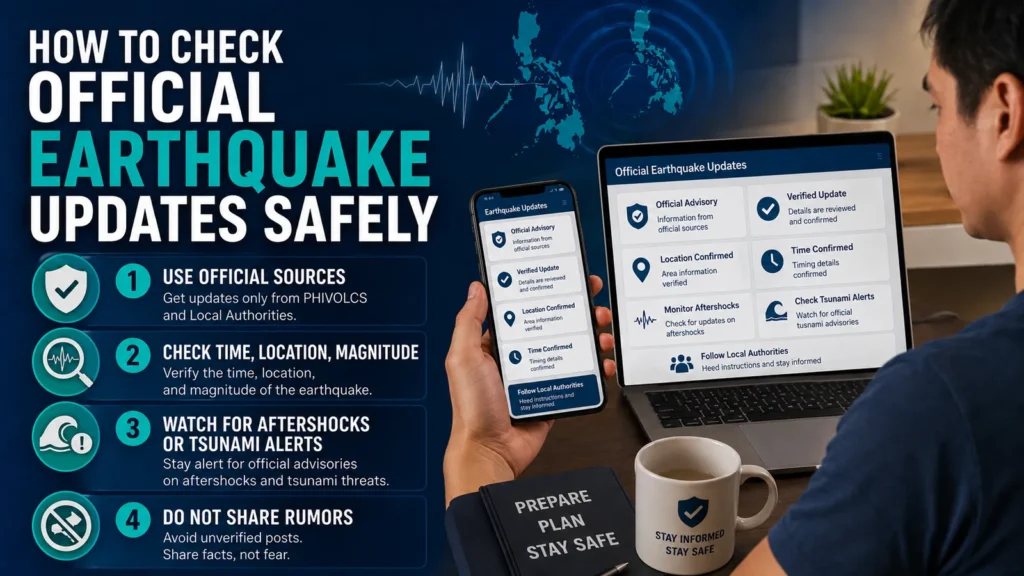
When checking updates, look for the date, time, location, magnitude, depth, advisory status, and whether local authorities are asking people to evacuate or avoid certain areas. Do not rely only on screenshots because they can be old, edited, or taken from a different event.
Safe checking habit: open the official website or verified channel directly, compare the time stamp, and avoid reposting claims until they are confirmed.
Earthquake Philippines Safety Guide: 15 Quick Safety Steps
- Fasten large furniture, shelves, and heavy appliances before an earthquake occurs.
- Keep sturdy shoes, a flashlight, and important emergency contacts close to sleeping areas.
- Prepare a lightweight emergency bag for every family member, child, or student.
- Decide on safe meeting locations and backup contacts before phone networks become overloaded.
- Practice Drop, Cover, and Hold On with children, older adults, and anyone who may need help.
- When shaking starts, stay low and shield your head and neck from falling objects.
- If you are already indoors, remain inside until the shaking has stopped.
- If you are outside, move to an open space away from buildings, trees, utility poles, and wires.
- If you are in a vehicle, stop carefully in a safe area away from bridges and overhead hazards.
- After the shaking ends, check for injuries and put on footwear before walking around.
- Use stairs instead of elevators if officials or building conditions require evacuation.
- Stay alert for aftershocks and do not enter buildings that appear cracked, leaning, or unsafe.
- If you are near the coast and feel strong shaking or notice tsunami warning signs, move to higher ground.
- Follow updates from PHIVOLCS, local officials, and trusted emergency information channels.
- After each drill or real earthquake, review what worked, fix weak spots, and update your family safety plan.
Conclusion
A strong earthquake can turn normal life into emergency decision-making within seconds, but preparation gives people a better chance to respond calmly. This Earthquake Philippines Safety Guide focused on the three stages that matter most: prepare before shaking, protect yourself during shaking, and act carefully after shaking stops.
The most important action during shaking is simple: Drop, Cover, and Hold On. The most important action before shaking is to secure your space and make a family or school plan. The most important action after shaking is to stay alert for aftershocks, avoid damaged buildings, and follow official instructions.
Earthquake safety is not about fear. It is about making smart actions easy before stress takes over. For families, students, schools, and workplaces in the Philippines, even small steps today can reduce injuries tomorrow.
FAQ Section
What is the safest thing to do during an earthquake in the Philippines?
The safest basic action during shaking is to Drop, Cover, and Hold On. Drop low so you are not knocked down, cover your head and neck under sturdy furniture if possible, and hold on until the shaking stops. Stay away from windows, shelves, and heavy objects that may fall.
Should I run outside during an earthquake?
No. If you are already indoors, it is usually safer to stay inside, take cover, and wait until the shaking stops. Running outside can expose you to falling glass, walls, signs, wires, and roof materials. After shaking stops, evacuate carefully if the building is damaged or authorities instruct you to leave.
What should coastal residents do after strong earthquake shaking?
If you are near the coast and feel strong or long shaking, move to higher ground or inland immediately, especially if official tsunami guidance or local warning signs indicate danger. Do not go to the beach to watch the sea, and do not return until authorities say it is safe.
What should be in a family earthquake emergency kit?
A family earthquake kit should include drinking water, ready-to-eat food, flashlight, batteries, power bank, first aid items, needed medicines, hygiene supplies, whistle, emergency contacts, copies of important documents, small cash, masks, and basic clothing or rain protection.
How can I check official earthquake updates in the Philippines?
Check PHIVOLCS earthquake information and advisories, local government emergency pages, school or workplace announcements, and verified disaster risk reduction channels. Avoid relying on random screenshots or viral posts unless the information is confirmed by official sources.
- Earthquake Philippines Safety Guide: 15 Powerful Steps
 This Earthquake Philippines Safety Guide explains the safest actions to take before, during, and after shaking. Before an earthquake, secure heavy objects, prepare a family plan, check local hazards, and… Read more: Earthquake Philippines Safety Guide: 15 Powerful Steps
 - Tsunami Warning Philippines Explained: 7 Critical Safety Facts
 Tsunami warning Philippines explained means knowing what an official tsunami alert is trying to tell coastal communities and what action people should take before danger gets closer. A warning does… Read more: Tsunami Warning Philippines Explained: 7 Critical Safety Facts
 - Philippines Earthquake Explained: 7 Powerful Reasons Quakes Happen
 Philippines earthquake explained simply means understanding why the country experiences frequent shaking, how earthquakes happen, what makes some areas more vulnerable, and what people should do before, during, and after… Read more: Philippines Earthquake Explained: 7 Powerful Reasons Quakes Happen