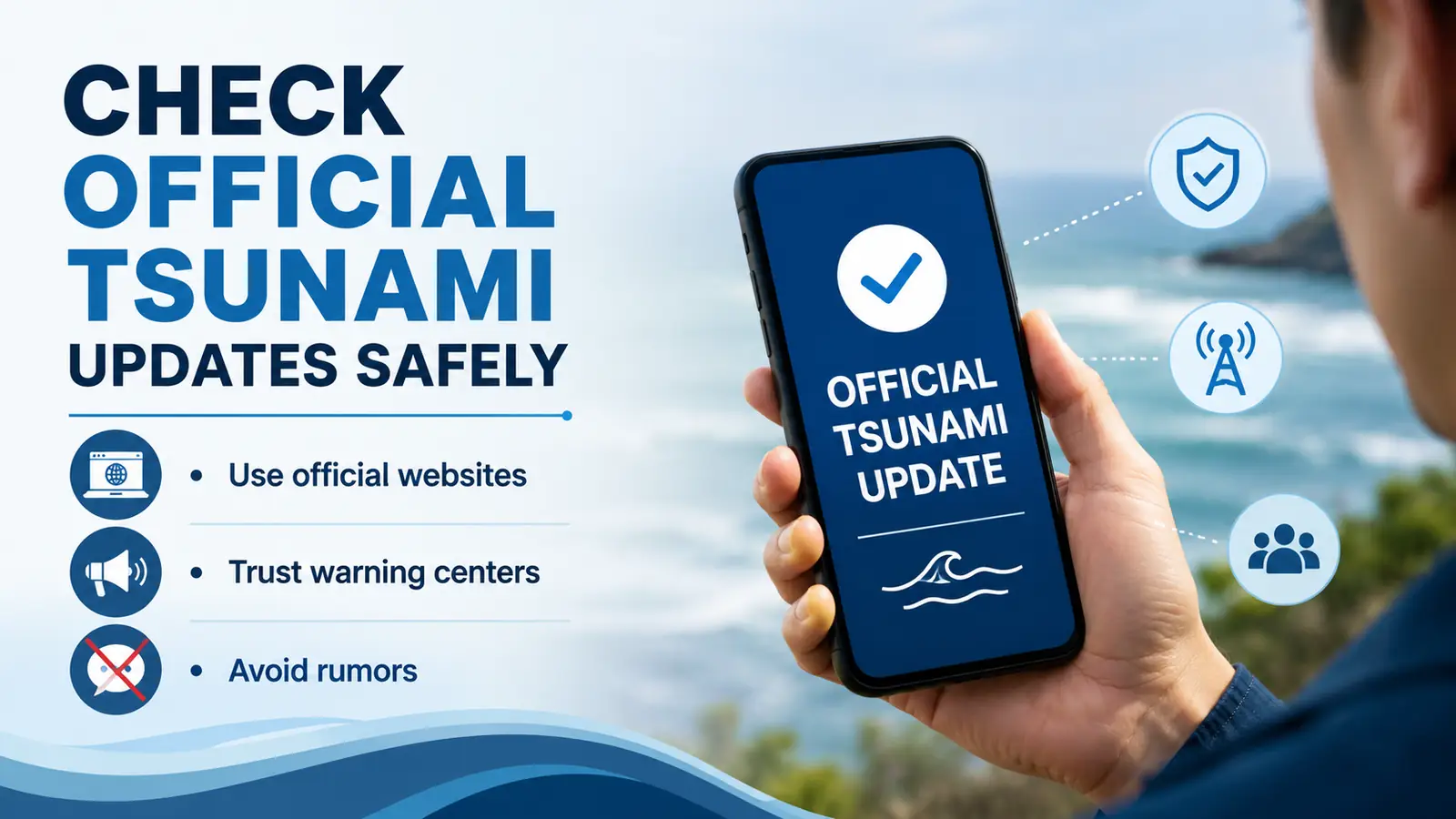
Tsunami warning Philippines explained means knowing what an official tsunami alert is trying to tell coastal communities and what action people should take before danger gets closer. A warning does not mean every beach, town, or island will face the same impact. It means authorities have found a possible tsunami threat for specific coastal areas, where flooding, fast-moving water, or strong currents may become dangerous. Anyone near the shoreline should stay calm, check official updates, listen to local emergency instructions, move to higher ground or farther inland when advised, and avoid sharing unverified posts that can create confusion during a serious situation.
Introduction
Tsunami alerts can make people nervous, especially when they come soon after a powerful earthquake under or near the sea. Words such as warning, advisory, watch, evacuation, coastal flooding, or wave danger can quickly create confusion for families living near the shoreline. That fear is natural, but during a possible tsunami threat, the most helpful thing is not panic — it is clear, trusted information.
This evergreen guide breaks down tsunami warning Philippines explained in simple language for everyday readers. It focuses on what these alerts mean, why some offshore earthquakes raise tsunami concerns, how official agencies review the risk, and what coastal families should do before, during, and after an alert. The goal is to give practical safety knowledge without exaggeration, fake disaster claims, or fear-based wording.
Official tsunami alerts are created to help emergency teams, local authorities, coastal communities, and the public understand a possible ocean-related hazard. Early alerts may be based on the first earthquake details available, while later updates can become more accurate as experts review sea-level readings, forecast tools, and additional scientific information.
Tsunami Warning Philippines Explained: What It Means
A tsunami warning means that a tsunami with dangerous potential may be imminent, expected, or occurring for a specific coastal area. In simple words, it is a high-level alert that coastal residents should take seriously. It does not mean every beach, bay, or island will experience the same impact. Local geography, distance from the source, wave direction, tide level, and official modeling can all affect the final risk.
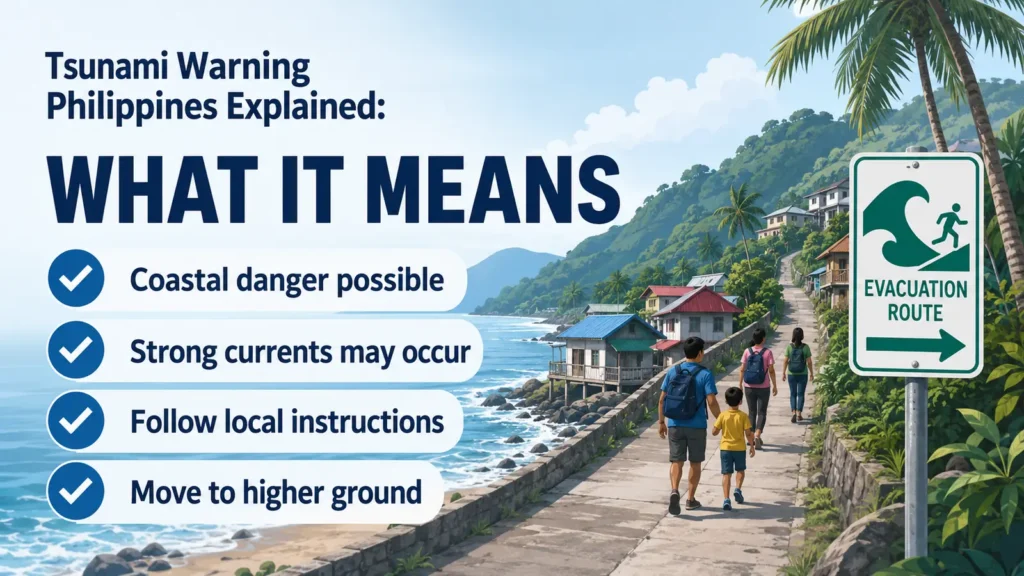
For the Philippines, tsunami risk is especially important because the country is made of many islands and coastal communities. Some coastal towns may be close to offshore earthquake zones. Others may be farther away but still need to watch official messages when a large undersea earthquake occurs in the region.
The phrase tsunami warning Philippines explained should not be used to scare readers. It should help them understand that a warning is an instruction-focused alert. The safest response is to pay attention, follow local emergency officials, move away from low-lying coastal areas when instructed, and avoid waiting near the water to watch waves.
Quick Safety Meaning Box
| Term | Reader-Friendly Meaning |
|---|---|
| Tsunami warning | A serious alert that coastal flooding, fast-moving water, or dangerous currents could affect the warned area. |
| Main action | Follow local emergency instructions and move to higher ground or farther inland if evacuation is advised. |
| What not to do | Do not visit beaches, ports, river mouths, or low coastal spots to record videos or watch the sea. |
| Best source | Check official updates from local authorities, PHIVOLCS, and trusted tsunami warning centers before sharing or reacting. |
Warning vs Advisory vs Watch vs Information Statement
Many people confuse tsunami alert levels. This confusion can make a safe response harder. The alert level tells people how urgent the situation is and what kind of action may be needed.
A warning is the most urgent public safety message. It is associated with possible dangerous flooding or powerful currents. An advisory is less severe than a warning, but it can still be dangerous for people in or near the water. A watch means the impact is not yet known, so people should stay informed and be ready. An information statement usually means there is no immediate destructive threat or that the event is being evaluated.
| Alert Type | Possible Hazard | Reader Action |
| Warning | Dangerous coastal flooding and powerful currents | Move to high ground or inland when instructed |
| Advisory | Strong currents and waves dangerous near water | Stay out of water and away from beaches, harbors, and waterways |
| Watch | Threat not yet known | Stay tuned and prepare to act |
| Information Statement | No threat or distant event still being evaluated | Usually no immediate public action |
The important detail is that alert levels can change. A watch can be upgraded. A warning can be adjusted, downgraded, or canceled. That is why readers should check the latest official update instead of relying on one screenshot or one old social media post.
For InfoJustify readers, this section matters because people often search tsunami warning philippines during stressful moments. A clear table helps them understand the difference quickly and act safely without confusion.
Why Some Earthquakes Trigger Tsunami Alerts
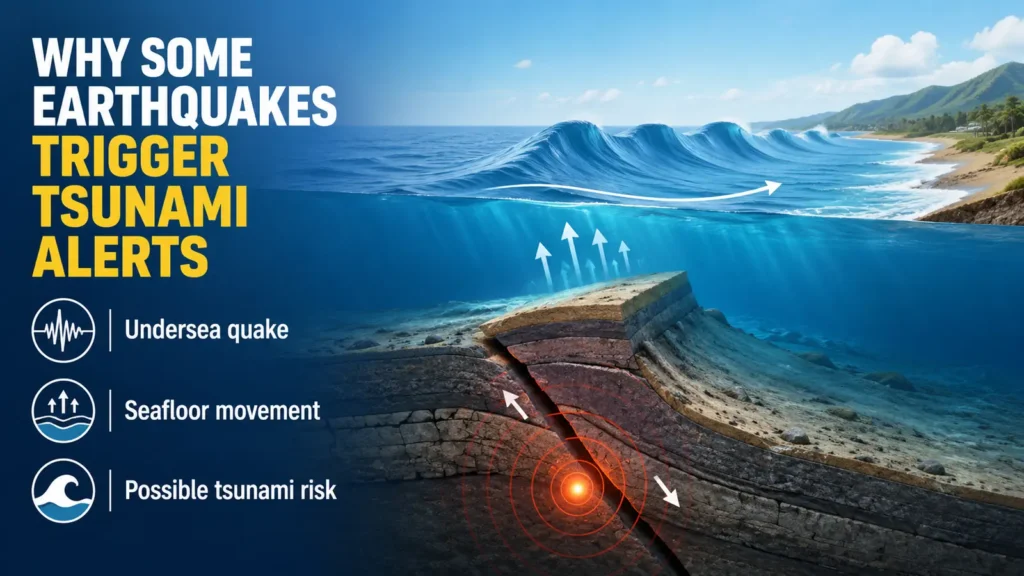
A tsunami is not caused by every earthquake. A tsunami is usually linked to a sudden disturbance that moves a large amount of water. The most common cause is a strong undersea earthquake, especially when the seafloor moves vertically and displaces water.
An earthquake tsunami warning may be issued before a tsunami is confirmed because warning centers need to move fast. Early decisions often use preliminary earthquake data such as magnitude, depth, location, and fault type. Later updates may include sea-level readings, buoy data, coastal tide gauges, and forecast modeling.
This is why one strong offshore earthquake may trigger a warning while another strong earthquake may not. The difference can depend on whether the earthquake happened under the sea, how deep it was, how the fault moved, whether water was displaced, and how the wave may travel toward coastal communities.
Simple Example
Imagine dropping a stone straight into a bowl of water. The water moves outward because the stone disturbed it. A tsunami is more complex, but the basic idea is similar: if the seafloor moves suddenly and pushes water, waves can spread across the ocean. If an earthquake happens deep underground or moves in a way that does not strongly displace water, the tsunami risk may be lower.
This is also why readers should not decide risk by magnitude alone. Magnitude is important, but location, depth, fault movement, sea-level observations, and official analysis matter too.
Natural Tsunami Warning Signs People Should Know
Official alerts are important, but in some near-source tsunami situations, people may feel the earthquake before a formal warning reaches them. That is why natural warning signs are also important.
People near the coast should be alert if they experience strong or long shaking, notice the ocean suddenly rising or falling, or hear an unusual loud roar from the sea. These signs do not prove that a tsunami will definitely arrive, but they are serious enough that people should move away from the shore and seek safer ground instead of waiting to confirm the danger visually.
Natural signs are especially important for coastal communities, tourists, fishermen, boaters, and families living near beaches, bays, harbors, or river mouths. If local officials later confirm that there is no threat, people can return when it is safe. But during uncertainty, moving away from the water is safer than watching from the shoreline.
Natural Warning Signs
- Strong ground shaking near the coast.
- Long shaking that continues longer than normal.
- Sudden sea retreat or sudden rise in water level.
- A loud ocean roar that sounds unusual.
- Official sirens, emergency texts, radio alerts, or local evacuation instructions.
A key tsunami safety rule is simple: if you are near the coast and the environment feels wrong after a strong earthquake, do not move closer to the water. Move away from the coast, then check official information.
What Coastal Families Should Do During a Warning
Tsunami safety steps should be simple enough to remember under stress. During a warning, people do not need a perfect explanation of wave physics. They need clear actions.
First, move away from the coast if your area is under a warning or local officials order evacuation. Choose higher ground or an inland route. Second, avoid beaches, harbors, seawalls, rivers, and low-lying coastal roads. Third, do not return just because the first wave looks small or the water seems calm. Tsunami danger can continue for several hours after initial arrival, and later waves can still be dangerous.
Families should also keep communication simple. Send short text messages instead of making long phone calls when networks are busy. Keep emergency bags ready. Know where children, older adults, and pets should go. If driving creates traffic or delays, follow local evacuation guidance and use designated routes when available.
Family Checklist
- Know your nearest high-ground or inland evacuation route before a warning happens.
- Keep shoes, water, flashlight, first-aid supplies, and important documents ready.
- Do not wait to collect nonessential belongings during an evacuation order.
- Help children understand that moving inland is a safety step, not a punishment or panic reaction.
- Return only after officials say the area is safe.
The best tsunami safety steps are planned before the emergency. A family that already knows where to go can move faster and with less confusion.
How to Check Official Tsunami Updates Safely
During a tsunami philippines search spike, social media can move faster than official updates. Speed is useful, but accuracy matters more. A fake map, old wave video, or copied screenshot can mislead people and create panic.
For earthquake details, readers can check the USGS Latest Earthquakes map or earthquake feeds. For Philippines-specific earthquake and tsunami advisories, readers should check PHIVOLCS and local emergency offices. For tsunami alert meaning and warning terminology, readers can use tsunami.gov and National Weather Service tsunami safety resources. This is also why searches like usgs earthquakes philippines can be useful when readers want earthquake details before checking tsunami messages.
What to Check
| Detail | Why It Matters |
| Time of update | Confirms whether the message is current or old. |
| Affected coastlines | Shows whether your location is included. |
| Alert level | Explains whether it is warning, advisory, watch, or information statement. |
| Recommended action | Tells people whether to evacuate, stay away from beaches, or monitor updates. |
| Cancellation update | Confirms when the threat has ended or dropped below damaging levels. |
If a tsunami-related post on social media does not show a clear date, source, alert type, location, or official link, do not treat it as final safety information. It may help you notice that something is happening, but your real decision should come from official updates and local emergency instructions.
Common Mistakes to Avoid During a Tsunami Alert
During a tsunami alert, many risky decisions happen because people are curious, confused, or too confident about their local area. Some people move toward the shoreline to record videos. Others think the danger has passed after the first wave. Some ignore evacuation routes because they have lived near the coast for years and believe they already know the area well.
Another common mistake is thinking a tsunami advisory means everything is normal. Even if major flooding is not expected, fast water movement and strong currents can still make beaches, harbors, boats, docks, and river mouths unsafe. Staying away from the water is part of the safety message.
People should also understand that a canceled warning does not mean the alert was fake. Tsunami warnings are sometimes issued early because officials need to protect coastal communities before every reading is complete. If later sea-level data, modeling, and expert review show that a destructive tsunami is not expected, the warning may be lifted or canceled. That is the system updating with better information, not a false alarm.
Avoid These Actions
- Do not go near the beach to watch or record waves.
- Do not drive toward coastal areas just to check damage.
- Do not share disaster videos without checking the date and location.
- Do not ignore evacuation instructions because the ocean looks calm.
- Do not return to low-lying coastal areas until officials confirm it is safe.
Tsunami Safety Tips for Visitors Staying Near the Coast
People who are visiting the Philippines for a short trip may not understand the local coastline the way residents do. They may not know which roads lead uphill, which areas are low-lying, or where emergency signs are posted. That is why coastal visitors should do a little planning before they relax near the beach.
Before booking or staying in a seaside hotel, look around with safety in mind. Check where the nearest higher ground is. Ask the hotel desk what guests should do if a tsunami alert is issued. Notice whether there are evacuation signs on nearby roads. Keep your phone charged, save an offline map, and keep shoes, water, and important items easy to reach.
If officials issue a warning, do not waste time trying to understand every local detail by yourself. Follow the instructions from hotel staff, local authorities, police, emergency workers, or community leaders. They are more likely to know which roads are open, which routes are safer, and which places should be avoided. The safest choice for a visitor is simple: move away from the shoreline quickly and do not block evacuation routes for local people.
Extra Advice for Families With Children
Families should keep the safety plan short and easy. Children do not need a long explanation during an emergency. A simple phrase like “go uphill now” or “move away from the water” can help them understand what to do.
Parents staying near the beach should keep shoes, a flashlight, drinking water, and a small ready-to-go bag near the door. If an alert happens at night, a clear exit path can reduce confusion. The goal is not to scare children, but to ensure the family can move quickly without having to search for basic items.
Philippines Earthquake Explained: 7 Powerful Reasons Quakes Happen
How This Guide Helps During Future Tsunami Concerns
A tsunami alert may happen because of different earthquakes in different years, but people usually ask the same basic questions: Is the coast safe? Should I move inland? Which alert should I trust? What should I avoid doing?
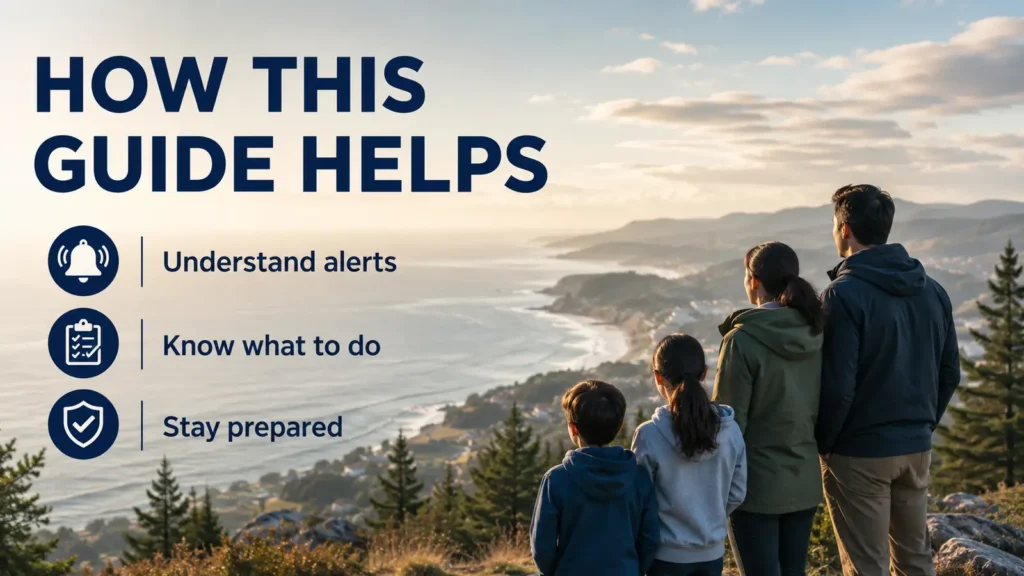
That is why this article is written as a safety guide, not as a one-day news update. The exact location, alert level, and earthquake details can change, but the safety thinking remains useful. Readers can use this guide to understand the meaning of tsunami alerts, then check official sources for the live situation.
For a publisher, this approach is also more responsible. It avoids old “today” information, does not pretend that an alert is still active forever, and gives readers knowledge they can use whenever a future offshore earthquake raises tsunami concern.
Quick Takeaways for Readers
- Trust official alerts more than viral screenshots or old videos.
- If strong or long shaking happens near the sea, take coastal safety seriously.
- Moving uphill or inland is safer than standing near the water to watch.
- A canceled warning does not mean the warning was fake; it means officials reviewed the threat and updated the alert.
- During a tsunami concern, calm action is better than panic sharing.
Practical Recap for Safer Tsunami Decisions
For anyone reading about tsunami Philippines updates, the most important rule is simple: stay away from the shoreline, avoid guessing, and do not turn a possible danger into a video moment. If an alert is active, your first job is to protect life, not to record waves, forward random posts, or wait near the water for visual proof.
A tsunami alert does not affect every shoreline in the same way. One town may face stronger currents while another area may see little or no impact. Authorities often send early alerts to give people time to move before all ocean readings are complete. If later monitoring shows the threat is lower than expected, the alert may be changed or lifted. This is not a mistake; it is the warning system adjusting as better information becomes available.
People near the coast should also pay attention to natural warning signs. If strong or long shaking happens, the ocean suddenly behaves strangely, the water pulls back in an unusual way, or a loud ocean roar is heard, do not stay at the beach to investigate. The safer move is to go uphill or farther inland first, then check official updates after reaching a safer place.
Official alerts matter because they come from monitoring systems, warning centers, and emergency authorities that review earthquake information, ocean readings, and local risk. A single screenshot or social post should never be treated as the final answer. Always look for the latest official message and follow instructions from local emergency workers.
Natural Signs and Official Alerts Both Matter
A helpful tsunami safety article should explain two things together. First, official agencies can issue alerts when earthquake data and ocean observations suggest possible danger. Second, people already near the coast may need to act quickly if natural signs appear before a phone notification or news update reaches them.
This is where tsunami warning Philippines explained becomes practical, not scary. It helps readers understand that a warning is not made to create panic. It is made to give coastal communities time to move before water, currents, or flooding become dangerous.
For families, tourists, and coastal residents, the clearest takeaway is this: if the alert affects your area, move away from low coastal ground first and verify details after you are safer. Return only when officials say it is safe. This approach keeps tsunami safety steps focused on real protection instead of fear-based reactions.
A prepared reader can protect family members, avoid unsafe shorelines, and share better information during a coastal emergency. Calm action, trusted sources, and early movement are always stronger than panic, curiosity, or unverified social media claims.
Sources of Links
| Topic / Purpose | Clean URL |
| Tsunami alert definitions and warning logic | https://www.tsunami.gov/?page=message_definitions |
| General tsunami safety resources | https://www.weather.gov/safety/tsunami |
| Earthquake event checking and recent earthquake data | https://earthquake.usgs.gov/earthquakes/map/ |
| Philippines-specific earthquake and tsunami advisories | https://www.phivolcs.dost.gov.ph/ |
| Earthquake education and monitoring context | https://www.usgs.gov/programs/earthquake-hazards |
Conclusion
Tsunami warning Philippines explained is a safety guide, not a fear message. A warning means people in affected coastal areas should take official instructions seriously because coastal flooding, fast-moving water, or powerful currents may become dangerous. It does not mean every shoreline will face the same impact, and it should never be used to create panic content.
The safest response is to understand the alert level, move inland or to higher ground when advised, stay away from beaches, harbors, river mouths, and low coastal areas, and keep checking official updates. Earthquakes can happen quickly, tsunami messages can change, and social media can spread confusion during stressful moments.
For InfoJustify readers, the key lesson is clear: learn the warning terms before an emergency, trust official sources during an alert, and never move toward the coast to watch a possible tsunami threat. Good information should help people act earlier, stay calmer, and make safer decisions.
FAQs –
What does a tsunami warning mean in the Philippines?
A tsunami warning in the Philippines means dangerous coastal flooding or powerful currents may be possible for affected coastal areas. People should follow local emergency instructions, move inland or to higher ground when told, and avoid beaches, harbors, and waterways until officials say it is safe.
Does every strong earthquake create a tsunami?
No. Every strong earthquake does not create a tsunami. Tsunami risk depends on where the earthquake happens, how deep it is, how the fault moves, and whether the seafloor displaces enough water to generate dangerous waves.
What is the difference between a tsunami warning and advisory?
A tsunami warning is more urgent and can involve dangerous coastal flooding and powerful currents. A tsunami advisory usually means strong currents or waves may be dangerous for people in or near the water, but major flooding is not expected for the advisory area.
Where can people check official tsunami updates?
People should check official sources such as PHIVOLCS, local emergency offices, tsunami.gov, and recognized earthquake monitoring pages such as the USGS Latest Earthquakes map. Social media posts should be verified before being shared.
Can a tsunami warning be canceled?
Yes. A tsunami warning can be canceled after officials evaluate updated data and determine that a destructive tsunami will not affect the warning area or that the threat has dropped below dangerous levels.
- Earthquake Philippines Safety Guide: 15 Powerful Steps
 This Earthquake Philippines Safety Guide explains the safest actions to take before, during, and after shaking. Before an earthquake, secure heavy objects, prepare a family plan, check local hazards, and… Read more: Earthquake Philippines Safety Guide: 15 Powerful Steps
 - Tsunami Warning Philippines Explained: 7 Critical Safety Facts
 Tsunami warning Philippines explained means knowing what an official tsunami alert is trying to tell coastal communities and what action people should take before danger gets closer. A warning does… Read more: Tsunami Warning Philippines Explained: 7 Critical Safety Facts
 - Philippines Earthquake Explained: 7 Powerful Reasons Quakes Happen
 Philippines earthquake explained simply means understanding why the country experiences frequent shaking, how earthquakes happen, what makes some areas more vulnerable, and what people should do before, during, and after… Read more: Philippines Earthquake Explained: 7 Powerful Reasons Quakes Happen
One thought on “Tsunami Warning Philippines Explained: 7 Critical Safety Facts”