
Types of Yoga Explained: 30 Styles and How to Choose the Right One
A practical beginner-friendly guide to help you choose yoga by goal, intensity, body condition, lifestyle, and safety needs.
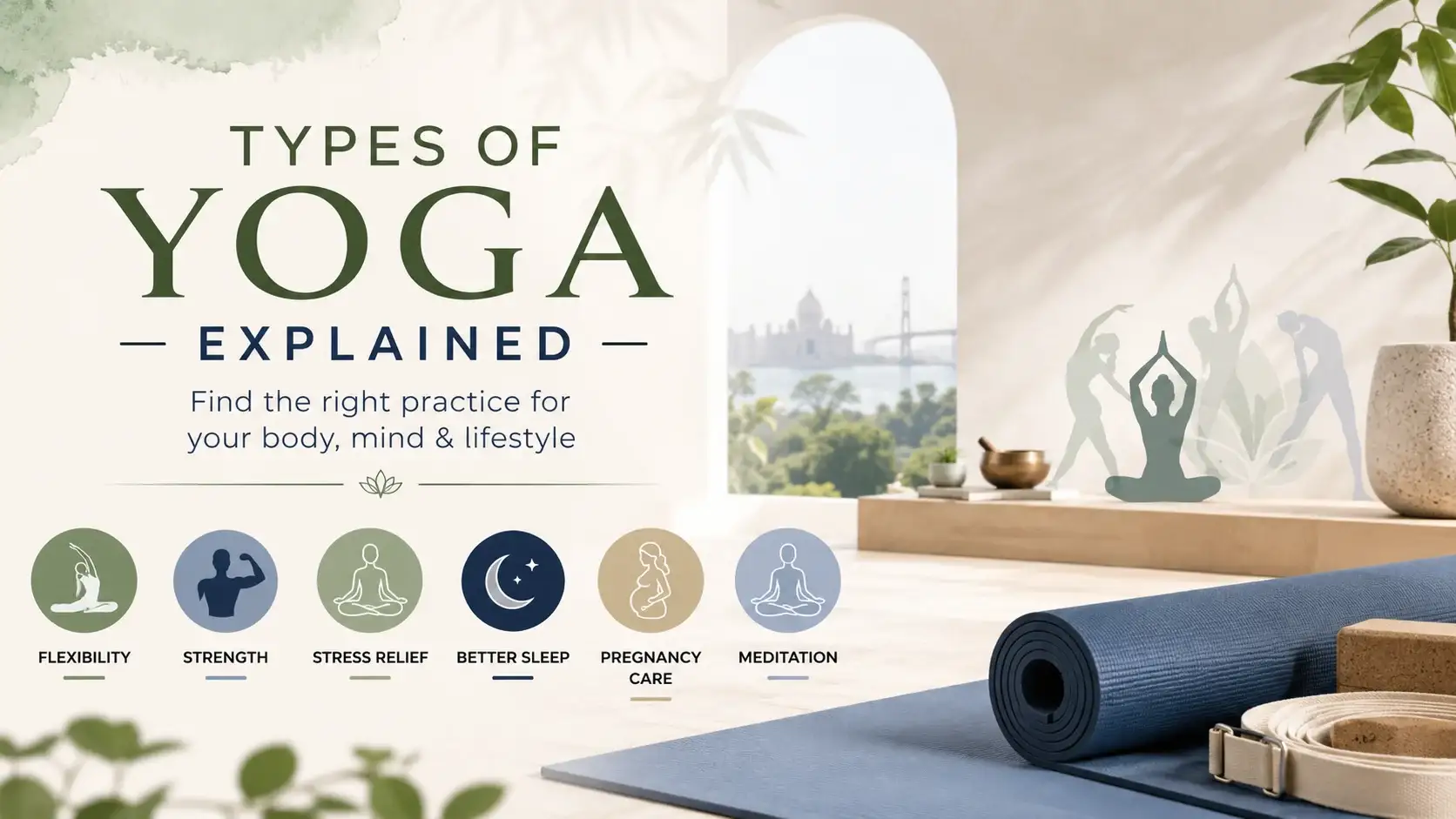
Quick Answer: How to Choose the Right Yoga Style
The best yoga style is not always the most popular one. It is the style that matches your body condition, your energy level, your goal, and the type of teacher you can safely learn from.
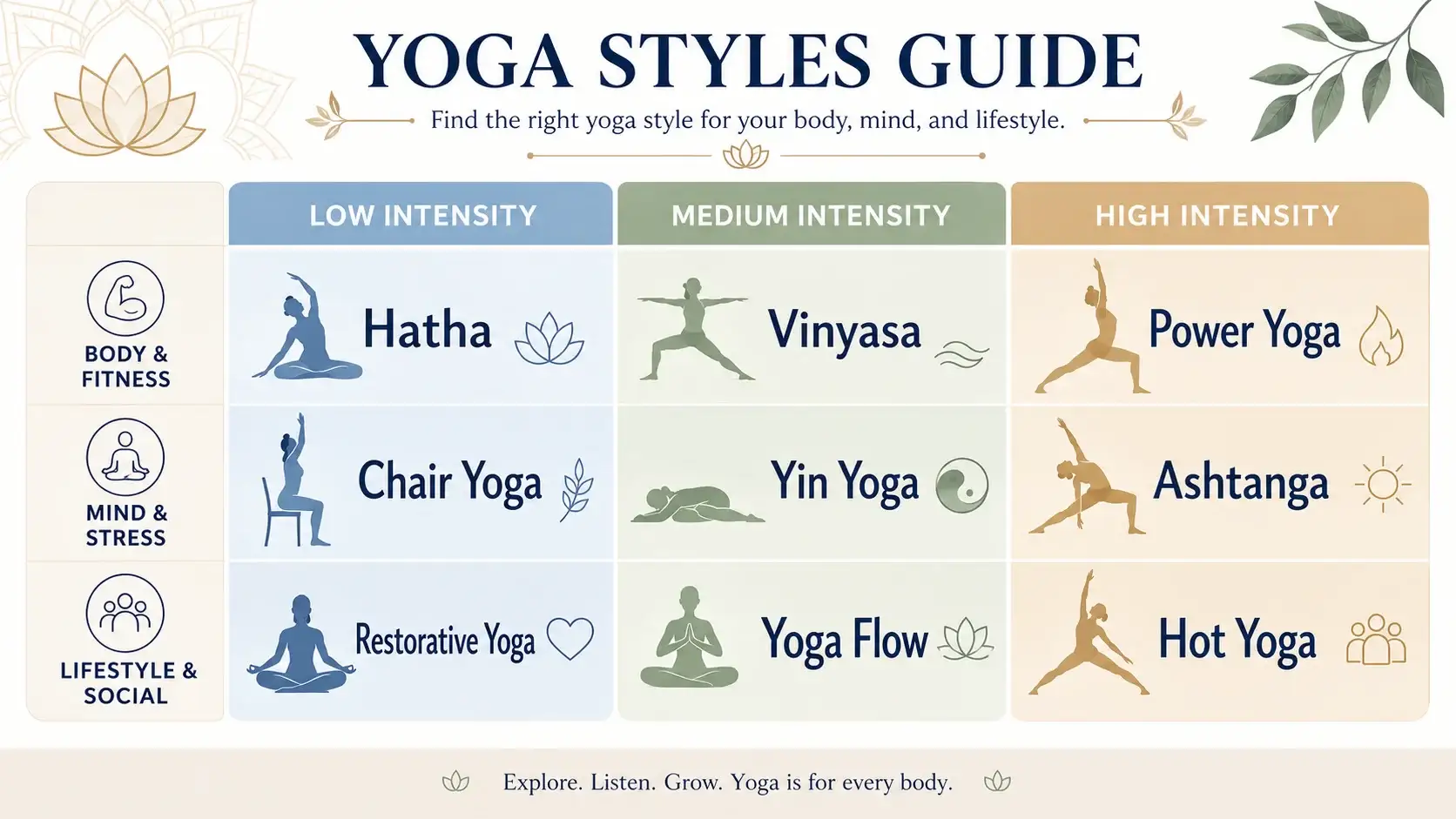
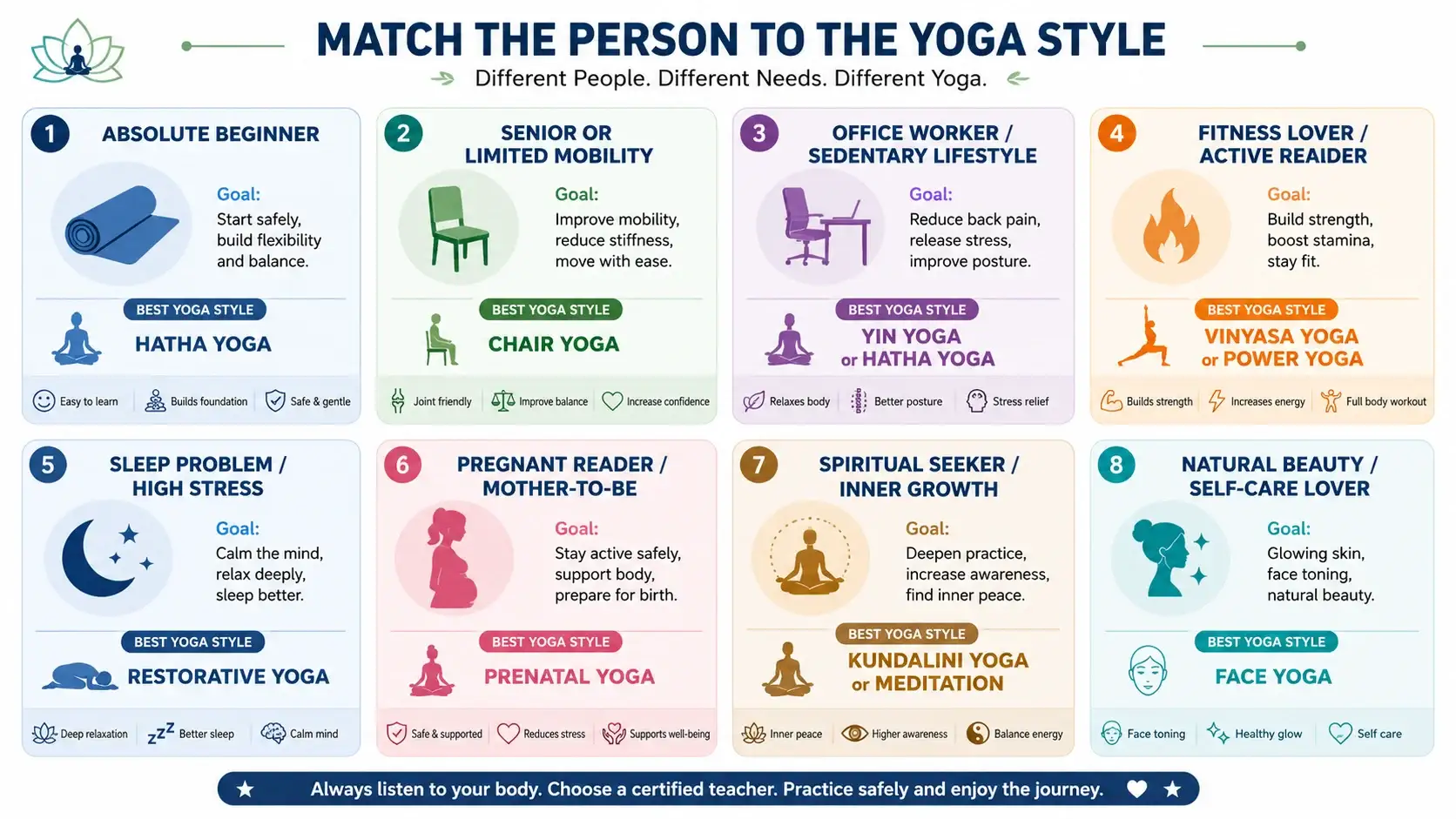
For a complete beginner, I would usually start with Hatha Yoga, Chair Yoga, Iyengar Yoga, Yin Yoga, or Restorative Yoga. For strength and sweat, Vinyasa, Power Yoga, Ashtanga, Hot Yoga, or Bikram Yoga may fit better after basic movement awareness is built.
For stress, sleep, and mental calm, Yoga Nidra, Restorative Yoga, Yin Yoga, Nada Yoga, and simple breath-based practice are usually more useful than a fast workout class.
Start with your goal first. Then check intensity, body condition, teacher quality, and recovery needs.
Article Navigation
How to use this guide
Read it like a personal selection tool. Do not memorize all 30 styles in one sitting. First identify why you want yoga: stress relief, flexibility, weight loss, pregnancy care, better posture, spiritual learning, or simple daily movement.
Pick one main style and one recovery style
A fitness reader may use beginner Vinyasa as the main practice and Yoga Nidra as recovery. A stressed office worker may use Hatha as the main practice and Restorative Yoga at night.
What Yoga Really Means in a Modern Wellness Routine
Yoga is often explained as posture practice, but a useful yoga routine can include breathing, relaxation, meditation, focus, mobility, and lifestyle discipline. In India, many people connect yoga with traditional mind-body practice. In the United States, many beginners first meet yoga through studios, gyms, wellness apps, workplace programs, or online classes.
Both views can be useful. The problem begins when a person chooses a style only because it looks viral, intense, or aesthetic. A student who needs sleep support may not need a heated power class. An office worker with stiffness may not need advanced inversions.
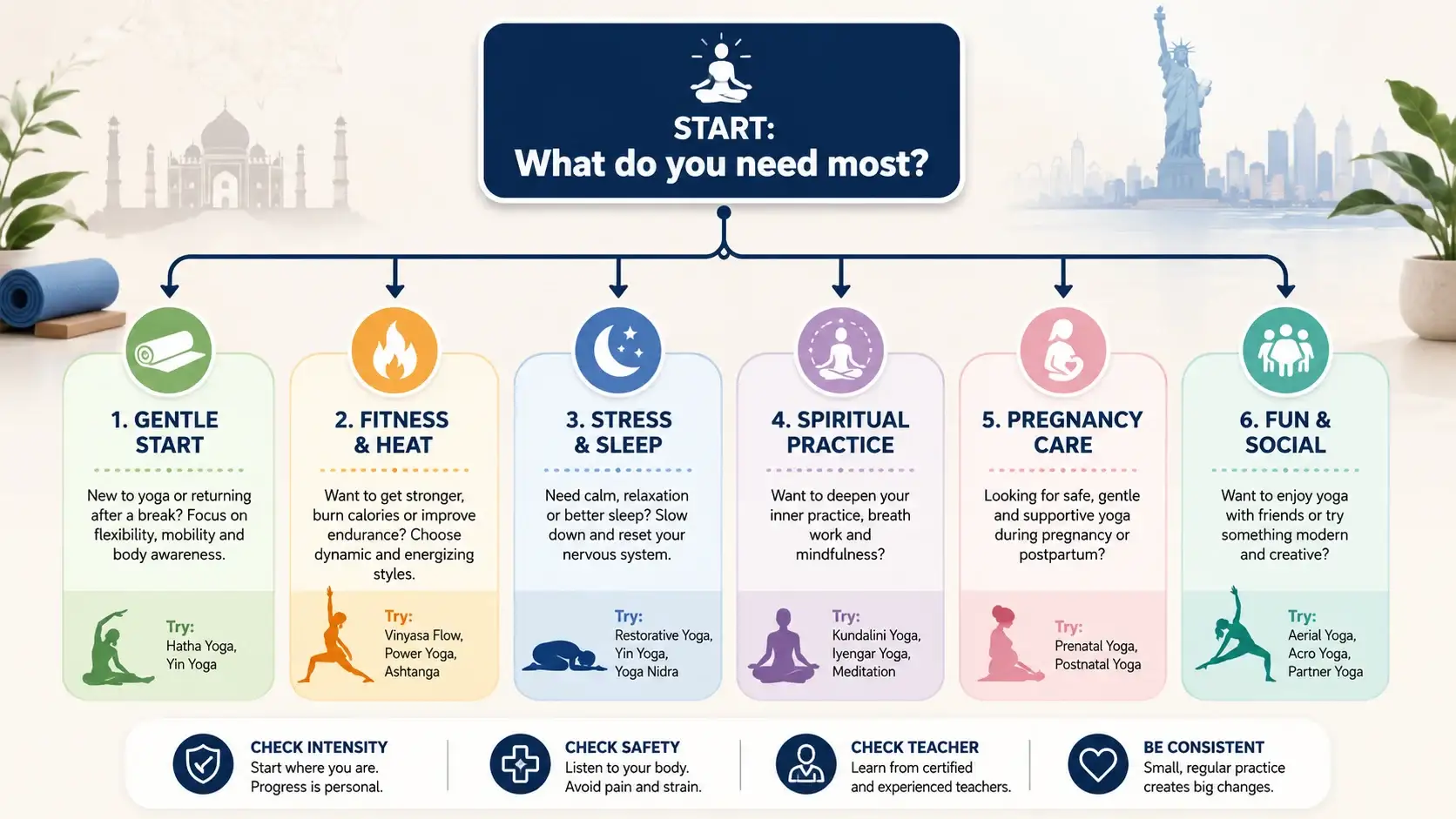
The simple way is to treat yoga like a map. Choose your destination first: flexibility, strength, calm, posture, pregnancy care, spiritual learning, social fun, or recovery. Then choose the path that fits your body.
The 5-Step Yoga Selection Framework
A safe yoga decision is not based on trend. It is based on goal, intensity, body condition, class format, and recovery. This framework keeps the article practical for beginners in both India and the United States.
Do you want calm, strength, flexibility, posture correction, pregnancy support, spiritual depth, or fun?
Low intensity fits beginners and recovery. Medium intensity fits active learners. High intensity fits sweat and discipline seekers.
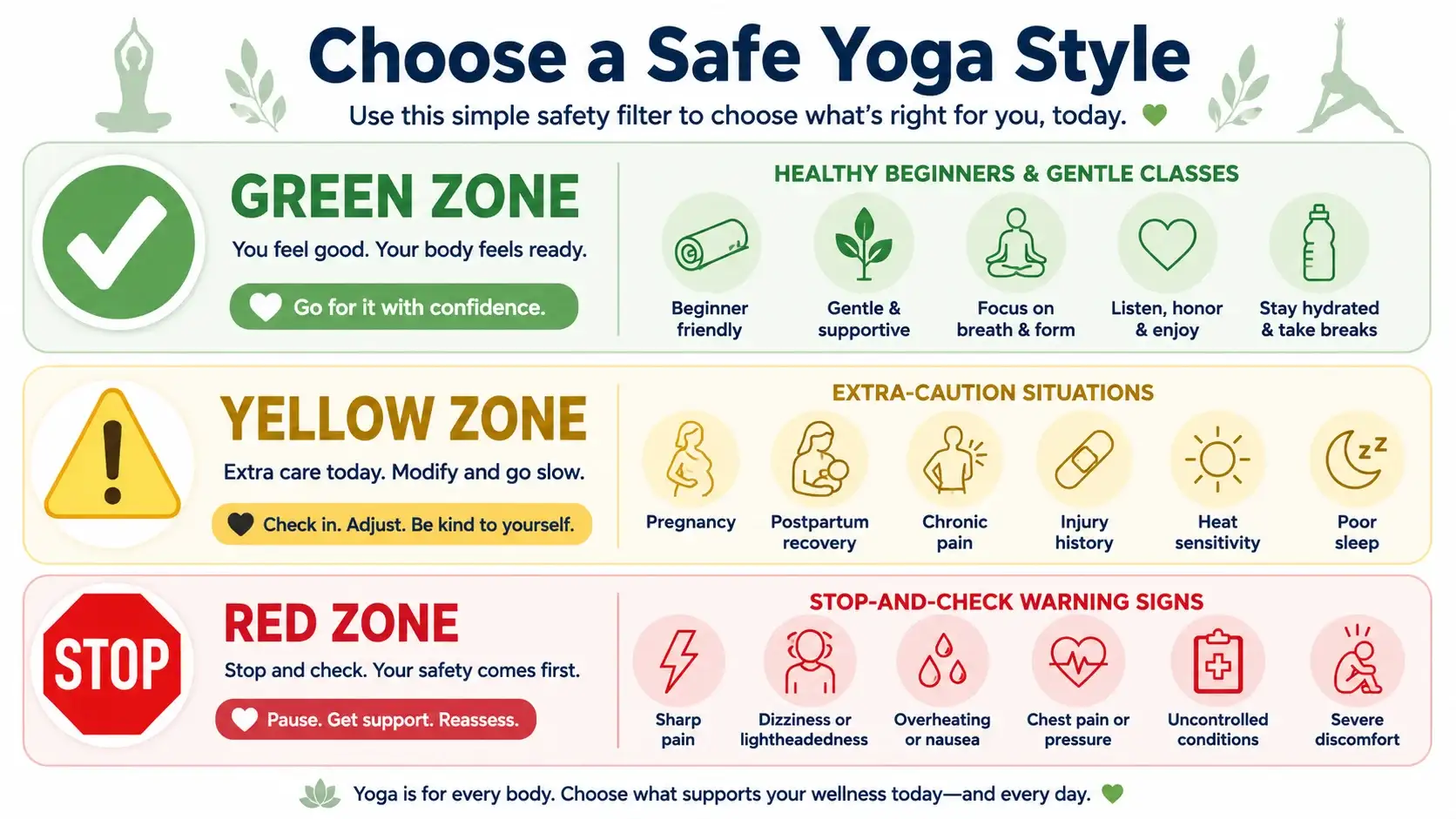
Pregnancy, pain, heat sensitivity, balance issues, and injury history should change your yoga choice.
A live teacher is better for alignment-heavy or higher-risk styles. Online classes can work for simple beginner routines.
Yoga should leave you clearer, steadier, and more aware. Sharp pain, dizziness, overheating, numbness, or breathlessness is a stop signal.
Choose a practice you can repeat safely, not the one that looks most impressive online.
Best Yoga Styles for Complete Beginners
Hatha Yoga is the first style I would explain to a new reader because it builds the foundation. It uses basic postures and breathing in a slower format.
Chair Yoga is even more accessible. It modifies traditional movements so a person can practice while sitting or using a chair for balance. This makes it useful for seniors, office workers, and people with limited mobility.
Iyengar Yoga is excellent when the reader cares about alignment. It uses props such as blocks, straps, cushions, or chairs. That makes poses more precise and often safer for posture correction or injury-sensitive practice.
Anusara Yoga also belongs in the beginner-alignment family because it focuses on uplifting, alignment-aware movement.
Beginner Alignment Gear Tip
For Hatha, Iyengar, Chair, Yin, and Restorative Yoga, two yoga blocks can help reduce strain and make poses more accessible. Use props as support, not as a shortcut to force deeper poses.
Product: Symactive High Density Premium EVA Foam Yoga Blocks · Placement: Beginner alignment / Hatha-Iyengar-Chair Yoga section
Best Yoga Styles for Fitness, Weight Loss, and Strength
Links movement with breath. Good for people who want rhythm, movement, and a dynamic class.
A modern fitness-focused style for muscle engagement, sweat, and gym-style intensity.
A fixed intense sequence for disciplined people who like routine, stamina, and measurable progress.
Adds heat, sweat, and flexibility demand. Hydration, pregnancy, medical conditions, and heat sensitivity matter a lot.
Best Yoga Styles for Stress, Sleep, and Recovery
Restorative Yoga is useful for burnout, anxiety-like tension, fatigue, and deep rest. It uses props to support the body so the person can stay in restful positions without muscular effort.
Yin Yoga is slow, quiet, and deep. Poses are held longer and should be practiced gently without forcing the joints.
Yoga Nidra is usually practiced lying down while attention is guided through the body and mind. It can support rest and sleep routines without a workout feeling.
Recovery Gear Tip
A yoga bolster can support the body in Restorative Yoga, Yin Yoga, and relaxation-based practice. It should be used for comfort and support, not as a medical treatment claim.
Product: Streetup India® Yoga Bolster for Iyengar Yoga With Premium Cotton Washable Cover · Placement: Stress, sleep, recovery / Restorative-Yin-Yoga Nidra section
Best Yoga Styles for Spiritual Learning and Inner Discipline
Kundalini Yoga uses breath practices, mantra, meditation, and physical movements to work with energy and awareness. Beginners should choose teachers carefully because some practices can feel intense.
Sivananda Yoga gives a traditional lifestyle framework around exercise, breathing, relaxation, diet, positive thinking, and meditation.
Jivamukti Yoga blends vigorous movement with ethical and philosophical teaching.
Kriya, Raja, Bhakti, Karma, and Jnana Yoga are not all posture-centered systems. They focus on breath, meditation, devotion, selfless action, knowledge, discipline, and self-inquiry.
Best Yoga Styles for Pregnancy and Postpartum Recovery
Prenatal Yoga is designed for pregnancy. It uses modified poses and usually avoids movements that strain the belly, overheat the body, or require risky balance.
Postnatal Yoga, sometimes called Mom and Baby Yoga, is designed for the postpartum body. Its job is to rebuild gently, support posture, and help the parent recover while bonding with the baby.
Fun, Social, and Modern Yoga Trends
Uses a suspended hammock and should be learned with equipment safety and trained instruction.
Combines yoga, acrobatics, and partner trust. Spotting and clear communication matter.
Takes yoga onto water and builds balance, focus, and core stability with water safety.
Uses shared support and should respect each person’s comfort and mobility.
Combines voluntary laughter and breathing for mood and group energy.
More lifestyle and wellness-trend focused than serious alignment training.
Quick Reference Table: 30 Yoga Styles
Use this table as a fast reader guide and future internal linking map for InfoJustify cluster articles.
| # | Yoga Style | Core Focus | Best For |
|---|---|---|---|
| 1 | Hatha Yoga | Basic postures + breathing | Beginner foundation |
| 2 | Vinyasa Yoga | Breath-linked flow | Dynamic cardio-style practice |
| 3 | Ashtanga Yoga | Fixed intense sequence | Discipline, stamina, core strength |
| 4 | Kundalini Yoga | Breath, mantra, energy work | Spiritual and mental practice |
| 5 | Iyengar Yoga | Precise alignment + props | Posture correction, seniors, injury recovery |
| 6 | Bikram Yoga | 26 poses in heated room | Sweat, heat-based flexibility |
| 7 | Yin Yoga | Long-held floor poses | Flexibility, joints, deep relaxation |
| 8 | Restorative Yoga | Fully supported rest poses | Stress, anxiety, fatigue, insomnia |
| 9 | Power Yoga | Fitness-based intense flow | Muscle building and sweat |
| 10 | Prenatal Yoga | Pregnancy-safe modified poses | Expecting mothers |
| 11 | Yoga Nidra | Guided yogic sleep | Sleep quality and deep relaxation |
| 12 | Aerial Yoga | Yoga with silk hammock | Spinal decompression, playful inversions |
| 13 | Chair Yoga | Yoga using a chair | Seniors, office workers, limited mobility |
| 14 | Face Yoga | Facial exercises + massage | Facial tension and beauty-wellness routines |
| 15 | Hot Yoga | Heated room with varied flows | Sweat + flexibility with variety |
| 16 | Sivananda Yoga | 5-principle holistic lifestyle | Traditional well-rounded practice |
| 17 | Jivamukti Yoga | Vinyasa + ethics/spiritual teaching | Vigorous practice with philosophy |
| 18 | AcroYoga | Yoga + acrobatics + partner work | Core strength and communication |
| 19 | Postnatal Yoga | Postpartum recovery practice | New mothers and baby bonding |
| 20 | Laughter Yoga | Laughter + breathing | Mood boost and group energy |
| 21 | Kriya Yoga | Advanced prana/breath meditation | Advanced spiritual seekers |
| 22 | Anusara Yoga | Heart-opening alignment system | Positive, alignment-safe practice |
| 23 | SUP Yoga | Yoga on paddleboard | Balance, core, nature lovers |
| 24 | Nada Yoga | Yoga of sound | Sound healing and meditation |
| 25 | Partner / Couples Yoga | Shared poses with partner | Trust, intimacy, communication |
| 26 | Bhakti Yoga | Path of devotion | Devotional spiritual practice |
| 27 | Karma Yoga | Selfless action | Service, meaning in daily duties |
| 28 | Raja Yoga | Mind control + Eight Limbs | Mental mastery and meditation |
| 29 | Jnana Yoga | Knowledge and self-inquiry | Thinkers and philosophers |
| 30 | Goat / Animal Yoga | Yoga with animals | Stress relief, joy, viral fun |
India and United States: How Readers Should Choose Differently
In India, yoga is culturally rooted and widely connected with traditional practice, spiritual learning, breath, and discipline. A beginner may find local teachers, community classes, AYUSH-linked resources, school or college yoga programs, and traditional institutes.
In the United States, yoga is often offered through studios, fitness clubs, wellness apps, workplace programs, and online subscriptions. The choice is larger, but branding can be confusing. One studio may call a class gentle, while another uses the same word for a more active flow.
For both countries, the best selection rule is the same: choose a teacher and class that matches the person. A beginner should not feel embarrassed to use props. A senior should not feel forced into fast flows. A pregnant reader should choose prenatal modification.
Beginner Practice Plan: A Safe 4-Week Starting Path
Pick Hatha Yoga or Chair Yoga. Practice two or three short sessions. Learn breathing, mountain pose, cat-cow, supported child’s pose, and simple relaxation.
Try Iyengar-inspired alignment or a beginner class with blocks and straps. Learn where your knees, hips, wrists, and spine feel stable.
Try Yin or Restorative Yoga once or twice. Notice whether sleep, stress level, and body tension improve.
If your body feels stable, try beginner Vinyasa. Keep the pace slow and do not jump into Power Yoga or Ashtanga too quickly.
Beginner Starter Gear Tip
You do not need expensive equipment to start yoga. A supportive non-slip yoga mat is enough for most beginner-friendly home practices. Add blocks and a strap only when they make the practice safer and more comfortable.
Product: Extra Thick NBR Yoga Mat with Carrying Strap · Placement: Beginner 4-week plan / starter gear box
Common Mistakes Beginners Should Avoid
- Choosing a style only because it looks impressive on social media.
- Treating sharp pain, dizziness, tingling, or joint pinching as progress.
- Skipping props because they feel like weakness.
- Copying pregnancy or injury routines without modification.
- Practicing only intense styles and ignoring recovery.
Final Recommendation: Which Yoga Should You Start With?
If you are a complete beginner, start with Hatha Yoga. If you are older, stiff, or mobility-limited, start with Chair Yoga or Iyengar Yoga. If you want stress relief, start with Restorative Yoga or Yoga Nidra. If you want flexibility, start with Yin Yoga carefully. If you want fitness, start with beginner Vinyasa before Power Yoga or Ashtanga.
If you are pregnant, choose Prenatal Yoga and ask your health professional. If you are postpartum, wait for clearance and choose Postnatal Yoga. If you want spiritual learning, explore Sivananda, Bhakti, Raja, Kriya, Kundalini, or Nada Yoga with a responsible teacher.
The most useful yoga style is the one that supports your real life. Start simple. Stay consistent. Learn from your body. That is how yoga becomes useful.
Frequently Asked Questions
Hatha Yoga is usually best for beginners because it teaches basic postures, breathing, and body awareness at a slower pace. Chair Yoga and Iyengar Yoga are also beginner-friendly options.
Restorative Yoga, Yin Yoga, and Yoga Nidra are strong options because they focus on slow movement, deep rest, breathing, and relaxation.
Vinyasa, Power, Ashtanga, Hot Yoga, and Bikram can support active movement goals because they are more demanding than slow yoga styles.
Yoga is generally safe for many healthy people when practiced properly, but pregnancy, injury, chronic pain, heat sensitivity, or medical conditions need professional guidance.
Yin uses long-held poses for connective tissues and flexibility. Restorative uses props to support the body fully and focuses more on rest and comfort.
References and Helpful Safety Sources
Affiliate Disclosure: This article contains affiliate links. If you buy through these links, InfoJustify may earn a small commission at no extra cost to you. This does not change the article’s educational purpose.
Edit HTML blocks faster with the InfoJustify HTML Visual Editor
Want to customize article cards, affiliate boxes, tables, buttons, and layout sections without editing every line manually? Use the InfoJustify HTML Visual Editor to preview, select, edit, and download updated HTML in a cleaner workflow.
- Live preview: paste your HTML and visually check the layout.
- Container editing: select sections, cards, text, links, and tables.
- Useful for bloggers: improve WordPress Custom HTML blocks faster.
- Clean export: copy or download your updated HTML when ready.
Tip: This tool is useful when you want to adjust article HTML blocks, responsive cards, link buttons, and visual sections before publishing on WordPress.
- Social Security COLA 2026 Explained: What Changed This Year
- Kyle Busch Pneumonia Sepsis: Cause of Death Explained
- Why Are Social Security Checks Late in May 2026? (The Real Truth)
- Antarctica From Space: 5 Climate Signals to Watch
- Ebola Outbreak 2026: Bundibugyo Virus Explained & Related Topic
- Robert Redfield: Biography, CDC Role, COVID-19 Legacy
- Types of Yoga: 30 Powerful Styles Explained
- What is Cloud Storage ? 7 Best Basics
- Are AI voices safe for YouTube monetization
- Realistic Indian Accent AI Voices for Free: 3 Best Tools